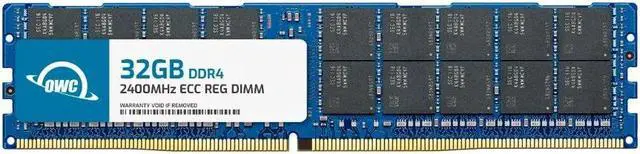
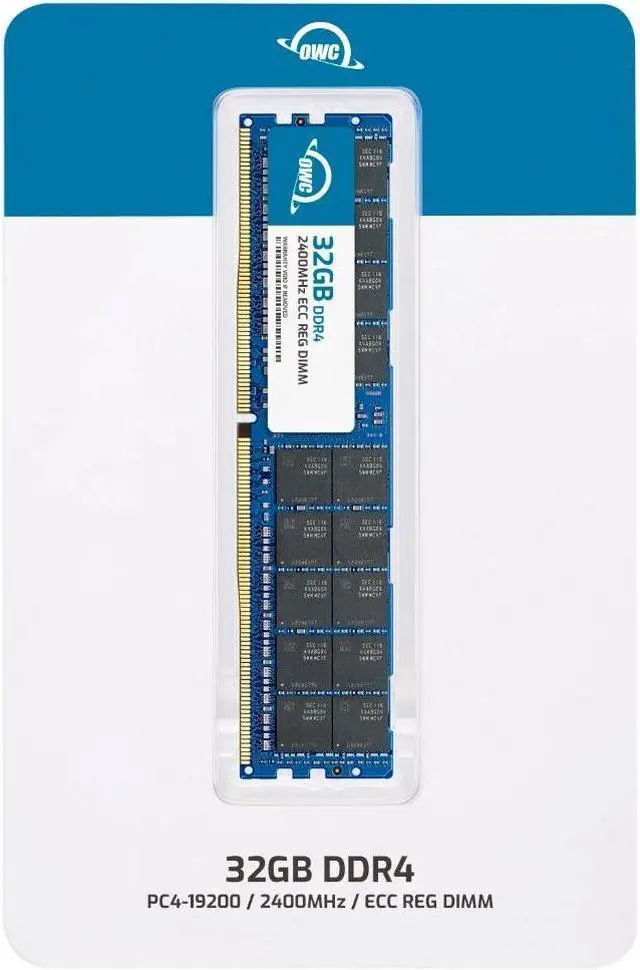
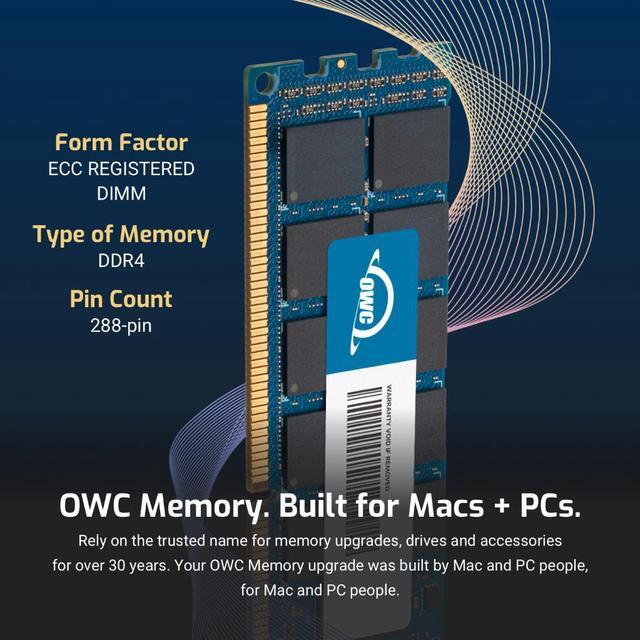
The OWC 32GB DDR4-2400 ECC Registered RDIMM is a replacement for specified Supermicro memory part numbers, suited to compatible servers and workstations that use registered 288-pin DDR4 memory.
Recommended For
- Operators upgrading a compatible Supermicro server that calls for 32GB DDR4-2400 ECC RDIMMs, such as the listed MEM-DR432L-HL01-ER24, MEM-DR432L-HL02-ER24, or MEM-DR432LC-ER24 replacements.
- Server and NAS owners expanding memory for workloads such as hosting multiple services, virtual machines, or large file caches—provided their system supports this DDR4 registered DIMM type and configuration.
- Workstation users whose supported platform takes DDR4 ECC registered memory and who need more capacity for memory-intensive professional workloads.
- IT teams maintaining existing DDR4-2400 server infrastructure who want a single 32GB replacement or capacity addition, after checking the system’s memory population rules.
Real-World Use Scenarios
- When a compatible Supermicro virtualization host is short on memory, adding this module can give the host more room for VMs and nested lab environments, subject to the system’s slot, processor, and memory-population rules.
- For a home-lab server running a mix of containers, virtual machines, and storage services, adding compatible RDIMM capacity can help accommodate more workloads at once; it does not increase CPU or storage performance by itself.
- In a compatible server cluster used for software-defined storage, this memory can serve as a replacement or capacity addition; Supermicro documents 32GB DDR4-2400 ECC registered DIMMs in a Storage Spaces Direct reference configuration.
- For a server hosting database or business-application VMs, adding memory may help when the workload is constrained by available RAM, allowing more capacity for the host and virtual machines; the actual benefit depends on the server configuration and workload.
- When maintaining an older supported Supermicro workstation or server, using a compatible replacement RDIMM can help restore memory capacity or extend the system’s useful service life without replacing the whole platform.




 here!