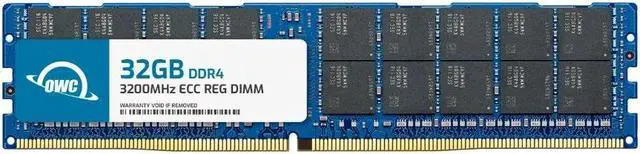
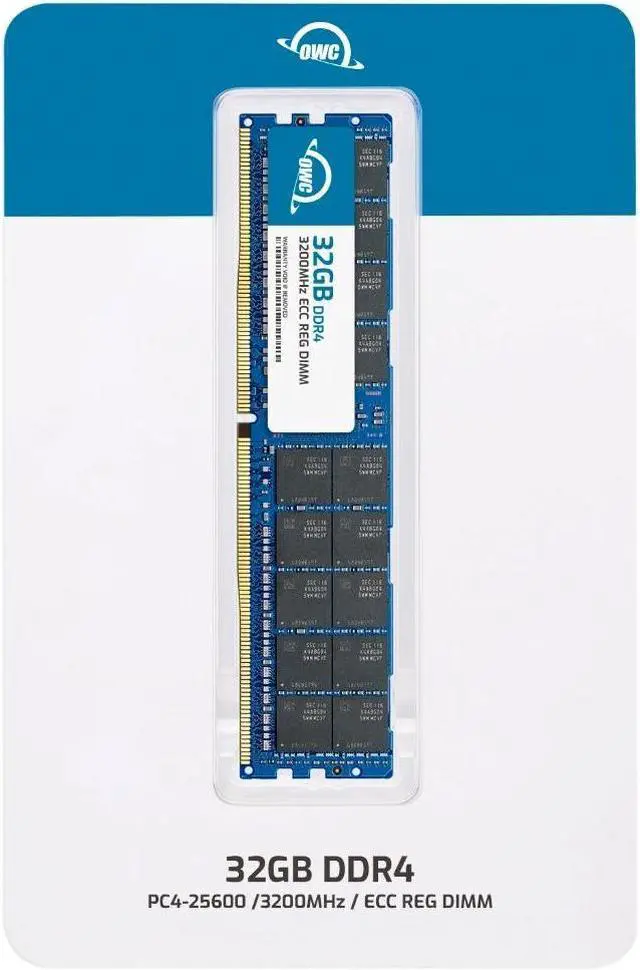
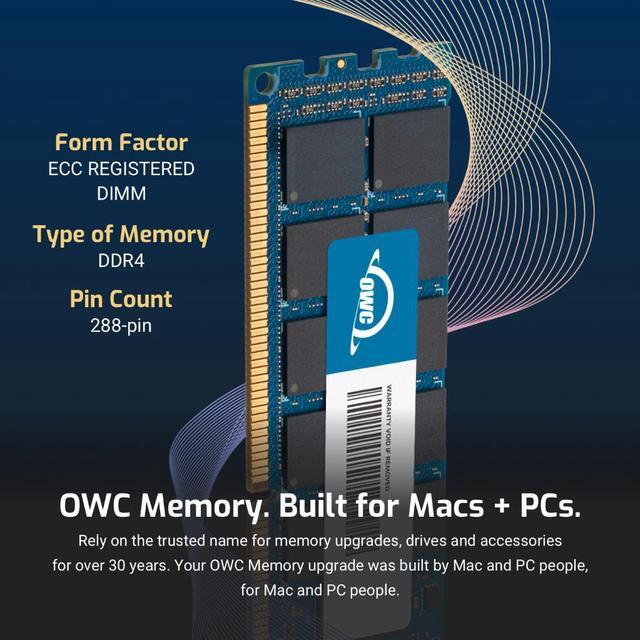
The OWC 3R2D42R432GB is a 32GB DDR4-3200 ECC registered RDIMM for upgrading compatible servers and workstations that use 288-pin 2Rx4 memory; it is not intended for standard desktops or systems requiring unbuffered memory.
Recommended For
- Owners of a DDR4 server that supports 32GB 2Rx4 ECC RDIMMs at the required speed, who want to add memory or replace a matching Samsung module. Check the server’s memory rules before installing it.
- Virtualization-host operators running multiple VMs on a compatible DDR4 server, when the host needs additional ECC-registered memory for its workload. The CPU and motherboard must support RDIMMs and the planned memory configuration.
- Homelab builders using a compatible DDR4 server platform for self-hosted services or lab VMs, who want to expand memory with a server-class RDIMM rather than desktop UDIMM memory.
- Workstation users with a model specifically validated for DDR4 ECC RDIMMs, who need a compatible replacement or memory expansion for professional workloads. Workstation support varies by motherboard and processor, so verify the exact system configuration.
Real-World Use Scenarios
- When a compatible server is running short of memory, add this module as part of a supported memory configuration; extra RAM can give active services more room and reduce reliance on slower disk-based paging when memory pressure is the bottleneck.
- For a virtualization host that needs to run more or larger virtual machines, use compatible RDIMMs to expand host memory; this can ease memory limits on VM allocation, though CPU, storage, and total platform capacity still constrain how many VMs it can support.
- For a database server whose working set is growing, add memory in a supported configuration to make more room for database processes and cached data; the practical benefit depends on whether memory capacity is currently limiting the workload.
- When extending the life of an existing DDR4 server or workstation, use the module as a capacity upgrade only after confirming the system supports ECC registered DIMMs and the required memory population rules; it is not a drop-in option for standard desktop memory slots.
- For a memory-intensive technical workstation, such as one handling large datasets or several demanding applications at once, additional compatible RAM can reduce memory-capacity bottlenecks; it will not necessarily speed up tasks limited by the processor, graphics, or storage.




 here!