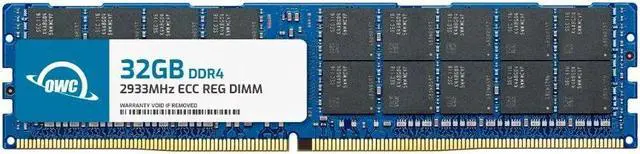
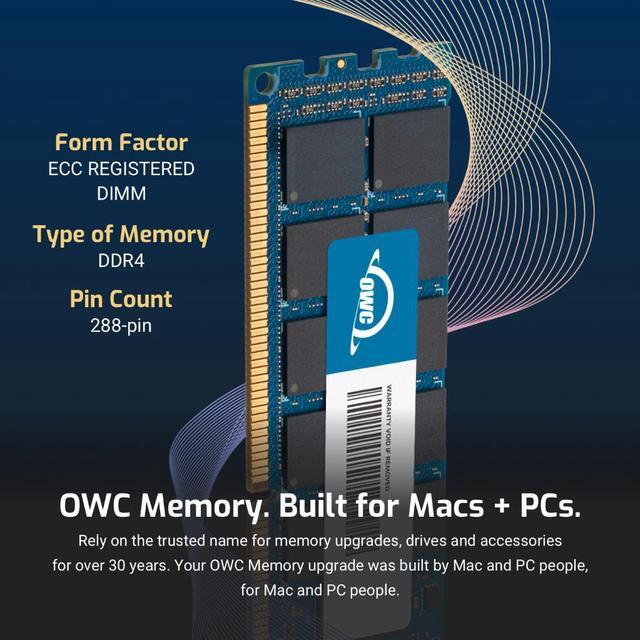
The OWC 2R9D42R432GB is a 32GB DDR4-2933 ECC registered RDIMM for compatible servers and workstations, with 2Rx4 organization and 1.2V operation; it is suited to systems requiring registered memory, not standard desktops or systems using unbuffered memory.
Recommended For
- Server owners replacing a failed Kingston KSM29RD4/32MEI or matching that module’s DDR4-2933, 32GB, 2Rx4 RDIMM specifications in a compatible system.
- Homelab and NAS operators expanding a DDR4 server with a platform that explicitly supports ECC Registered DIMMs and the required capacity and speed.
- Workstation users running sustained memory-intensive workloads who need ECC Registered memory and have a workstation motherboard and processor that support this RDIMM configuration.
- Administrators upgrading supported DDR4 server platforms, such as Intel S2600WF systems, where the system’s memory list and population rules allow 32GB DDR4-2933 RDIMMs.
Real-World Use Scenarios
- A server owner adds memory to a compatible system that is running short on capacity; if the platform supports this RDIMM type, the extra RAM can give memory-hungry services more room without replacing the whole server.
- A homelab or small-business server runs several virtual machines at once; adding memory can ease capacity limits and let the host run more memory-demanding workloads, provided the server supports the module and its configuration.
- An older server or workstation is kept in service rather than replaced; using a compatible 32GB module can expand its memory for existing workloads, though the system’s supported memory layout determines the actual capacity and speed.
- A NAS or file server handles multiple services or users; additional memory can provide more headroom for those tasks, but this module is suitable only if the NAS platform specifically accepts ECC registered DIMMs.
- A workstation user works with memory-intensive professional applications; on a workstation designed for ECC RDIMMs, adding memory can help accommodate larger projects or datasets, while the application’s performance still depends on the rest of the system.