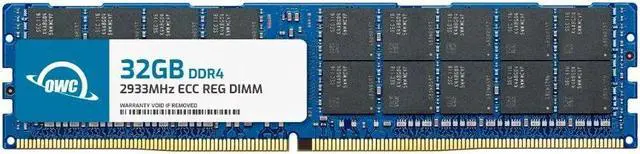
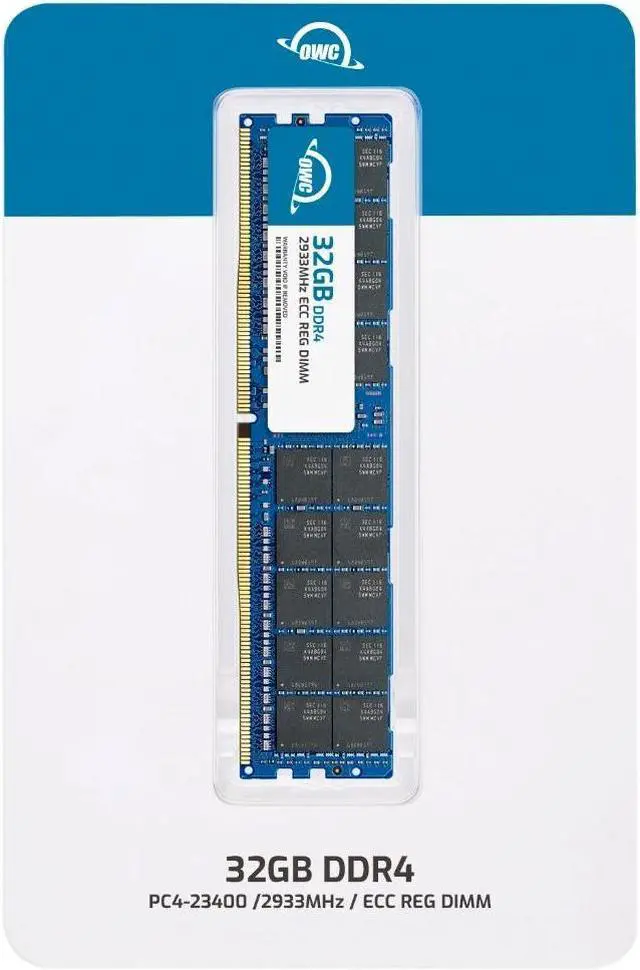
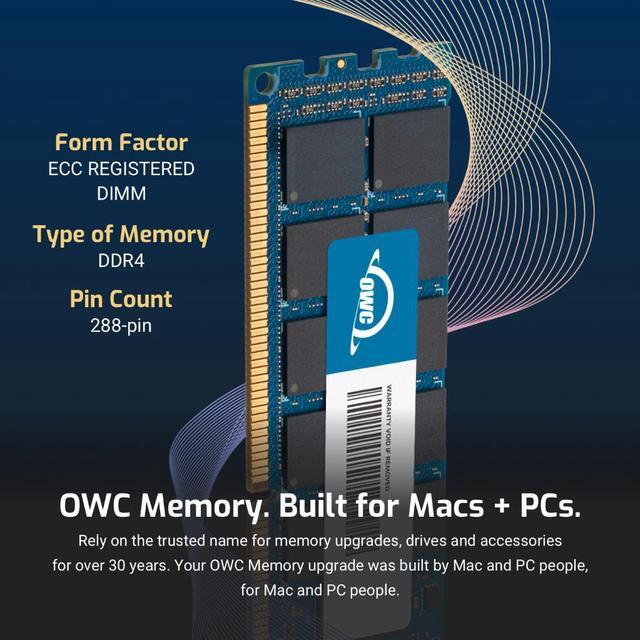
The OWC 32GB DDR4-2933 ECC Registered RDIMM is a 288-pin server and workstation memory module designed as a specification match for Samsung M393A4K40CB2-CVF and M393A4K40DB2-CVF parts; it suits compatible systems that require registered ECC memory.
Recommended For
- 2019 Mac Pro owners with a 2933MHz-compatible configuration who need to add or replace 32GB RDIMMs for memory-intensive workstation projects; OWC lists 32GB 2933MHz RDIMMs for the Mac Pro 2019.
- Server administrators replacing or expanding memory in a DDR4 server whose documentation supports 32GB, 2933MHz, 2Rx4 ECC RDIMMs—especially when matching the listed Samsung part numbers.
- Homelab operators running a server platform that supports registered ECC memory and need more RAM for virtual machines, containers, or other memory-heavy services.
- IT teams extending the service life of an existing DDR4 server or workstation by replacing a failed compatible RDIMM instead of changing the system’s memory platform.
Real-World Use Scenarios
- On a compatible virtualization server that is running short of memory, adding this module can provide more capacity for virtual machines and host overhead, helping reduce memory pressure when several VMs are active. The actual benefit depends on the workload and the server’s memory configuration.
- When a supported server or workstation needs a replacement for a matching 32GB Samsung DDR4-2933 ECC RDIMM, this OWC module can restore that memory capacity without switching to a different memory type. Confirm the system supports this RDIMM configuration before installing it.
- For a compatible server running a database, additional RAM can give the operating system and database more room for working data, caches, or temporary tables. This may reduce memory pressure, but it does not guarantee faster queries; results depend on the database settings and workload.
- In a compatible workstation used for large-memory projects or datasets, adding capacity can help keep more of the active workload in RAM when the existing memory is insufficient. It may reduce reliance on disk-based paging, but will not speed up work that is limited by the CPU, storage, or software.