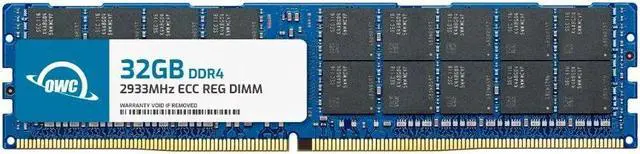
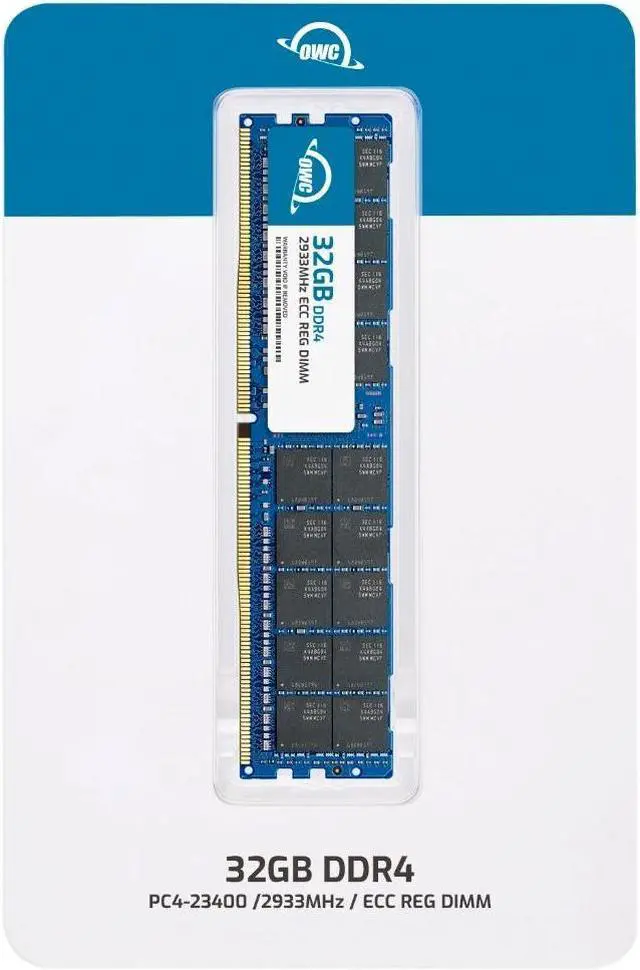
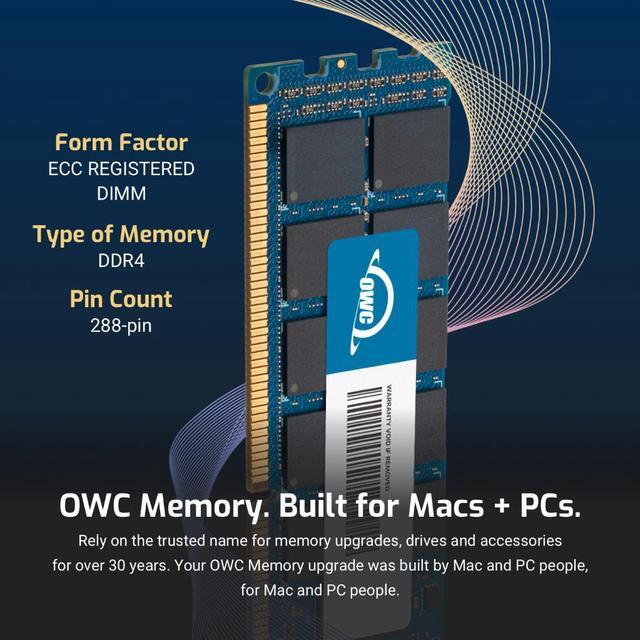
The OWC 32GB DDR4-2933 ECC Registered RDIMM is a server and workstation memory upgrade designed as a replacement for Supermicro MEM-DR432L-CL01-ER29, MEM-DR432L-CL02-ER29, and MEM-DR432L-CL03-ER29 modules. Choose it for a compatible system that requires 288-pin, 2Rx4 registered memory.
Recommended For
- Server administrators replacing a failed 32GB DIMM in a compatible Supermicro DDR4 system; the module is specified as a replacement for Supermicro MEM-DR432L-CL01/02/03-ER29, and Supermicro lists the corresponding 32GB DDR4-2933 2Rx4 ECC RDIMM in a qualified-memory document.
- Homelab operators adding or replacing memory in a DDR4 server that supports ECC registered DIMMs and the module’s 32GB, 2Rx4 configuration; confirm the exact motherboard and CPU support before buying.
- Workstation users whose motherboard and processor specifically support DDR4 ECC RDIMMs, and who need a 32GB module for memory-intensive professional workloads; the workstation label alone does not establish RDIMM compatibility.
- IT teams extending the service life of an existing compatible DDR4 server by replacing or adding a matching RDIMM, while following the system’s memory-channel population rules.
Real-World Use Scenarios
- Expanding a compatible Supermicro virtualization host: adding memory can give multiple virtual machines more room to run at once, reducing memory pressure when the host is near its current capacity. The benefit depends on the server, processor, memory layout, and workload.
- Giving a database server or other memory-intensive application more working memory: when the application is constrained by available RAM, added capacity can help keep more of its active data in memory and reduce reliance on slower storage. It does not guarantee faster performance if the workload is limited elsewhere.
- Upgrading a compatible server used for storage or several always-on services: additional memory can provide more headroom for the operating system, file services, and other workloads running together. ECC memory is intended for supported server platforms; it does not by itself prevent every kind of data loss or corruption.
- Replacing a failed or undersized module in a supported Supermicro server: a compatible replacement can restore the system’s intended memory capacity or provide additional capacity for its workload. Check the motherboard’s supported-memory list and population rules before installing it.
- Running a workstation or lab server for compute-heavy jobs: extra memory can help when simulations, data analysis, or other large working sets do not fit comfortably in existing RAM. Actual job speed still depends on the processor, software, and memory configuration.




 here!