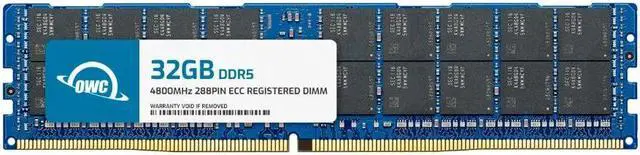
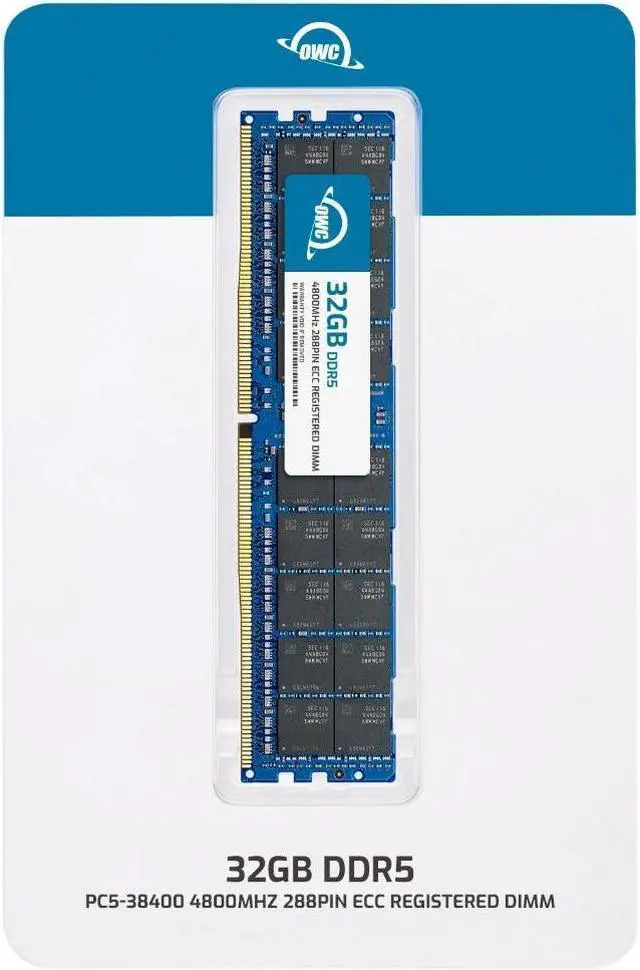
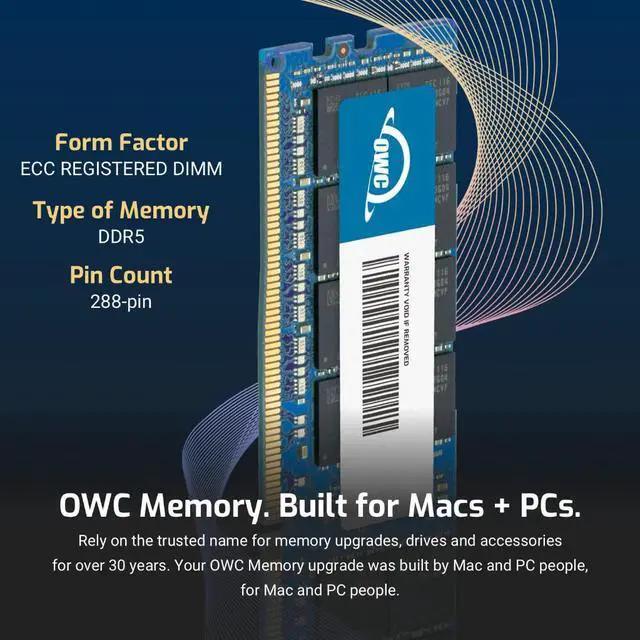
The OWC 32GB DDR5-4800 ECC Registered RDIMM is a 288-pin server memory upgrade for compatible workstations and servers, including systems using Hynix HMCG84MEBRA113N, HMCG84MEBRA115N, or HMCG84MEBRA174N modules; it is not intended for standard desktop computers.
Recommended For
- Server administrators adding or replacing memory in a platform that specifically supports DDR5-4800 ECC RDIMMs, such as when expanding capacity for virtual machines or shared services.
- Workstation users running memory-sensitive professional workloads who need ECC registered memory and have verified that their motherboard and processor support this module type.
- NAS operators upgrading a system designed for registered DDR5 memory, particularly when the system’s workload makes memory integrity and stable operation priorities.
- IT teams maintaining an existing Hynix-compatible server or workstation and seeking a 32GB replacement module, after confirming the system’s supported memory specifications.
Real-World Use Scenarios
- A server host running several virtual machines is running short on memory; adding this module in a supported configuration can give the host more RAM to allocate across VMs and may reduce memory pressure.
- A database server needs more room for its working data; adding memory can let a memory-limited workload keep more data in RAM, though the benefit depends on the database and the rest of the system.
- An organization wants to extend the useful life of a compatible server or workstation instead of replacing the system; this module can add 32GB of memory when the platform supports this exact RDIMM type and configuration.
- A server runs continuously handled workloads where memory error correction matters; in a compatible system, ECC memory can correct certain memory errors during operation, but it does not prevent every failure or replace backups.
- A workstation user works with memory-intensive engineering, scientific, or analytics tasks; if RAM capacity is the limiting factor, adding memory may help keep more of the active workload in RAM and reduce reliance on slower disk paging.