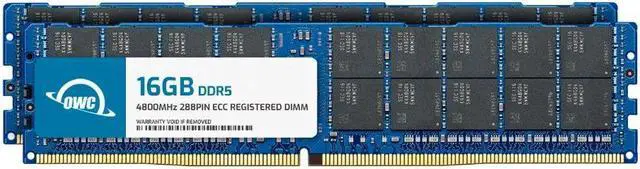
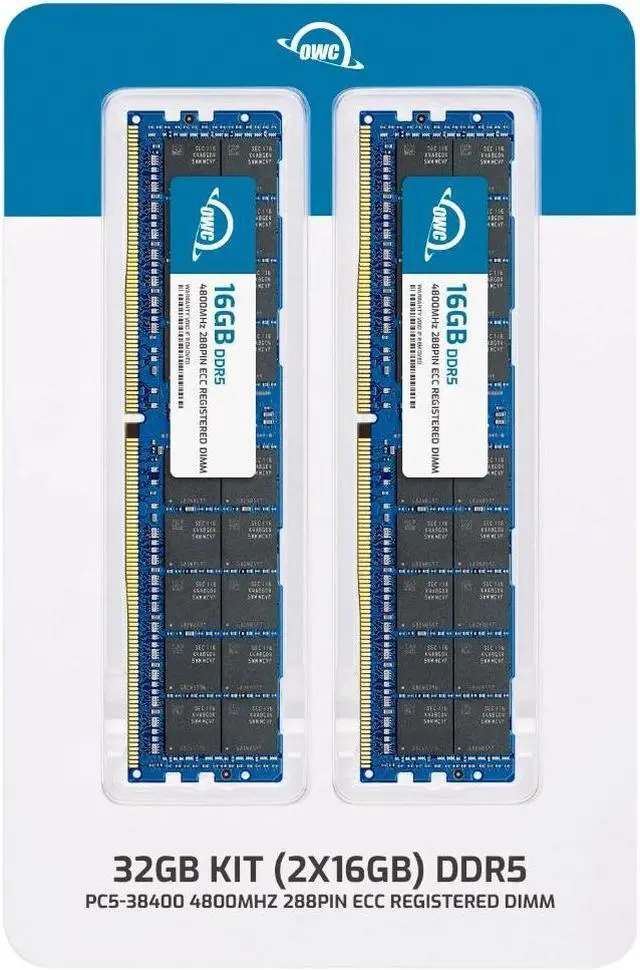
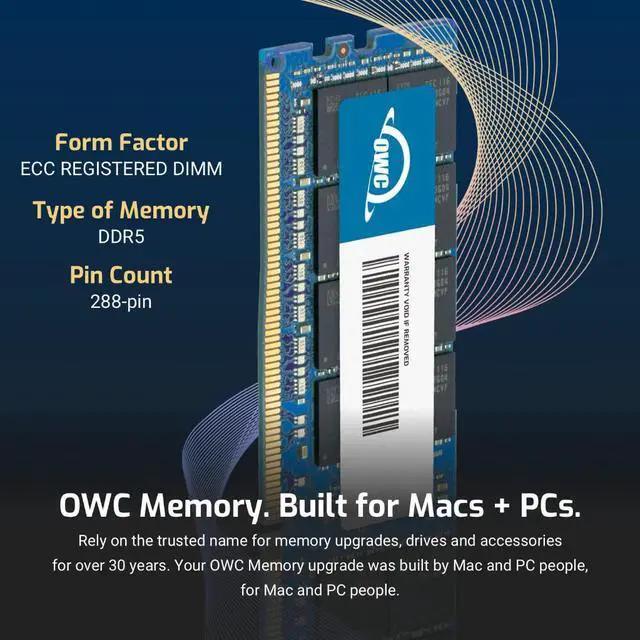
The OWC 32GB DDR5-4800 ECC Registered RDIMM kit includes two 16GB modules for compatible workstations and servers that use registered memory; it is not intended for standard desktop computers.
Recommended For
- Server administrators upgrading a compatible DDR5 RDIMM system who need a 32GB memory addition for server workloads; confirm the server’s supported module type, speed, and population rules first.
- Workstation users running engineering, creator, or data-focused workloads on a platform that requires DDR5 Registered DIMMs and supports ECC; the kit adds memory while retaining the RDIMM type those systems call for.
- Homelab operators adding memory to a compatible DDR5 RDIMM server used for multiple services or virtual machines, provided 32GB is the amount their workload needs and the system supports this kit’s configuration.
- Owners of compatible workstations, servers, or NAS systems replacing or expanding existing DDR5-4800 ECC RDIMM memory who want a matched two-module kit.
Real-World Use Scenarios
- On a compatible virtualization host that is running short on memory, adding this kit can give existing virtual machines more room to run without competing as much for RAM; the number of VMs it can support depends on their workloads.
- For a compatible NAS or storage server, ECC registered memory suits a system that stays in service and handles stored files; it adds memory with error-correction support, but does not replace backups or other data-protection measures.
- In a compatible workstation, this kit can help when larger project files or several applications are pushing memory capacity; users may be able to keep more work open at once, while compute speed itself depends on the system and workload.
- For a home lab running services alongside test or development virtual machines, an ECC-capable server or workstation can use added memory to accommodate more concurrent workloads, provided the host was previously constrained by RAM.
- When maintaining a compatible server, this kit can be a targeted memory-capacity addition for services such as web hosting, software-defined storage, or databases; the practical benefit is workload-dependent, and supported module type and population rules should be checked first.




 here!