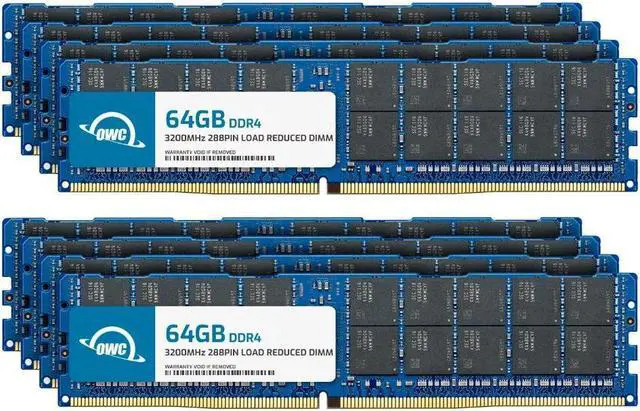
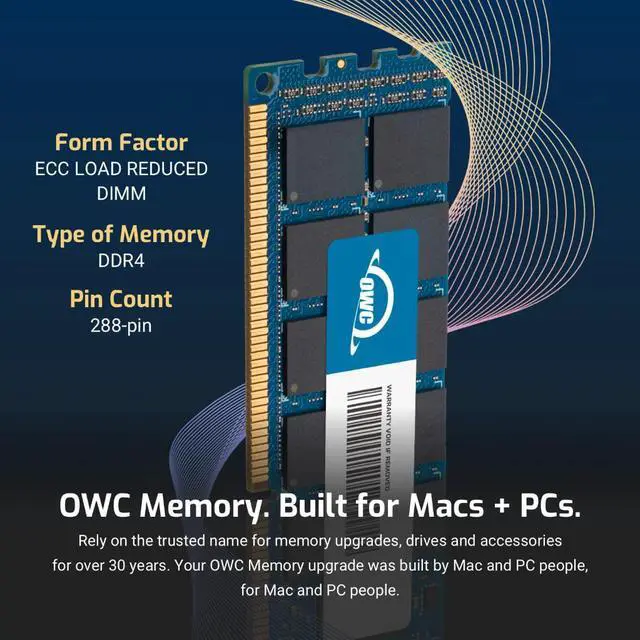
OWC 512GB (8×64GB) DDR4-3200 ECC LRDIMM memory is a server and workstation upgrade for systems that support 288-pin, 4Rx4 load-reduced modules. It runs at 1.2V with CL22 timings and is intended for compatible platforms, not standard desktops or systems using unbuffered memory.
Recommended For
- Virtualization hosts consolidating multiple VMs can use this kit when they need a larger memory footprint and their server supports 64GB DDR4-3200 LRDIMMs.
- Database server operators with large in-memory datasets can consider this 512GB kit when their platform supports LRDIMMs; LRDIMMs are positioned for higher-capacity server configurations.
- Operators of compatible DDR4 servers or NAS systems who need to add 512GB using eight 64GB modules can consider this kit after checking the system’s supported DIMM type, speed, rank, and population rules.
- High-performance computing teams running memory-intensive jobs can consider it when expanding capacity is the priority and their server platform explicitly supports this DDR4 LRDIMM configuration.
Real-World Use Scenarios
- On a virtualization host running several memory-hungry VMs, adding server-compatible RAM can provide more room for VM allocations and reduce memory pressure when the host is currently constrained by RAM.
- For a database server whose active dataset or buffer pool is limited by installed memory, additional RAM can let more data stay in memory; the practical benefit depends on the database configuration and whether memory is the bottleneck.
- When a server runs analytics or other jobs on large in-memory datasets, more available RAM can let the working dataset or more concurrent jobs fit in memory, reducing the need to process data in smaller batches when memory is the limiting factor.
- For a VDI host serving users with memory-intensive desktop applications, added capacity can give virtual desktops more room for their workloads and help avoid RAM-related slowdowns, provided the server and application requirements are also met.
- On a shared hosting or infrastructure server running services such as web, email, or file hosting alongside VMs, additional memory can provide more headroom for concurrent workloads and their caches when RAM is currently limiting capacity.




 here!