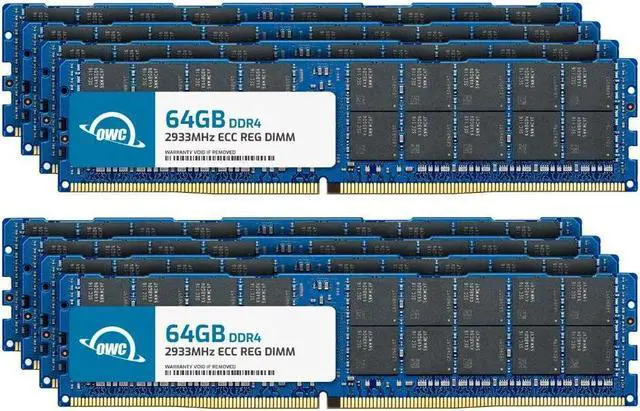
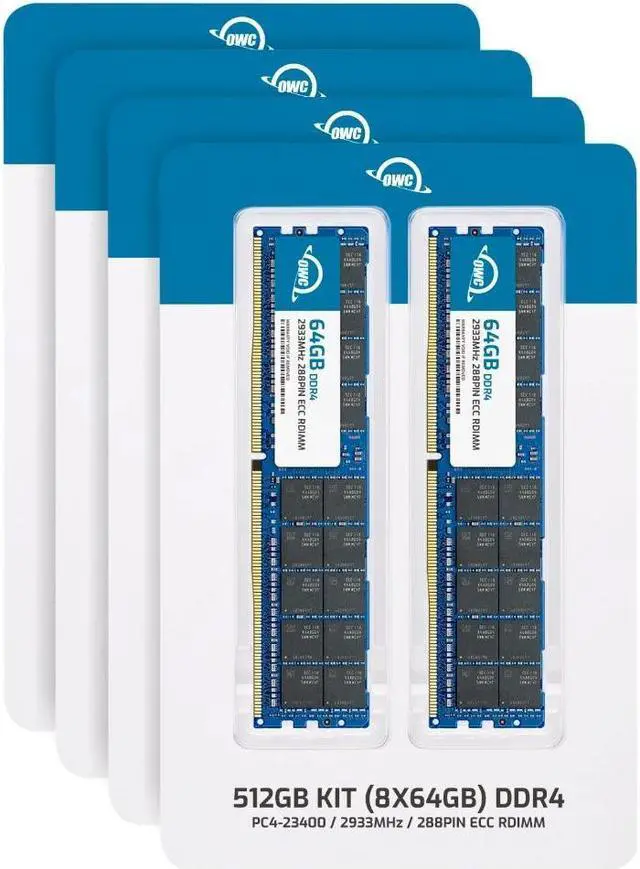
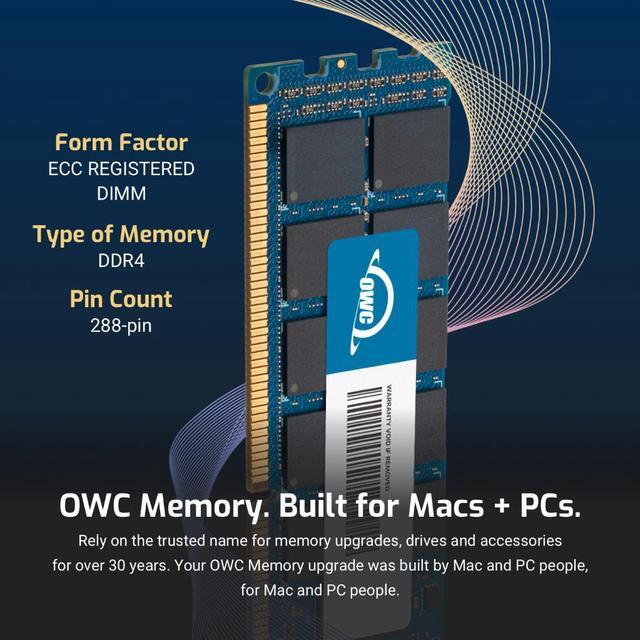
The OWC 512GB DDR4-2933 ECC Registered RDIMM kit includes eight 64GB modules for servers and workstations that support 288-pin, 2Rx4 registered memory; it is intended for systems using RDIMMs, not standard desktops or systems with unbuffered memory.
Recommended For
- Admins upgrading a compatible DDR4 server for memory-heavy virtualization, where giving more RAM to existing VMs or hosting more memory-intensive VMs is the goal.
- Database and analytics operators who want more working data or cache to fit in system memory, provided their server supports 64GB DDR4 RDIMMs and the required capacity.
- Teams running compute-intensive server workloads that need a large memory pool for data-intensive jobs, rather than a standard desktop-style memory upgrade.
Real-World Use Scenarios
- When a virtualization host is running out of memory, an administrator can add capacity for more VMs or give existing VMs more RAM; the practical benefit depends on the workloads and the server’s CPU, storage, and memory configuration.
- For a server hosting several database VMs, added memory can provide more room for each VM and its database workload, helping avoid memory becoming the immediate constraint as workloads grow; it does not by itself guarantee faster queries.
- When a virtual desktop host is close to its memory limit, additional RAM can make room for more desktop VMs or their allocated memory, subject to the actual peak usage and overhead of the virtualization platform.
- For a memory-constrained server running analytics or other data-heavy applications, extra capacity can let more of the active workload remain in system memory; any improvement depends on whether memory capacity is the bottleneck.
- When an older compatible server is nearing its memory limit, a RAM upgrade can help keep its current services running or accommodate growth before a full system replacement; it will not address separate CPU, storage, or platform limitations.