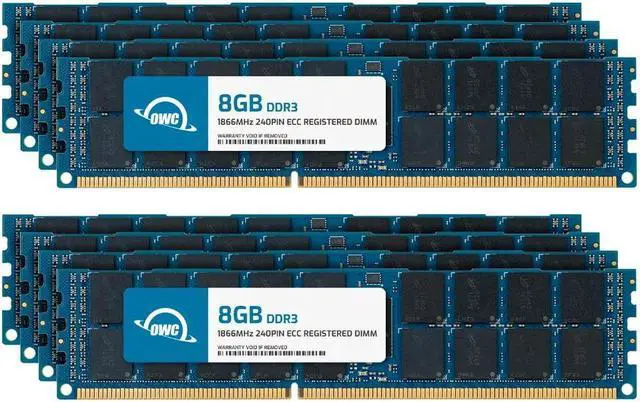
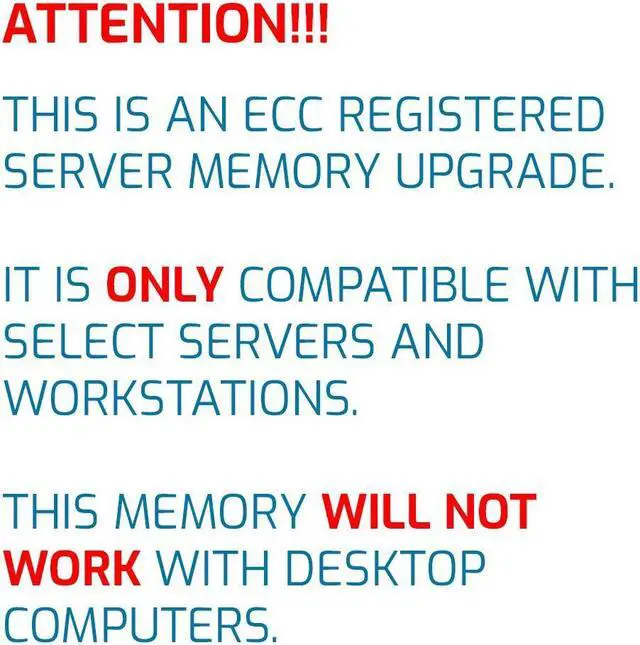
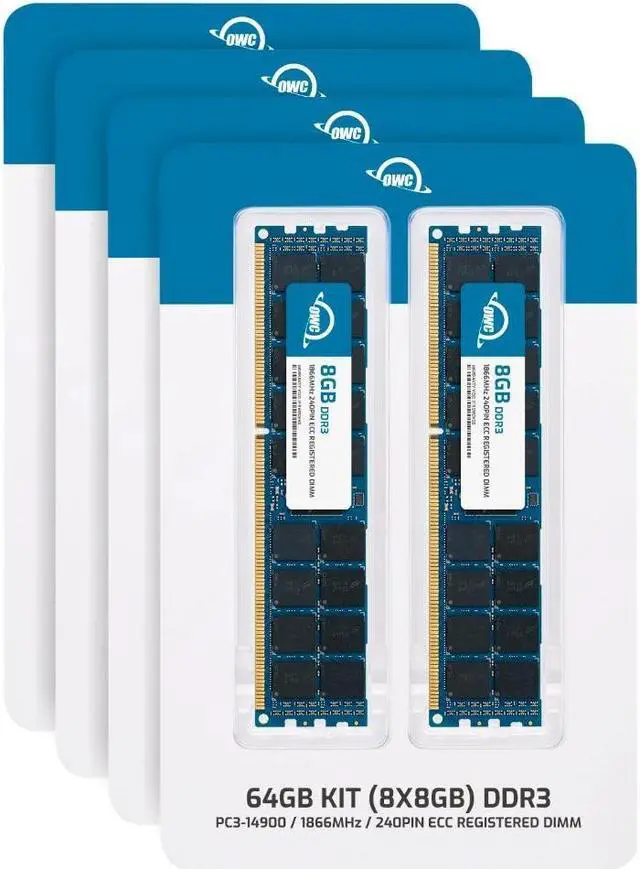
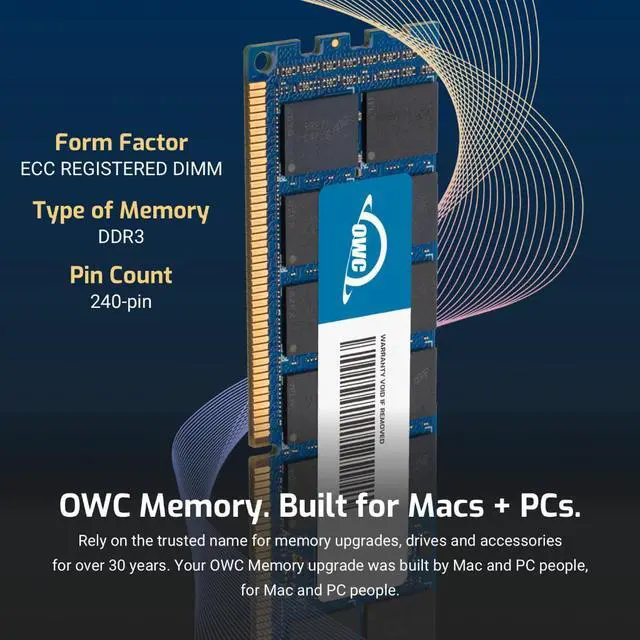
The OWC 64GB DDR3-1866 ECC Registered RDIMM kit includes eight 8GB modules for compatible workstations and servers that support 240-pin, 1.5V 1Rx4 registered memory; it is not intended for standard desktops or systems using unbuffered memory.
Recommended For
- Owners of a DDR3 server whose system supports 240-pin ECC registered RDIMMs can use this eight-module kit to bring memory capacity to 64GB; check the server’s supported speed and population rules first.
- Operators maintaining a compatible older workstation or server can use the kit to expand memory for workloads that benefit from more installed RAM, such as running several virtual machines or services at once.
- Owners of a compatible DDR3 NAS or home-lab system can consider this kit when their existing platform accepts registered ECC DIMMs and has the slots and capacity headroom for all eight modules.
- People extending the life of an older DDR3 server or workstation can use this as a matched 64GB kit, provided the system documentation confirms support for its 8GB 1Rx4 RDIMMs and DDR3-1866 speed.
Real-World Use Scenarios
- On a compatible legacy Xeon server, an administrator adds memory to run several virtual machines at once; the extra capacity gives each VM more room before the host has to rely on disk-based paging.
- For a home lab or training server, a user can assign memory to multiple test environments for practicing server administration or networking; the added capacity makes it easier to keep more lab VMs running together, subject to the host platform’s limits.
- In a compatible NAS or storage server, an owner can add memory for storage services and other background tasks; ECC can detect and correct certain memory errors, but it does not replace backups or guarantee file integrity.
- When keeping an older server in service, an operator can use this kit to expand memory without replacing the whole system; the practical benefit depends on the server supporting DDR3-1866 ECC registered DIMMs and the kit’s 64GB capacity.
- On a supported workstation used for memory-heavy multitasking, the added RAM can leave more room for several applications and large working files to stay open; it will not by itself speed up CPU- or graphics-limited tasks.




 here!