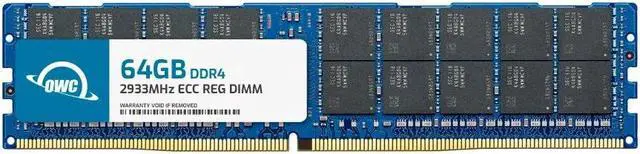
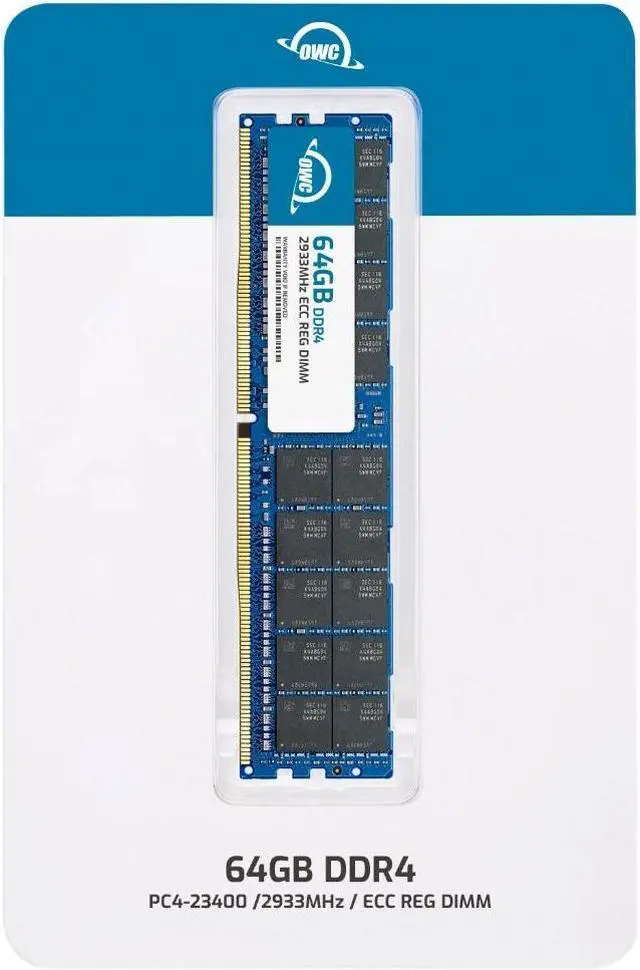
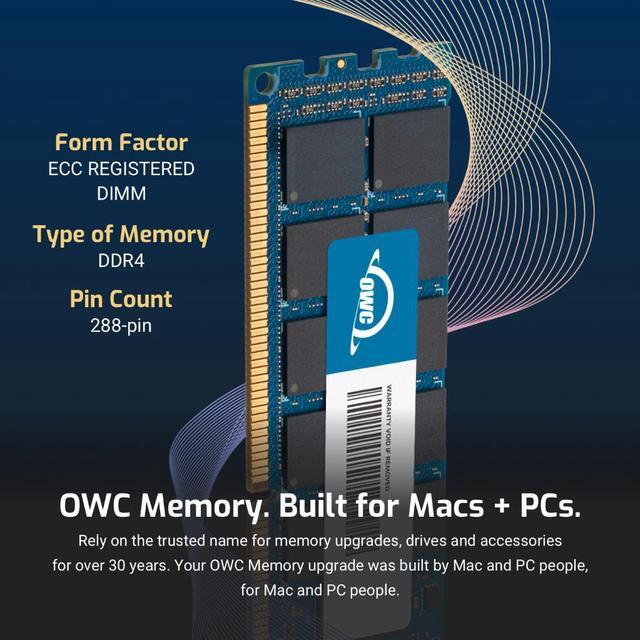
OWC 64GB DDR4-2933 ECC Registered RDIMM memory is a server- and workstation-focused upgrade for systems that support 288-pin 2Rx4 registered DIMMs; it is not intended for standard desktops or for use mixed with unbuffered memory.
Recommended For
- Operators expanding a compatible DDR4 server or virtualized host when memory capacity and ECC support matter for running multiple workloads.
- Server or workstation owners replacing or adding a module in a system specifically documented to support 64GB DDR4-2933 ECC RDIMMs; check the system’s supported rank and memory configuration before buying.
- NAS owners whose system documentation calls for registered DDR4 memory and supports this module’s capacity, speed, and rank.
- High-memory workstation users running demanding professional workloads on a platform that explicitly supports ECC registered DIMMs.
Real-World Use Scenarios
- A Proxmox or VMware host is running several virtual machines and containers, and the administrator needs more memory headroom; adding this module to a compatible server can let more workloads run concurrently or give existing VMs more memory, subject to the system’s supported configuration.
- A server runs a database whose working set is pressing against available RAM; adding memory on a supported platform can provide more room for in-memory data and reduce pressure to rely on slower storage, though results depend on the database and workload.
- A small business or home lab is consolidating services such as file sharing, web hosting, and application containers on one server; additional memory can help accommodate more services or users before the host runs short of RAM.
- An operator is repairing or extending an older server or workstation that already uses compatible DDR4 ECC Registered memory; this module can serve as a replacement or capacity addition, provided the platform supports its type, speed, and configuration.
- A workstation user handles memory-heavy engineering, scientific, or content-creation projects; on a compatible workstation, more RAM can leave larger project datasets in memory and reduce slowdowns caused by memory limits.