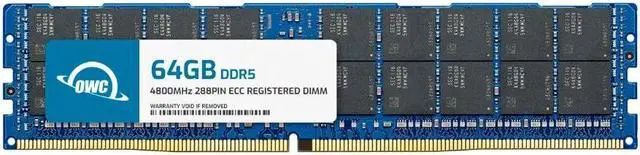
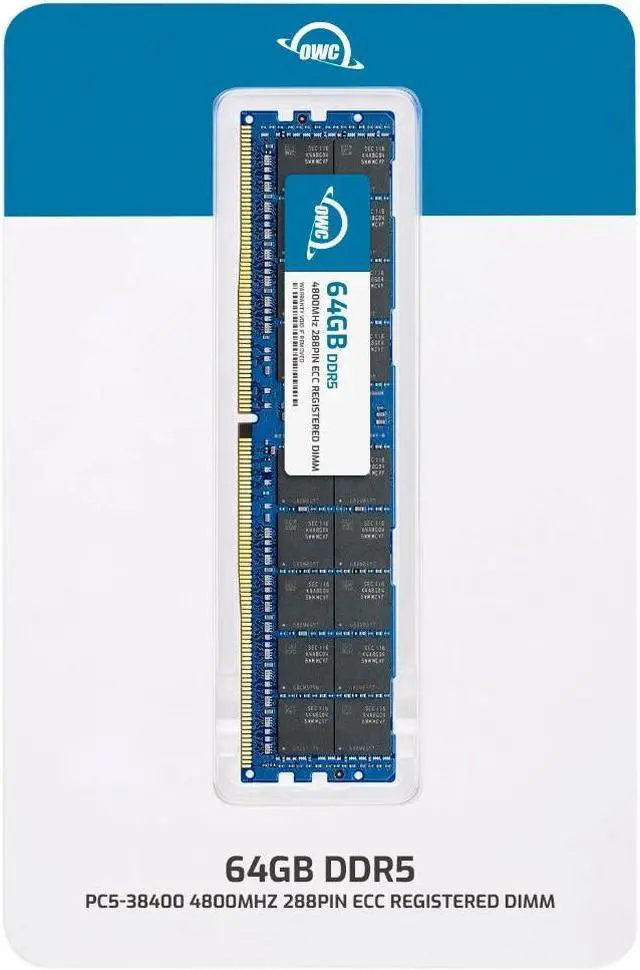
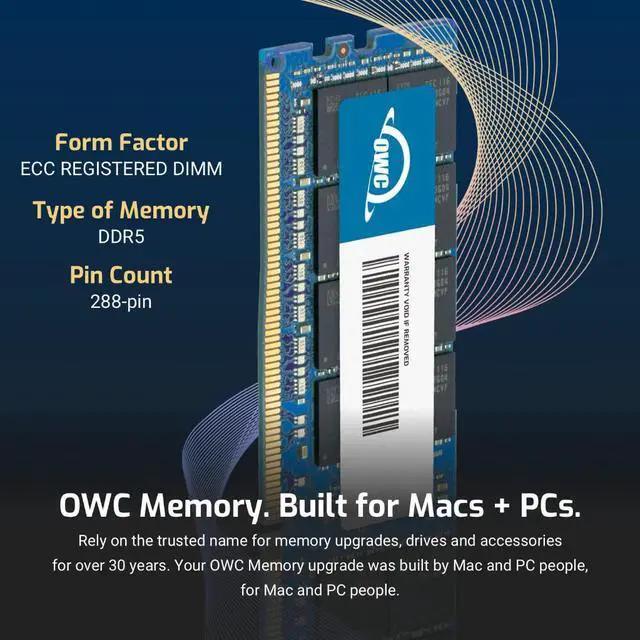
The OWC 4R8D52R464GB is a 64GB DDR5-4800 ECC registered RDIMM for compatible servers and workstations, including systems that use Kingston part KSM48R40BD4TMM-64HMR; it is not intended for standard desktop computers.
Recommended For
- Server operators expanding a compatible DDR5 RDIMM system who need a 64GB ECC registered module for memory-heavy server workloads; confirm the server supports this capacity, rank, and speed.
- IT teams replacing a failed or outdated server DIMM with a 64GB DDR5-4800 ECC RDIMM, especially when matching the system’s existing memory type and supported configuration matters.
- Workstation builders or administrators using a platform that specifically supports DDR5 registered ECC memory and need a 64GB module for memory-intensive professional workloads.
- Organizations extending the service life of an existing server or workstation, provided its manufacturer’s memory specifications list compatible DDR5-4800 RDIMMs.
Real-World Use Scenarios
- On a compatible DDR5 RDIMM virtualization host, adding memory can give the administrator more room to run or enlarge virtual machines before the host’s RAM becomes a constraint; the benefit depends on the server’s supported memory configuration and total installed capacity.
- When upgrading a supported server that uses the matching Kingston memory type, this module can add memory capacity for applications that need a larger in-memory working set, such as a database; it is a capacity upgrade, not a guaranteed database-speed increase.
- For a server running analytics or other memory-intensive jobs, adding this DIMM can provide more room for data and active processes in RAM, if the workload is memory-limited and the system supports the module.
- In a server consolidation project, extra memory may let a compatible host accommodate more memory-hungry services or virtual machines; actual capacity depends on the server, its CPU and memory layout, and the workload mix.
- When refreshing a compatible server’s memory, this ECC registered module is intended for systems designed for RDIMMs—not standard desktop PCs; checking the server’s qualified memory list and population rules helps avoid an incompatible upgrade.




 here!