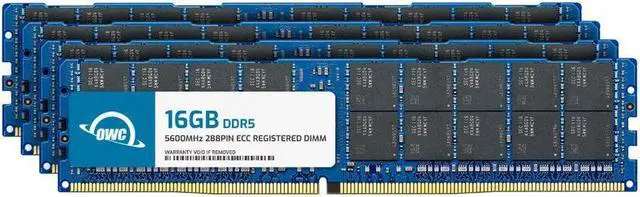
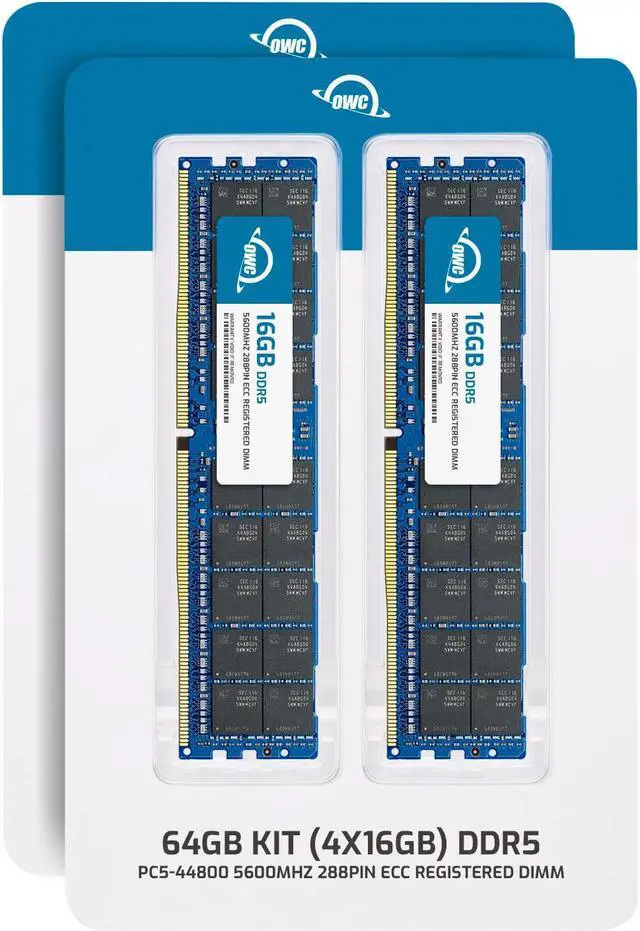
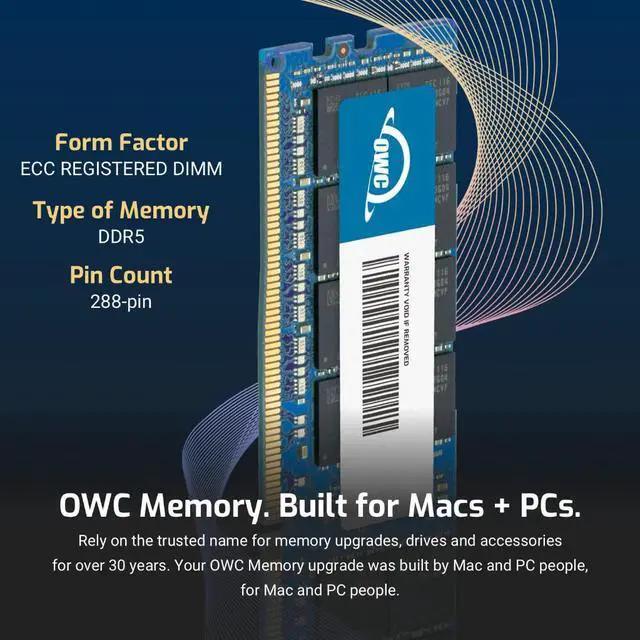
The OWC 64GB DDR5-5600 ECC Registered RDIMM kit includes four 16GB modules for upgrading select workstations and servers that support 288-pin registered DDR5 memory; it is intended for those systems rather than standard desktop PCs.
Recommended For
- Server administrators upgrading a compatible DDR5 RDIMM system with a matched four-module kit for services, databases, or other memory-intensive workloads; confirm the server supports 16GB DDR5-5600 ECC RDIMMs and the required slot population.
- IT teams expanding a compatible server or workstation in measured steps: the 4×16GB kit adds 64GB while keeping the new modules matched in capacity and type.
- Workstation users running memory-heavy professional applications who need ECC registered memory and whose CPU and motherboard explicitly support DDR5 RDIMMs at the system’s supported speed.
- Builders of compatible DDR5 server or workstation platforms who want ECC registered memory for workloads where memory stability and data integrity matter more than minimizing memory latency.
Real-World Use Scenarios
- On a compatible virtualization host, replacing or expanding memory with this 64GB kit can give several small virtual machines more room to run together, reducing memory pressure when their combined workload fits within the host’s available RAM.
- In a supported workstation used for several apps and large project files at once, the added memory can help reduce slowdowns caused by running short of RAM; the benefit depends on whether memory capacity is the current bottleneck.
- For a compatible server running a database or other memory-heavy business application, the upgrade can provide additional working memory for the workload, but the required capacity and any performance change depend on the database size and usage.
- When refreshing an existing compatible server or NAS, this kit can add 64GB of memory without replacing the whole system, provided the platform supports these RDIMMs and the configuration.
- For a home lab built on a compatible server platform, the kit can support running several services or test environments on one machine; actual capacity needs depend on how many are active and what they do.




 here!