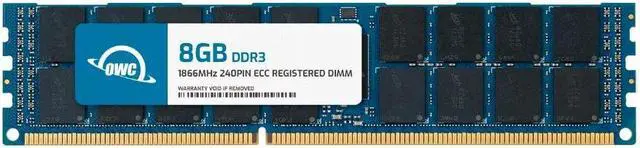
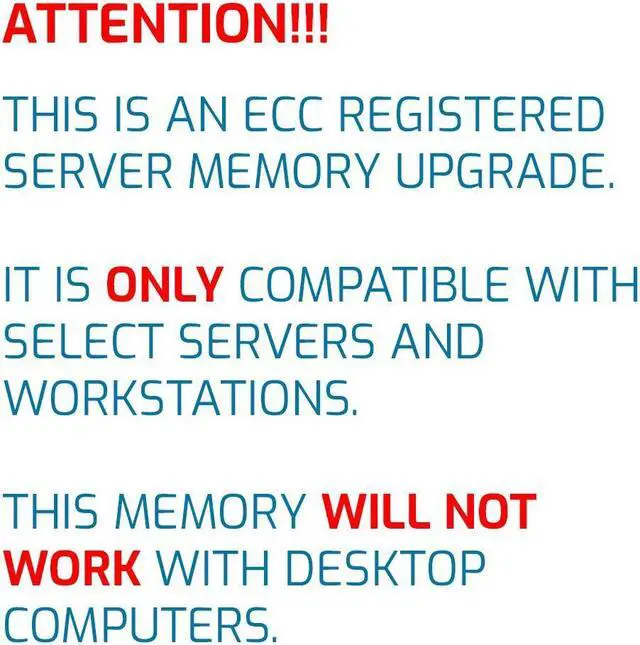
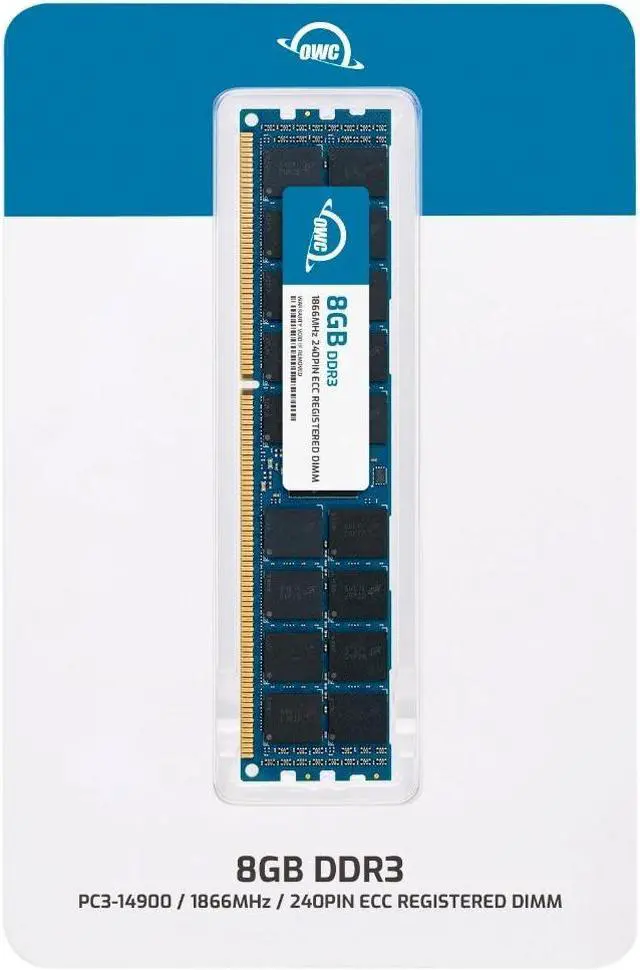
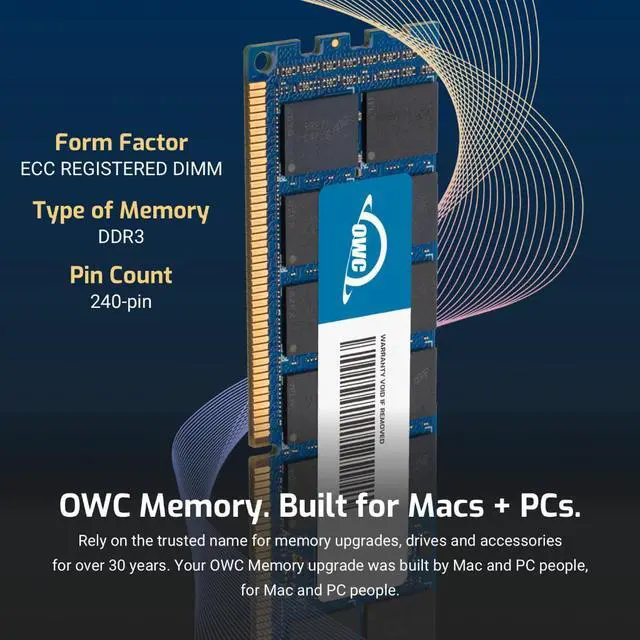
The OWC 8GB DDR3L-1866 ECC Registered RDIMM is a 1.35V server-memory module for compatible workstations and servers that require 240-pin 1Rx4 registered memory.
Recommended For
- Owners of a legacy server with confirmed support for DDR3L-1866 ECC registered RDIMMs who need an 8GB module for a memory replacement or incremental upgrade.
- Homelab or self-hosting users keeping a compatible DDR3 server in service for file storage, containers, or other always-on workloads, and who have verified the system’s RDIMM requirements.
- Workstation users maintaining an older system whose motherboard and processor specifically support DDR3 ECC registered memory, and who need a compatible replacement or capacity addition.
- IT staff or small organizations extending the service life of an existing DDR3 server, provided its memory documentation confirms support for this module’s capacity, speed, rank, and registered type.
Real-World Use Scenarios
- When a compatible older server is running short on memory, adding this module can provide a modest capacity increase and help keep the system useful for its existing services. The server must support DDR3L ECC registered RDIMMs.
- For a home lab running a hypervisor such as Proxmox, an added 8GB can give compatible older hardware more room for virtual machines and services. The actual benefit depends on the host’s current memory use; one module is a small incremental upgrade, not a guarantee that many VMs will run well.
- In a compatible NAS or file server that is nearing its memory limit, adding this module can provide extra headroom for the operating system and running services. It does not by itself guarantee faster file transfers or improve storage performance.
- For workstation users opening larger files or several applications at once, extra memory can reduce slowdowns caused by limited RAM—if memory pressure is the bottleneck. It will not directly make CPU- or graphics-limited tasks faster.
- When replacing a faulty or missing DIMM in an older server or workstation, this module may help restore the system’s memory capacity if the machine supports its specific registered ECC type, rank, speed, and capacity. Check the system’s memory documentation before installing it.




 here!