




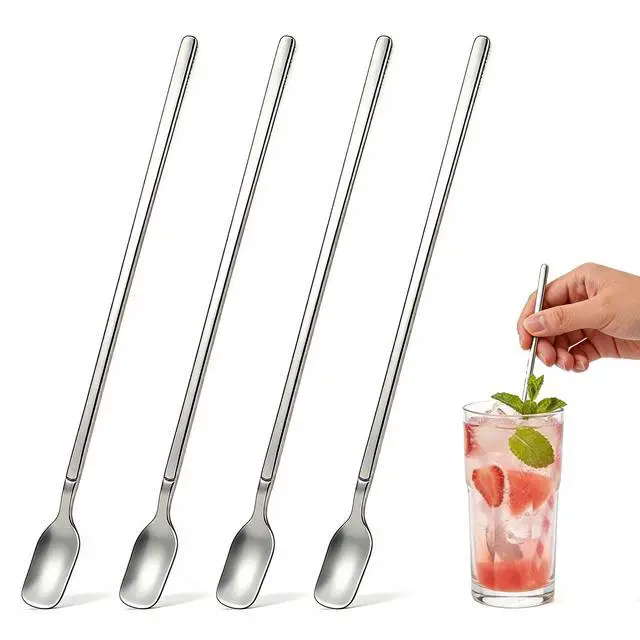
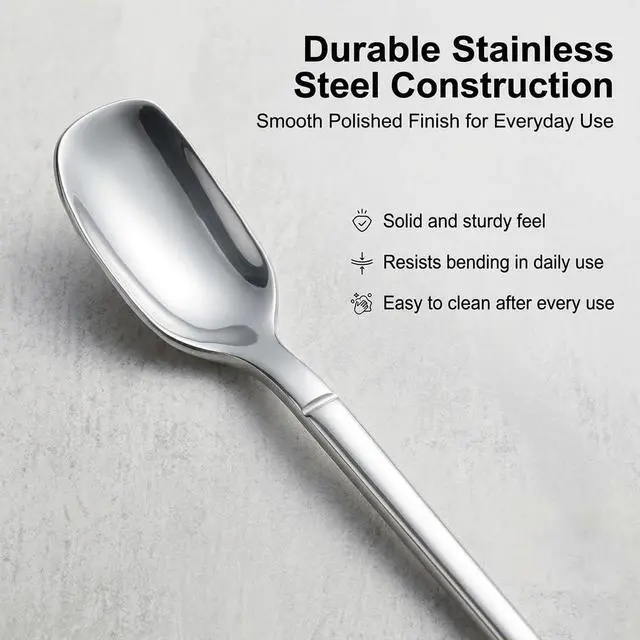






Simple Tool,Thoughtful Moments
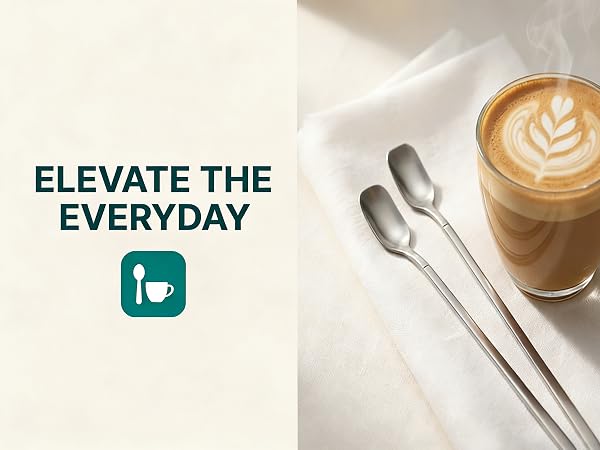
We believe the right spoon does more than stir—it completes the experience.
Clean lines, effortless maintenance, and a design that fits seamlessly into your kitchen. Because even the smallest detail deserves thought.
Elevate your sips and spoons—one moment at a time.
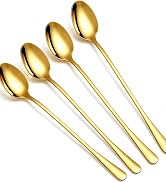
The companion for drinks
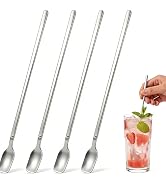
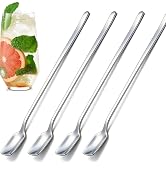
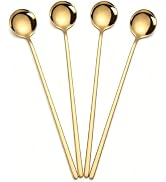
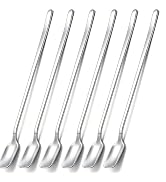
Making Coffee Better
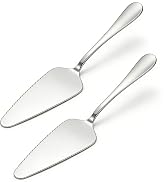
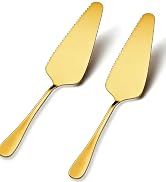
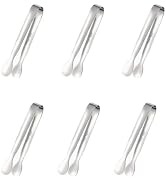
Essential for parties

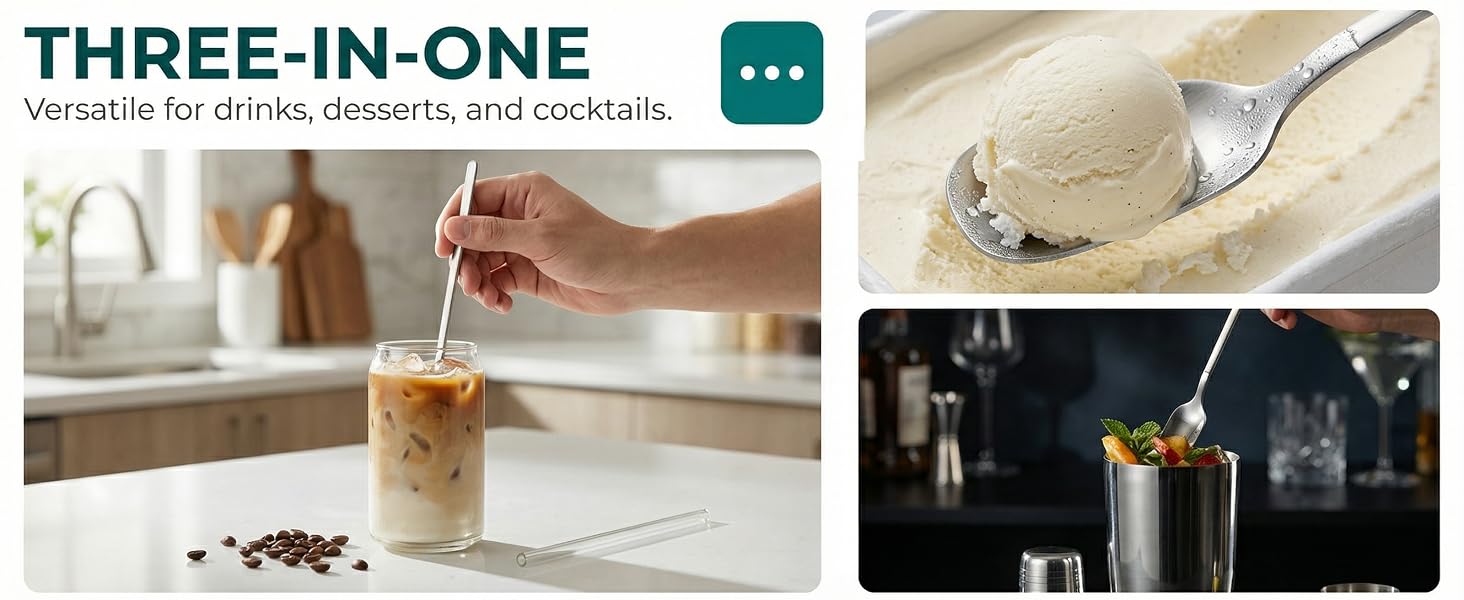

- I use tall mason jars and pint glasses for iced tea and cold brew at home — will an11.4-inch spoon actually reach the bottom without my hand going into the drink, and is that length awkward to use day to day?
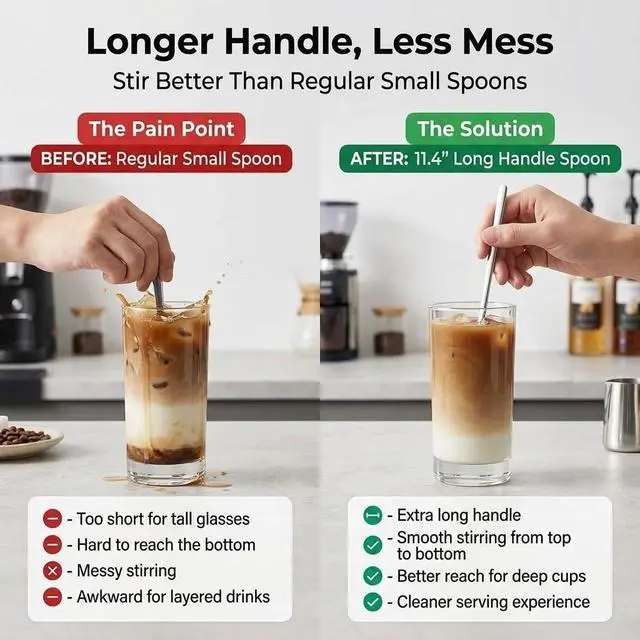
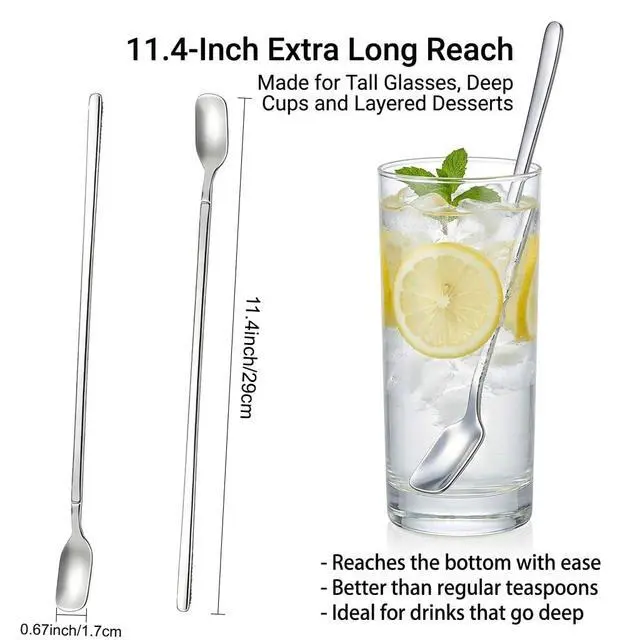
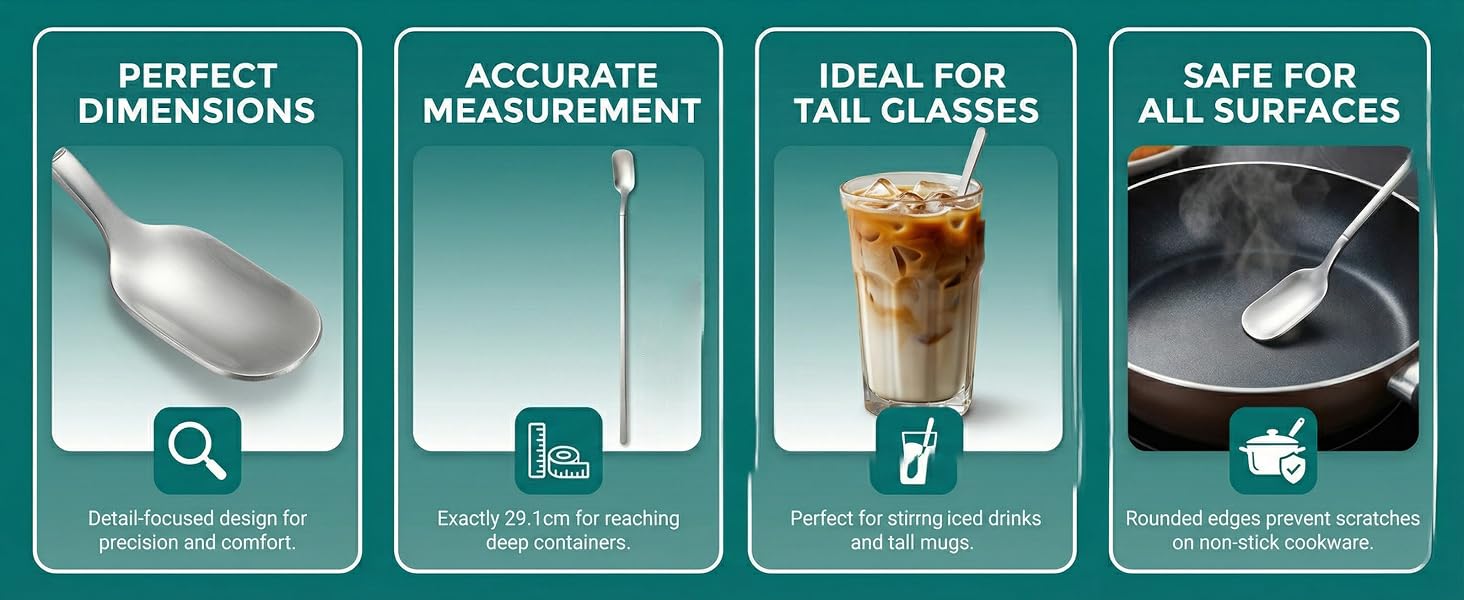
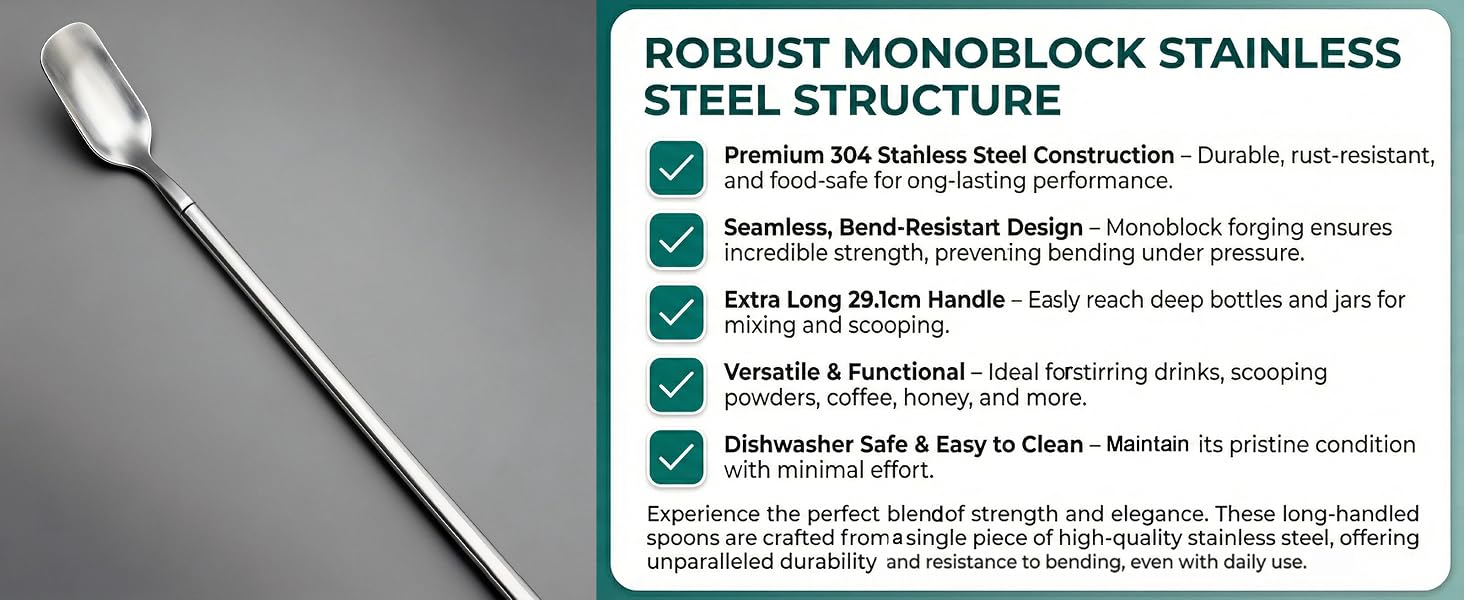
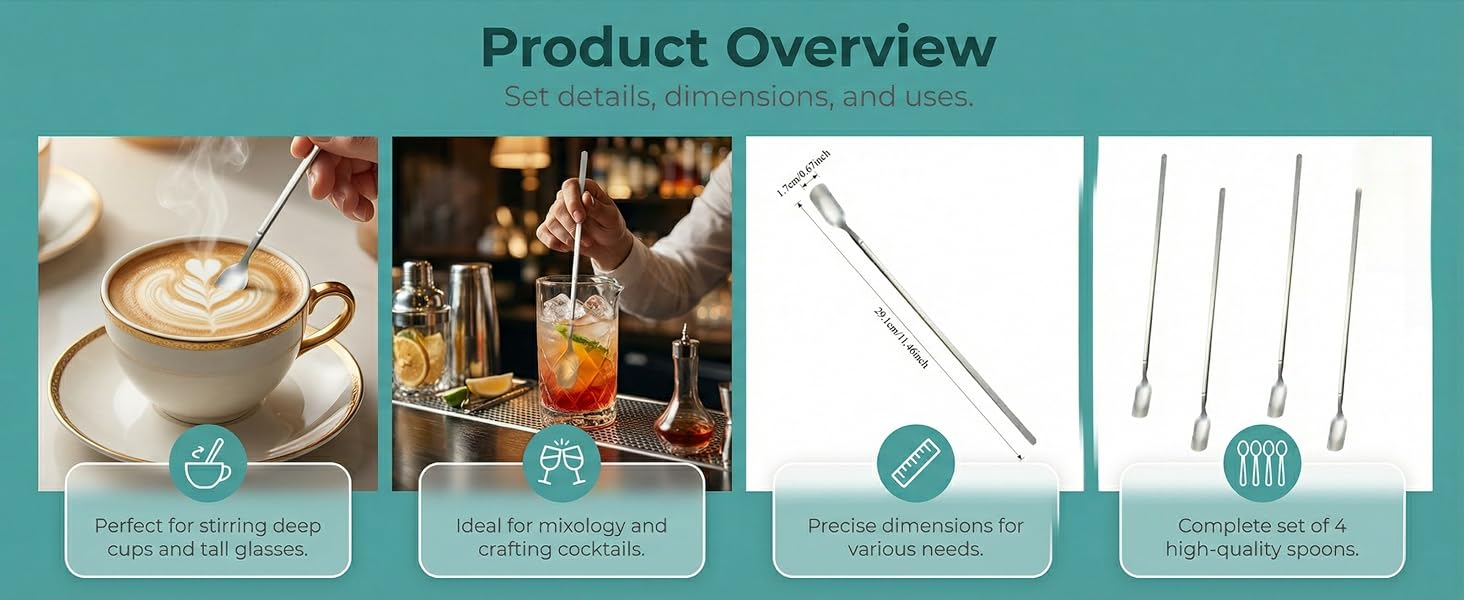
- The 11.4-inch handle length on these spoons is designed to address the reach limitation that comes with tall vessels like mason jars, pint glasses, milkshake cups, and sundae bowls. A standard teaspoon handle runs around 6inches, which leaves your hand at or below the rim of a tall glass when you try to stir the full depth of the drink — meaning your fingers contact the liquid surface or the rim during stirring. At 11.4 inches, the handle extends well above the rim of most tall glasses and mason jars, keeping your grip clear of the drink while the spoon bowl reaches the base. For day-to-day use, the length is practical rather than awkward for tall vessels specifically: you hold the upper portion of the handle the same way you would a standard spoon, and the extra length simply means the bowl reaches deeper. The 0.67-inch handle width keeps the spoon slim enough to fit through the opening of a standard mason jar or tall glass without displacing the drink. If you primarily use short mugs or standard-height glasses, the 11.4-inch length is longer than necessary — but for tall glasses, mason jars, and milkshake cups, the length solves the reach problem that shorter stirring spoons have.
- Someone asked whether these are safe for non-stick cookware — what surfaces are these spoons actually designed for, and is there anything I should know about using them with delicate glassware or ceramic cups?
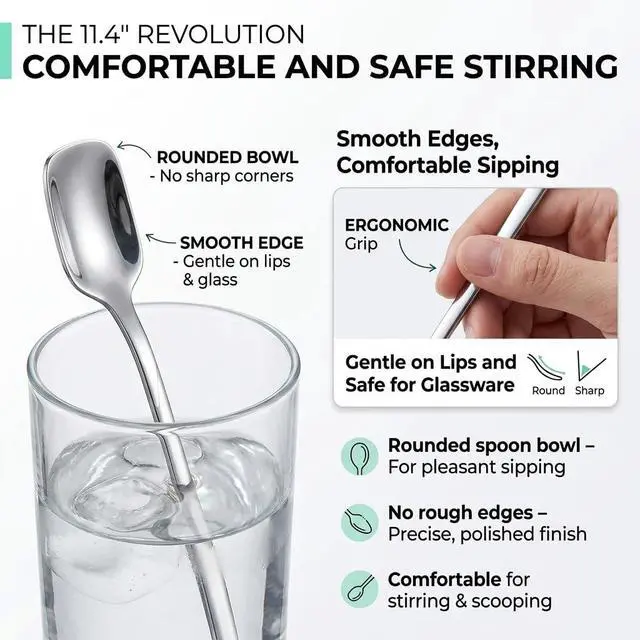
- These spoons are designed for use in drinking vessels — tall glasses, mason jars, milkshake cups, pint glasses, and sundae bowls — rather than for cookware. The primary use cases are stirring cold and hot drinks and scooping layered desserts from tall glasses, not stirring food in pots or pans. For that reason, non-stick cookware compatibility is not the intended application for this type of spoon. Regarding delicate glassware and ceramic cups: the spoon bowl on these spoons has a rounded profile, and the edges are polished smooth. The rounded bowl and polished edges are designed to minimize contact friction against glass and ceramic surfaces during normal stirring use. As with any metal utensil used in glassware, using a light stirring motion rather than pressing the spoon hard against the side of the glass reduces the risk of surface contact during use. The stainless steel construction is designed to resist bending during daily stirring and scooping, which means the spoon maintains its shape rather than flexing and pressing unevenly against the glass wall. For standard glassware used for cold drinks and desserts, these spoons work as intended — for non-stick cookware or delicate heirloom pieces, a silicone or wooden utensil would be a more appropriate choice.
- Can these go in the dishwasher, and if I hand wash them instead, is there anything I need to do to keep the polished finish from dulling over time?
- These spoons are dishwasher safe. The stainless steel construction is designed to withstand dishwasher cycles, and the polished finish holds up during standard dishwasher cleaning. For dishwasher use, placing the spoons in the utensil basket with the handles up keeps the spoon bowls exposed to the wash spray for thorough cleaning. If your dishwasher uses a heated dry cycle, removing the spoons promptly after the cycle ends and wiping them dry with a soft cloth prevents mineral deposits from tap water from settling on the polished surface — water spots are not rust, but they can dull the mirror finish if left to accumulate over repeated cycles. For hand washing, standard dish soap and a soft cloth or non-abrasive sponge are sufficient. Avoid steel wool or abrasive scrubbing pads, as these will scratch the polished surface and create a matte texture in the scratched areas. The slim0.67-inch profile of the handle means the spoons fit easily into a utensil drawer or a cup for storage after washing — no special storage arrangement is needed. With either washing method, the spoons are ready for the next use without additional treatment.
Simple Tool,Thoughtful Moments
We believe the right spoon does more than stir—it completes the experience.
Clean lines, effortless maintenance, and a design that fits seamlessly into your kitchen. Because even the smallest detail deserves thought.
Elevate your sips and spoons—one moment at a time.
The companion for drinks
Making Coffee Better
Essential for parties




- I use tall mason jars and pint glasses for iced tea and cold brew at home — will an11.4-inch spoon actually reach the bottom without my hand going into the drink, and is that length awkward to use day to day?
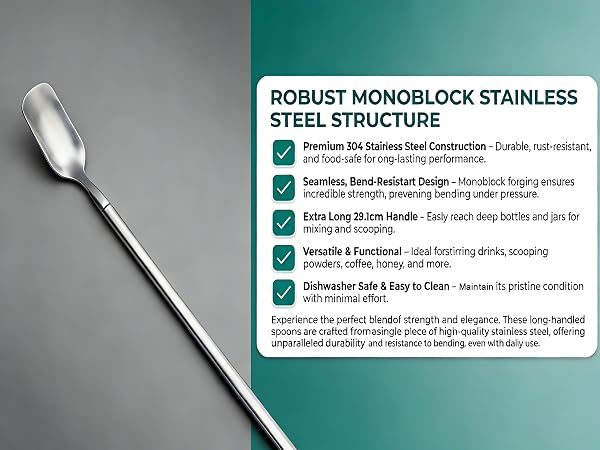
- The 11.4-inch handle length on these spoons is designed to address the reach limitation that comes with tall vessels like mason jars, pint glasses, milkshake cups, and sundae bowls. A standard teaspoon handle runs around 6inches, which leaves your hand at or below the rim of a tall glass when you try to stir the full depth of the drink — meaning your fingers contact the liquid surface or the rim during stirring. At 11.4 inches, the handle extends well above the rim of most tall glasses and mason jars, keeping your grip clear of the drink while the spoon bowl reaches the base. For day-to-day use, the length is practical rather than awkward for tall vessels specifically: you hold the upper portion of the handle the same way you would a standard spoon, and the extra length simply means the bowl reaches deeper. The 0.67-inch handle width keeps the spoon slim enough to fit through the opening of a standard mason jar or tall glass without displacing the drink. If you primarily use short mugs or standard-height glasses, the 11.4-inch length is longer than necessary — but for tall glasses, mason jars, and milkshake cups, the length solves the reach problem that shorter stirring spoons have.
- Someone asked whether these are safe for non-stick cookware — what surfaces are these spoons actually designed for, and is there anything I should know about using them with delicate glassware or ceramic cups?
- These spoons are designed for use in drinking vessels — tall glasses, mason jars, milkshake cups, pint glasses, and sundae bowls — rather than for cookware. The primary use cases are stirring cold and hot drinks and scooping layered desserts from tall glasses, not stirring food in pots or pans. For that reason, non-stick cookware compatibility is not the intended application for this type of spoon. Regarding delicate glassware and ceramic cups: the spoon bowl on these spoons has a rounded profile, and the edges are polished smooth. The rounded bowl and polished edges are designed to minimize contact friction against glass and ceramic surfaces during normal stirring use. As with any metal utensil used in glassware, using a light stirring motion rather than pressing the spoon hard against the side of the glass reduces the risk of surface contact during use. The stainless steel construction is designed to resist bending during daily stirring and scooping, which means the spoon maintains its shape rather than flexing and pressing unevenly against the glass wall. For standard glassware used for cold drinks and desserts, these spoons work as intended — for non-stick cookware or delicate heirloom pieces, a silicone or wooden utensil would be a more appropriate choice.
- Can these go in the dishwasher, and if I hand wash them instead, is there anything I need to do to keep the polished finish from dulling over time?
- These spoons are dishwasher safe. The stainless steel construction is designed to withstand dishwasher cycles, and the polished finish holds up during standard dishwasher cleaning. For dishwasher use, placing the spoons in the utensil basket with the handles up keeps the spoon bowls exposed to the wash spray for thorough cleaning. If your dishwasher uses a heated dry cycle, removing the spoons promptly after the cycle ends and wiping them dry with a soft cloth prevents mineral deposits from tap water from settling on the polished surface — water spots are not rust, but they can dull the mirror finish if left to accumulate over repeated cycles. For hand washing, standard dish soap and a soft cloth or non-abrasive sponge are sufficient. Avoid steel wool or abrasive scrubbing pads, as these will scratch the polished surface and create a matte texture in the scratched areas. The slim0.67-inch profile of the handle means the spoons fit easily into a utensil drawer or a cup for storage after washing — no special storage arrangement is needed. With either washing method, the spoons are ready for the next use without additional treatment.