here!
I’m your shopping assistant for PC builds, upgrades, and everything tech.
Got questions? Ask away!
Start a conversation
here!
I’m your shopping assistant for PC builds, upgrades, and everything tech.
Got questions? Ask away!
Start a conversation



Any questions? Ask CelesteSM will help you find out quickly.
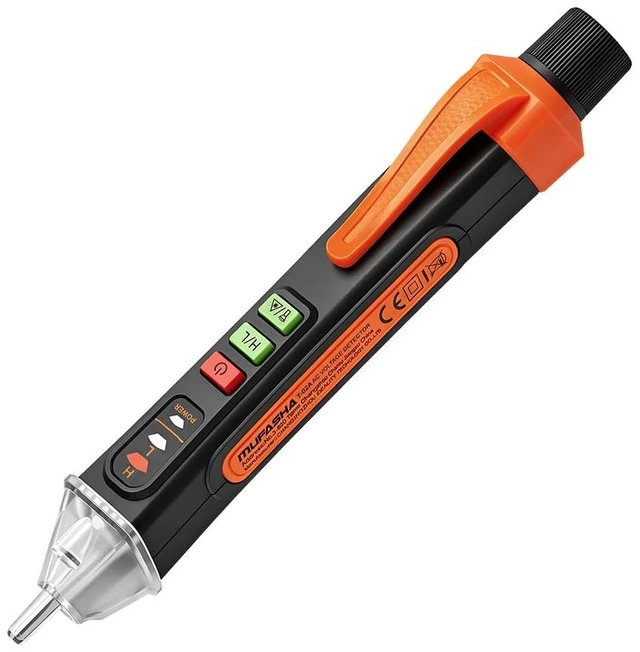
Step 1: Power On? – Press and hold the power button. The device self-checks and beeps once – confirming it's working.
Step 2: Choose Your Mode? – Short-press H/L button. Use H mode? for standard household circuits (100-1000V). Switch to L mode? for low-voltage wires (12-100V) to avoid false readings near sensitive electronics.
Step 3: Light It Up? – Short-press for flashlight in dark panels. Long-press for indicator light to mark detected wires.

Stay Safe, Stay Distant? – Before drilling, mounting, or repairing, simply bring the tip near a wire, socket, or switch. The tester instantly beeps and flashes – no contact needed. It's the safest way to confirm a circuit is dead before you work on it.
Two Sensitivity Modes for Any Job:?
H Mode (12V–1000V)? – For standard household wiring, outlets, and light switches. Detects everyday AC voltage quickly.
L Mode (48V–1000V)? – For crowded junction boxes. Reduces cross-sensing from nearby wires, helping you pinpoint exactly which wire is live – no more guesswork.

Where's the break?? When a light stops working or a socket goes dead, you don't need to guess or rip open walls. Simply trace along the wire with the tester — it detects changes in induced voltage around AC power lines to locate the break point. Important first step:? Always confirm the wire is carrying AC current before starting. Avoid false readings:? AC can also induce voltage in nearby ungrounded metal objects (like pipes or conduits). To get accurate results, keep the tip away from other metal surfaces while tracing.

Replacing a switch or installing a light fixture?? First, you need to know which wire is live. Simply insert the tester into the socket slot or touch each wire — the tester responds with a clear audio signal.
How to read the result:? • Live wire (Hot):? Loud, rapid beeping. • Neutral wire:? Silent or very faint buzz (because the live wire nearby can induce a weak signal).
Pro tip:? To avoid confusion, always test a known live outlet first to confirm the loud beep. Then compare with the neutral. The difference is obvious — loud vs. quiet. No guessing, no shocks.

Step 1: Power On? – Press and hold the power button. The device self-checks and beeps once – confirming it's working.
Step 2: Choose Your Mode? – Short-press H/L button. Use H mode? for standard household circuits (100-1000V). Switch to L mode? for low-voltage wires (12-100V) to avoid false readings near sensitive electronics.
Step 3: Light It Up? – Short-press for flashlight in dark panels. Long-press for indicator light to mark detected wires.
Stay Safe, Stay Distant? – Before drilling, mounting, or repairing, simply bring the tip near a wire, socket, or switch. The tester instantly beeps and flashes – no contact needed. It's the safest way to confirm a circuit is dead before you work on it.
Two Sensitivity Modes for Any Job:?
H Mode (12V–1000V)? – For standard household wiring, outlets, and light switches. Detects everyday AC voltage quickly.
L Mode (48V–1000V)? – For crowded junction boxes. Reduces cross-sensing from nearby wires, helping you pinpoint exactly which wire is live – no more guesswork.
Where's the break?? When a light stops working or a socket goes dead, you don't need to guess or rip open walls. Simply trace along the wire with the tester — it detects changes in induced voltage around AC power lines to locate the break point. Important first step:? Always confirm the wire is carrying AC current before starting. Avoid false readings:? AC can also induce voltage in nearby ungrounded metal objects (like pipes or conduits). To get accurate results, keep the tip away from other metal surfaces while tracing.
Replacing a switch or installing a light fixture?? First, you need to know which wire is live. Simply insert the tester into the socket slot or touch each wire — the tester responds with a clear audio signal.
How to read the result:? • Live wire (Hot):? Loud, rapid beeping. • Neutral wire:? Silent or very faint buzz (because the live wire nearby can induce a weak signal).
Pro tip:? To avoid confusion, always test a known live outlet first to confirm the loud beep. Then compare with the neutral. The difference is obvious — loud vs. quiet. No guessing, no shocks.