




 here!
I’m your shopping assistant for PC builds, upgrades, and everything tech.
Got questions? Ask away!
Start a conversation
here!
I’m your shopping assistant for PC builds, upgrades, and everything tech.
Got questions? Ask away!
Start a conversationShipped by GUANGZHOU PINTECH CO LTD




Any questions? Ask CelesteSM will help you find out quickly.

PINTECH is a high-tech enterprise specializing in the research, manufacturing and sales of measurement and testing instruments.
Currently, we offer over 70 products, including optical isolation voltage probes, differential probes, high-voltage attenuation rods, current probes, high-voltage amplifiers, power amplifiers, signal generators, oscilloscopes, multimeters, high-voltage power supplies, AC power supplies and DC power supplies.
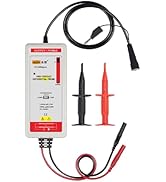
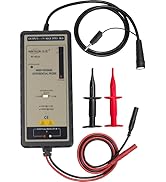
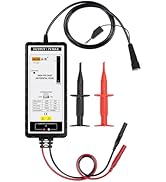
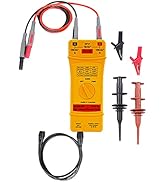
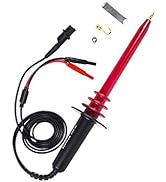
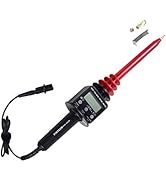
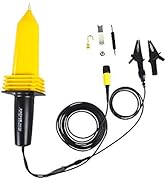
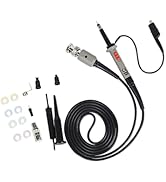
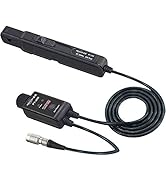
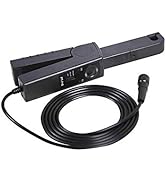
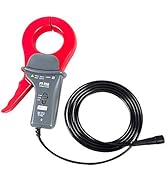
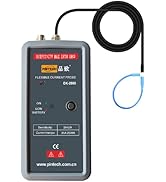
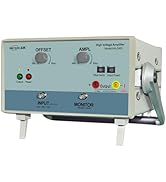
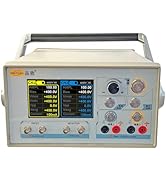
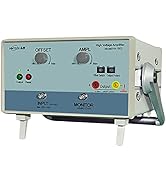
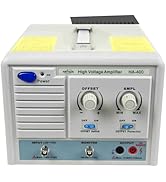

We not only provide professional measuring instruments and equipment, but also have a technical team that can offer professional advice according to your needs.
At PINTECH we have been designing and manufacturing electrical testing equipment since 2006.
PINTECH places great emphasis on pre-sales and after-sales service, prioritizing product quality to provide our customers with cost-effective products.
PINTECH is a high-tech enterprise specializing in the research, manufacturing and sales of measurement and testing instruments.
Currently, we offer over 70 products, including optical isolation voltage probes, differential probes, high-voltage attenuation rods, current probes, high-voltage amplifiers, power amplifiers, signal generators, oscilloscopes, multimeters, high-voltage power supplies, AC power supplies and DC power supplies.
We not only provide professional measuring instruments and equipment, but also have a technical team that can offer professional advice according to your needs.
At PINTECH we have been designing and manufacturing electrical testing equipment since 2006.
PINTECH places great emphasis on pre-sales and after-sales service, prioritizing product quality to provide our customers with cost-effective products.
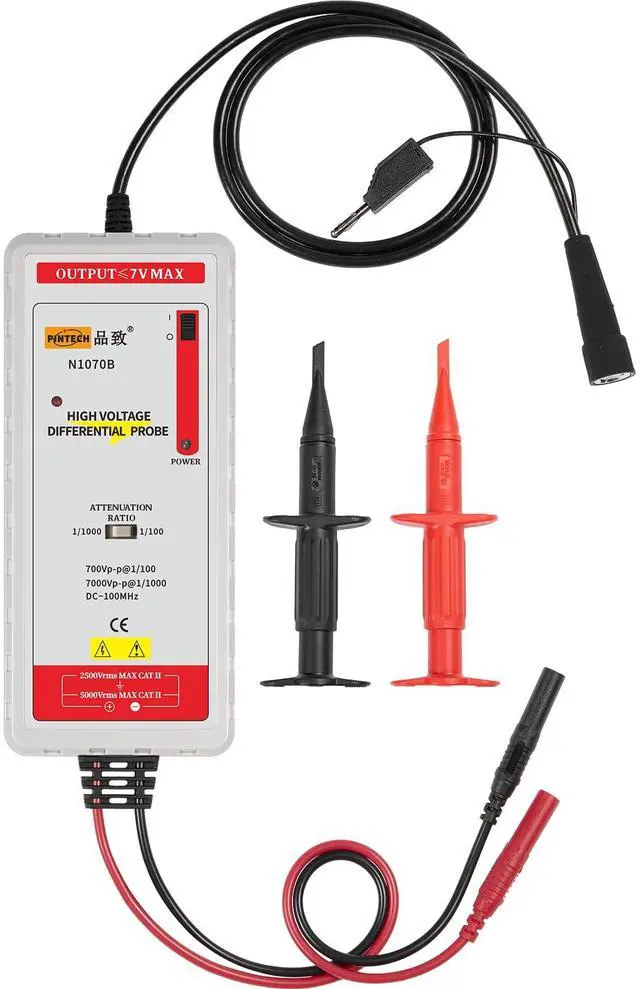
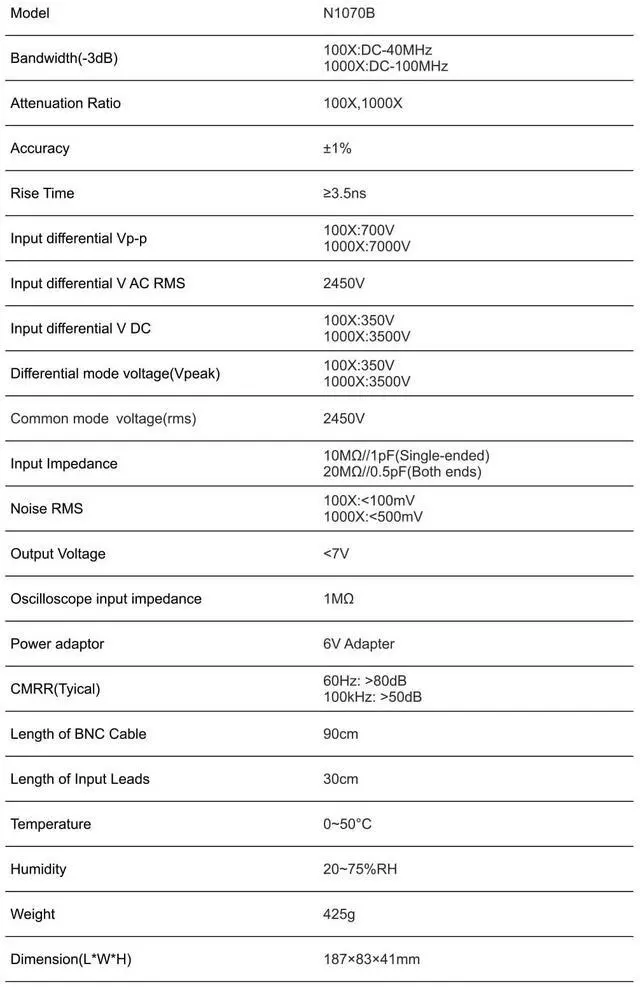
MODEL: N1070B
Bandwidth (-3dB): 100X: DC-40MHz; 1000X: DC-100MHz
Output(into 50k load):7V
Offset(typical):±5mV
Attenuation Rate: 1000X/100X
Rising Time: 3.5ns
Accuracy: ±1%
Input Impedance: Between the two ends: 20M//0.5pF, Single-ended to ground: 18M//2pF
Oscilloscope Input Impedance: 1M
CMRR: 60Hz:80dB; 100kHz:50dB
Testing Voltage(Vp-p): 100X: 700V; 1000X: 7kV
Input DC Voltage: 100X: 350V; 1000X: 3.5kV
Differential-mode voltage(Vp-p):100X: 350V; 1000X: 3.5kV
RMS Value: 2450V
Common-mode voltage RMS: 2450V
Noise RMS: 100X: 100mV; 1000X: 500mV
Weight: 425g/0.94lb
Dimension(LxWxH): 187x73x41 mm
| Product Dimensions | 7.32 x 3.3 x 1.49 inches |
| Item Weight | 4.4 pounds |
| Manufacturer | PINTECH |
| Item model number | N1070B |
| Is Discontinued By Manufacturer | No |
| Date First Available | April 20, 2021 |
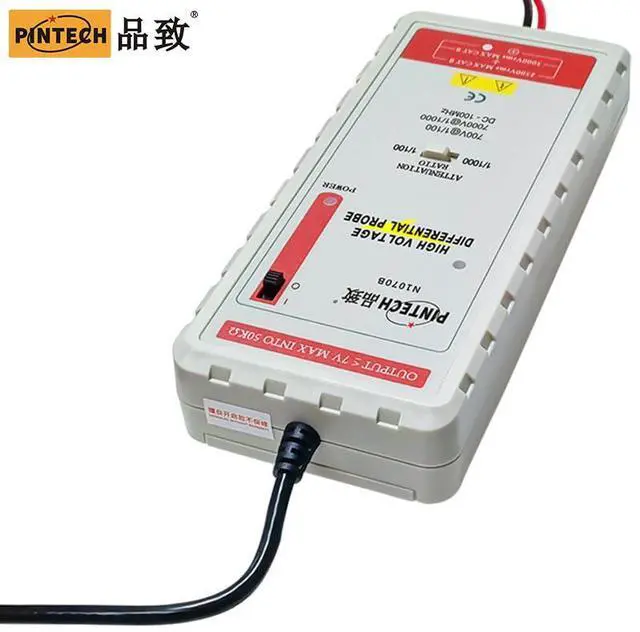
The PINTECH N1070B is a 100MHz high-voltage differential oscilloscope probe built for engineers, technicians, and lab users who need to safely measure differential signals up to 7kVp-p with switchable 1000X/100X attenuation and standard BNC oscilloscope compatibility.
| Attribute | Value |
|---|---|
| Best For | Measuring high-voltage differential signals up to 7 kV p-p on oscilloscopes where high attenuation (1000X/100X) and ±1% typical accuracy are required; usable on bench or in the field with battery or adapter power |
| Model Identifiers | PINTECH N1070B high-voltage differential probe (model N1070B) |
| Electrical Ratings | Maximum differential test voltage 7 kV p-p for high-voltage signal measurement |
| Bandwidth And Rise Time | DC–100 MHz (-3 dB) bandwidth with 3.5 ns rise time, suited to signals within that frequency range |
| Attenuation And Accuracy | Selectable 1000X or 100X attenuation with typical accuracy ±1% |
| Power And Battery | Dual power modes—battery or AC adapter; batteries not included |
| Features And Calibration | Built-in auto-zero feature for baseline correction |
| Interface And Compatibility | Standard BNC output interface for direct connection to common oscilloscope inputs |
| Included Accessories And Warranty | Includes probe host unit, adapter, two probe hooks and manual; PINTECH 1 year warranty |
| Category | Pintech — Test & Measurement Tools |
Q: Should I choose the PINTECH N1070B or a 100MHz differential probe with a lower voltage rating?
A: Choose the PINTECH N1070B when your main requirement is safely measuring much higher differential voltages. Its official positioning centers on 100MHz bandwidth with up to 7kVp-p differential voltage and switchable 100X/1000X attenuation, which fits inverter, power electronics, and other high-voltage bench work better than 700V to 1500V class probes. A lower-voltage 100MHz probe is the better fit when your signals stay well below that range and you want a probe matched more tightly to lower-voltage applications.
Q: Is the PINTECH N1070B a better choice than a higher-bandwidth differential probe?
A: The N1070B is the better choice when 100MHz is already sufficient and high-voltage capability matters more than capturing faster edges. Higher-bandwidth probes from major test-equipment brands are positioned for faster switching transitions, wider frequency content, and more demanding signal-fidelity work. If you routinely debug very fast power devices or need more bandwidth headroom, a 200MHz to 400MHz class differential probe is the stronger fit; if your work is centered on general high-voltage measurement at moderate edge speeds, the N1070B is the more targeted option.
Q: Should I buy the PINTECH N1070B or a compact lower-voltage probe for portability-focused work?
A: Choose the N1070B when bench flexibility and voltage range matter more than a compact probe-head format. Its battery or adapter power options and standard BNC output make it broadly compatible with many oscilloscopes, which is useful in mixed bench setups. A more compact lower-voltage probe can be the better option when you work mainly on crowded boards, lower-voltage switching nodes, or want a smaller physical probe style for easier handling around tight layouts.
Q: Is a standard passive oscilloscope probe enough, or should I get the PINTECH N1070B?
A: Get the PINTECH N1070B when you need to measure floating or high-side high-voltage signals that are not appropriate for a standard ground-referenced passive probe. Community guidance consistently points users toward high-voltage differential probes for this kind of measurement because they are designed for differential input measurement rather than simple ground-referenced probing. A passive probe remains suitable for routine lower-voltage measurements where the circuit reference and probe grounding are straightforward.
Q: Who is this high-voltage differential probe suitable for?
A: This probe is best suited for engineers, technicians, lab users, and advanced electronics users who need to measure floating or high-voltage signals with an oscilloscope. Its 7 kVp-p maximum differential voltage, 100 MHz bandwidth, and differential measurement design make it more appropriate for power electronics, motor drives, inverter work, power-supply development, and other high-voltage bench testing than for casual hobby use.
Q: Will it work with my oscilloscope?
A: It should work with most oscilloscopes that accept a standard BNC-connected probe input, because the product listing states it uses a standard BNC interface and is compatible with oscilloscopes broadly. In practice, buyers should still confirm that their scope's input characteristics and measurement setup match the probe's attenuation modes and operating requirements before purchase.
Q: Is this a good choice for measuring inverter, mains-side, or floating high-voltage signals?
A: Yes, this is the type of probe intended for that job. A high-voltage differential probe is typically chosen when a standard grounded passive probe is not appropriate, especially for floating measurements and higher-voltage power electronics work. The N1070B's 7 kVp-p rating and differential design make it better aligned with inverter, motor-drive, and power-conversion testing than a basic passive probe.
Q: What are the main trade-offs of the 1000X and 100X attenuation modes?
A: The key trade-off is voltage range versus usable bandwidth and signal size. On the N1070B listing, the 1000X mode reaches the full 100 MHz bandwidth, while the 100X mode is listed at DC-40 MHz. That means 1000X is the better fit when you need higher-voltage handling and the highest stated bandwidth, while 100X can be more practical when you want a larger output signal and do not need the full bandwidth.
Q: What should I know before buying this instead of a lower-voltage or simpler probe?
A: Buy this if you specifically need high-voltage differential measurement capability. Compared with simpler or lower-voltage probes, the advantage is safer and more appropriate measurement of floating high-voltage signals. The trade-off is that it is a more specialized tool, and the listing also notes that battery power is supported but the battery is not included, so buyers should plan for power setup as part of the purchase.
Q: Who is this differential probe actually suitable for?
A: This probe is mainly suitable for users who need to measure high-voltage floating signals with a standard BNC oscilloscope, such as mains-referenced power electronics, inverter outputs, motor drives, or other non-ground-referenced circuits. Reddit discussions repeatedly frame differential probes as the safer and more practical choice when a normal grounded probe could short the circuit or damage the scope. It is less suitable if you only measure low-voltage bench signals, because its 100X/1000X attenuation favors high-voltage work over maximum low-level sensitivity.
Q: Is this a good choice if I need to probe high voltage safely with a regular oscilloscope?
A: Yes, if your use case specifically requires a properly rated high-voltage differential probe. The product’s main fit is high-voltage differential measurement up to 7 kVp-p with DC to 100 MHz bandwidth, which aligns with the kind of use cases Reddit users discuss when measuring mains or other hazardous floating voltages. The key decision point is that it is meant for differential high-voltage measurement, not as a general replacement for standard passive probes.
Q: What are the main trade-offs of using this probe instead of a normal 10X probe?
A: The main trade-off is capability versus sensitivity. This model is built for high-voltage differential work, with 100X and 1000X attenuation to keep large signals within oscilloscope input range, but that also makes small signals appear much smaller on screen. Reddit discussions around high-attenuation probes repeatedly note that they are useful when voltage would otherwise overload the scope, while being less convenient for low-voltage measurements where a standard 10X probe is usually easier to use.
Q: Can this probe still be used for low-voltage signals, or is it only for high voltage?
A: It can be used for low-voltage signals, but it is not optimized for that role. Because the probe attenuates by 100X or 1000X, low-voltage waveforms will appear much smaller at the oscilloscope input, which reduces convenience and may limit practical resolution depending on the scope. It makes more sense as a specialized probe for high-voltage floating measurements than as an everyday probe for general low-voltage debugging.



