




 here!
I’m your shopping assistant for PC builds, upgrades, and everything tech.
Got questions? Ask away!
Start a conversation
here!
I’m your shopping assistant for PC builds, upgrades, and everything tech.
Got questions? Ask away!
Start a conversationShipped by GUANGZHOU PINTECH CO LTD




Any questions? Ask CelesteSM will help you find out quickly.
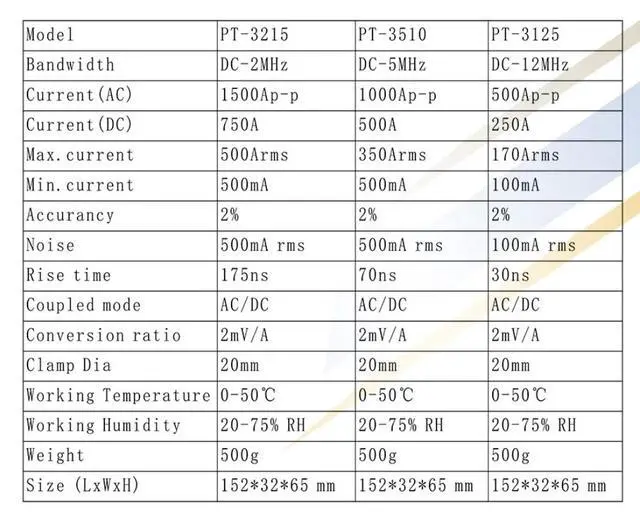
MODEL: PT-3215
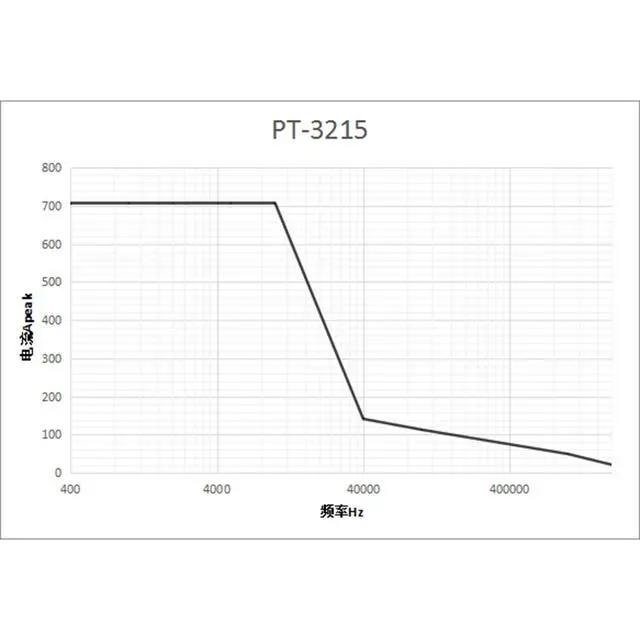
Bandwidth (-3dB): DC-2MHz
AC Current:1500Ap-p
DC Current:750A
Maximum Current: 500A rms
Minimum Test Current: 500mA
Accuracy:±2%
Transformation Ratio: 2mV/A(500:1)
Noise:500mA rms
Rise Time:175ns
Coupling Method:AC/DC
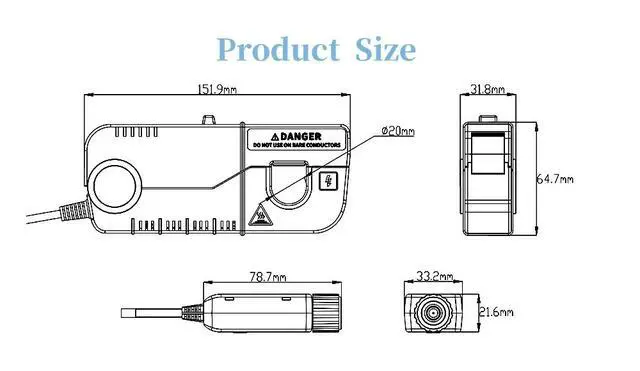
Clamp Dia: 20mm
Weight: 500g/1.1lb
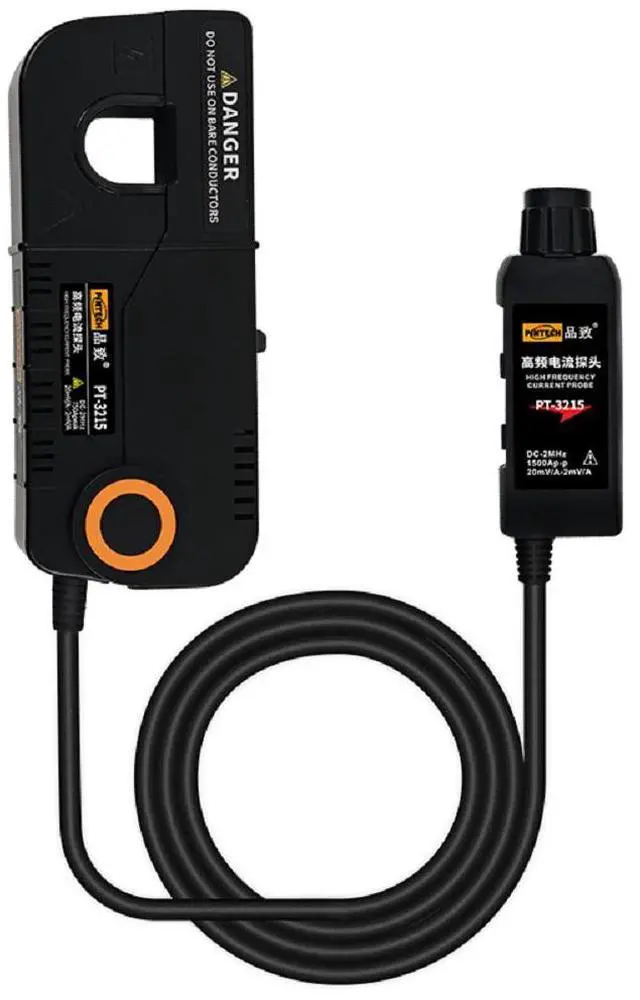
The PINTECH PT-3215 is a high-precision AC/DC current probe for oscilloscopes, designed for engineers, technicians, and electronics labs that need to capture current waveforms up to 1500A with DC-2MHz bandwidth through a standard BNC connection.
| Attribute | Value |
|---|---|
| Best For | Technicians and engineers who need an oscilloscope-compatible current probe for electrical testing and measuring |
| Model Identifiers | PINTECH PT-3215 |
| Measurement And Accuracy | Measurement accuracy ±2% for electrical testing use |
| Certifications And Compliance | CE certified |
| Packaging And Sales | Sold as a single unit (Each) |
Q: Should I choose the PINTECH PT-3215 or a lower-bandwidth AC/DC current probe around 800 kHz to 1 MHz?
A: Choose the PT-3215 when you need more headroom for faster current waveforms, higher di/dt switching edges, or troubleshooting beyond basic power-frequency and low-frequency SMPS work. Official PINTECH materials position the PT-3215 at DC to 2 MHz with 1500 Ap-p capability, which gives it broader waveform visibility than common sub-1 MHz AC/DC probes. A lower-bandwidth probe is the better fit when your signals are slower and budget matters more than capturing higher-frequency detail.
Q: Is the PINTECH PT-3215 better than using a shunt resistor for oscilloscope current measurements?
A: Choose the PT-3215 when you want isolated clamp-style current measurement without inserting a resistor into the circuit. It is the more practical option for observing AC and DC current waveforms on existing conductors with a standard BNC oscilloscope connection. A shunt resistor is still the better choice when cost, very low-current sensitivity, or tightly controlled measurement setups matter more than convenience and non-intrusive probing.
Q: Should I buy the PINTECH PT-3215 or move up to a higher-bandwidth current probe like the PT-3510 or PT-3125?
A: Choose the PT-3215 if your priority is higher current range over maximum bandwidth. In PINTECH's lineup, the PT-3215 is the 1500 Ap-p, DC to 2 MHz option, while higher-tier models trade current capacity for more bandwidth: the PT-3510 moves to 5 MHz at 1000 Ap-p, and the PT-3125 moves to 12 MHz at 500 Ap-p. That makes the PT-3215 the better fit for heavier-current power electronics, while the faster models are more appropriate when waveform detail at higher frequencies matters more than peak current range.
Q: Is the PINTECH PT-3215 a better fit than a PCB-focused magnetic current probe for bench troubleshooting?
A: Choose the PT-3215 when you mainly need clamp-on measurement around wires or conductors in power circuits and want direct oscilloscope compatibility. Community discussions often separate clamp probes from PCB-focused magnetic probes: clamp probes are preferred for straightforward conductor measurements, while PCB-field probes are more useful for tracing current behavior on board traces and in tighter physical spaces. The trade-off is that the PT-3215 is optimized for conventional clamp measurements rather than localized probing on PCB traces.
Q: Will this current probe work with my oscilloscope?
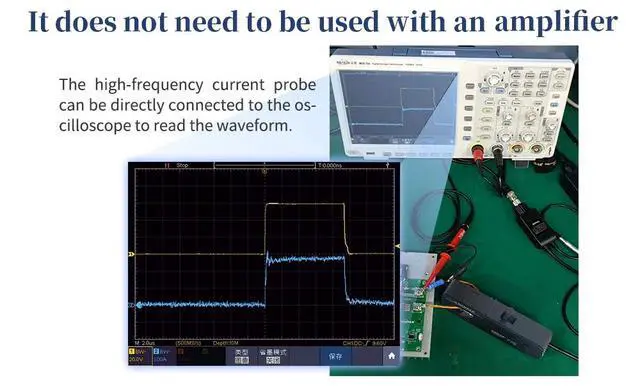
A: Usually yes if your oscilloscope has a standard BNC input, because the PT-3215 uses a BNC connector. The main decision point is not just the connector: active AC/DC current probes typically need external power and can have compatibility limits based on oscilloscope input characteristics. This model is a practical fit for bench oscilloscopes used for current waveform viewing, but buyers should still confirm input impedance requirements and powering/setup needs before purchase.
Q: Who is the PT-3215 best suited for?
A: The PT-3215 is best suited for engineers, technicians, and lab users who need to view both DC and AC current waveforms at relatively high current levels. Its 2 MHz bandwidth and 1500A peak-class positioning make more sense for power electronics, inverter, motor-drive, and industrial troubleshooting than for basic hobby measurements. It is less ideal if your work is mainly low-current precision electronics, where a lower-range and higher-sensitivity probe is usually the better choice.
Q: Is this a good choice for low-current or very small-signal measurements?
A: Not usually. The PT-3215 is optimized for higher current ranges, with a 2 mV/A transfer ratio and a stated minimum test current of 500 mA, so it is better for larger current waveforms than for tiny current changes. If your main use case is sub-amp debugging or very small-signal analysis, a lower-range current probe will generally give better sensitivity and easier interpretation on the oscilloscope.
Q: What are the main trade-offs versus a lower-range or higher-bandwidth current probe?
A: The PT-3215 trades sensitivity and ultra-high-speed performance for higher current capacity and broad general-purpose power measurement use. Compared with a lower-range probe, it is less convenient for small currents. Compared with a higher-bandwidth premium probe, it may miss faster current edges or higher-frequency detail above 2 MHz. Its value is strongest when you need AC/DC measurement, standard BNC connectivity, and high-current coverage without stepping up to much more expensive premium probes.
Q: Can it handle thick conductors and typical power wiring?
A: It can handle many common conductors, but not all. The stated jaw diameter is 0.79 inch (20 mm), which is enough for many single-cable and bench test scenarios, but it may be limiting for thicker bundled wiring, busbar-adjacent setups, or installations with little clearance. Buyers working on industrial power systems should check conductor size and access space before choosing this model.
Q: Is the PT-3215 a good fit for switching power supply and inverter current-waveform work?
A: It can fit general SMPS, motor-drive, rectifier, LED, and new-energy troubleshooting where you need isolated clamp-style current viewing with DC measurement. The main decision point is bandwidth: 2 MHz is usable for many power-electronics waveforms, but community discussions repeatedly note that fast switching edges can justify moving to a higher-bandwidth current probe. Buy it if your work is mostly moderate-frequency power electronics and high current; look higher if edge detail is the priority.
Q: Who is the PT-3215 most suitable for?
A: It is most suitable for users who need an AC/DC oscilloscope current probe for high-current work rather than fine low-current analysis. Based on the product data, its strength is measuring large currents with a standard BNC-connected oscilloscope and clamp jaw access. That makes it more suitable for power electronics, mains-side troubleshooting, large loads, and drive systems than for precision low-current lab measurements.
Q: What are the main trade-offs of choosing the PT-3215?
A: The trade-off is high current range versus measurement detail. The PT-3215 offers DC to 2 MHz bandwidth, 1500 A maximum current in the listing, ±2% stated accuracy, and a standard BNC workflow, which makes it broadly compatible and practical for large-current jobs. The likely downside is that a 2 MHz probe is not the best choice when you need very fine switching-edge detail or lower-current sensitivity from a smaller-range probe.
Q: Is the PT-3215 worth buying if I just need a current probe that works with my existing oscilloscope?
A: It is worth considering if compatibility and high-current AC/DC measurement matter more than premium bandwidth. The standard BNC interface lowers integration risk with typical oscilloscopes, and the included accessories make it closer to a ready-to-use setup. It is a practical choice if you specifically need a clamp current probe and your scope work does not require a much faster probe class.



