




 here!
I’m your shopping assistant for PC builds, upgrades, and everything tech.
Got questions? Ask away!
Start a conversation
here!
I’m your shopping assistant for PC builds, upgrades, and everything tech.
Got questions? Ask away!
Start a conversationShipped by GUANGZHOU PINTECH CO LTD

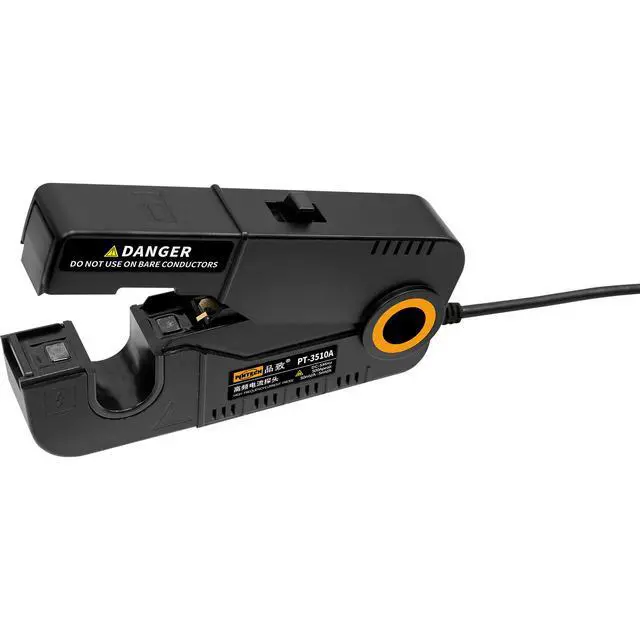
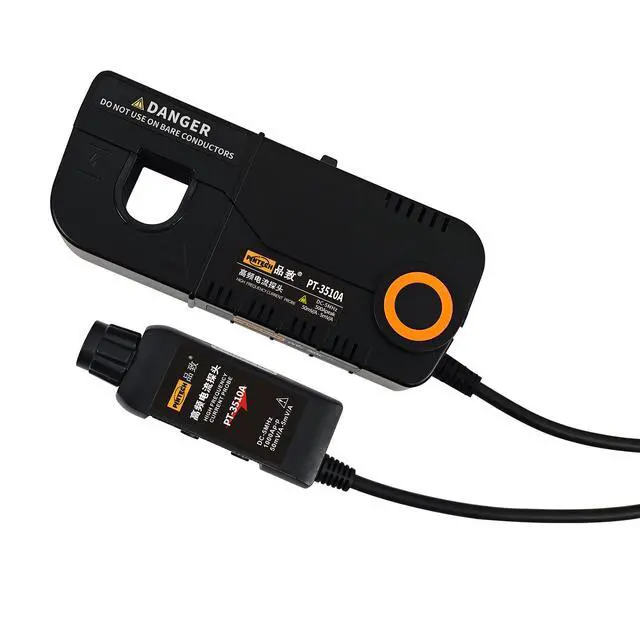
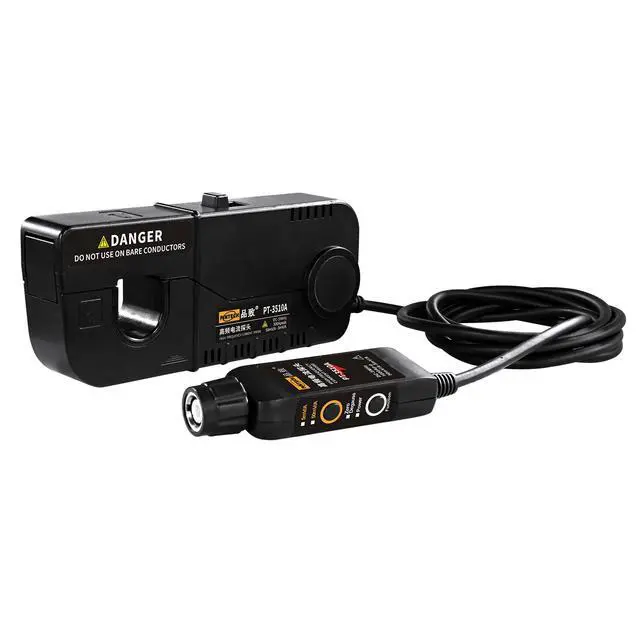



Any questions? Ask CelesteSM will help you find out quickly.
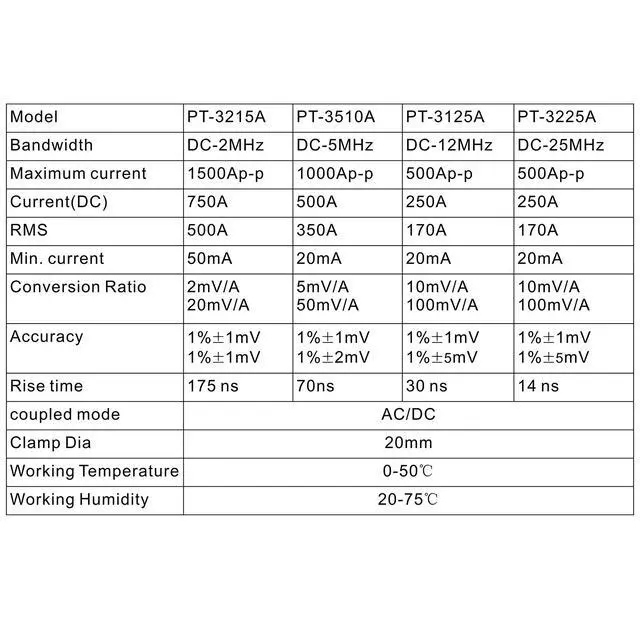
MODEL: PT-3510A
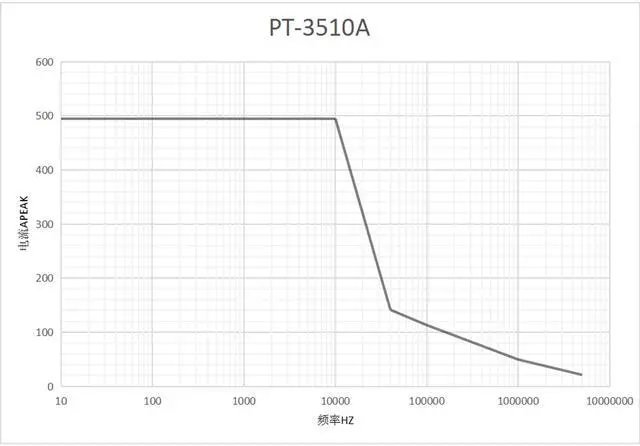
Bandwidth (-3dB): DC-5MHz
AC Current:100Ap-p; 1000Ap-p
DC Current:50A; 500A
RMS: 35mA; 350A
Accuracy: 1%±2mV; 1%±1mV
Transformation Ratio: 50mV/A(20:1); 5mV/A(200:1)
Noise:20mA rms
Rise Time:70ns
Coupling Method:AC/DC
Clamp Dia: 20mm
Weight: 500g/1.1lb
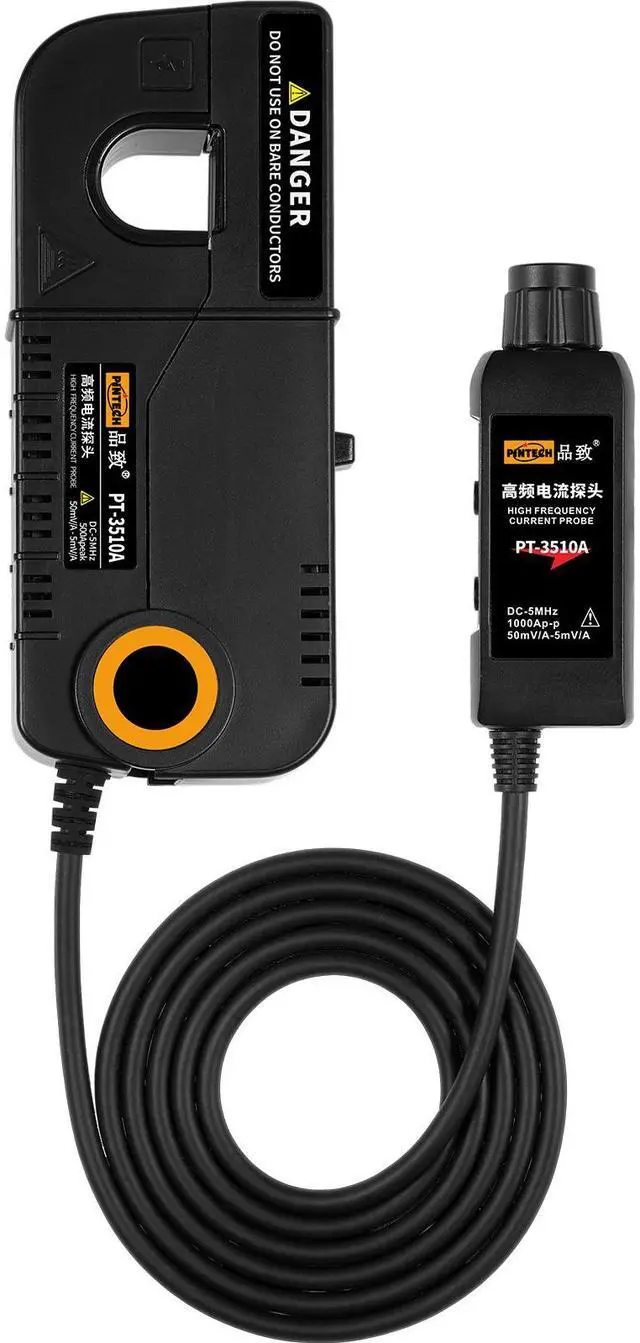
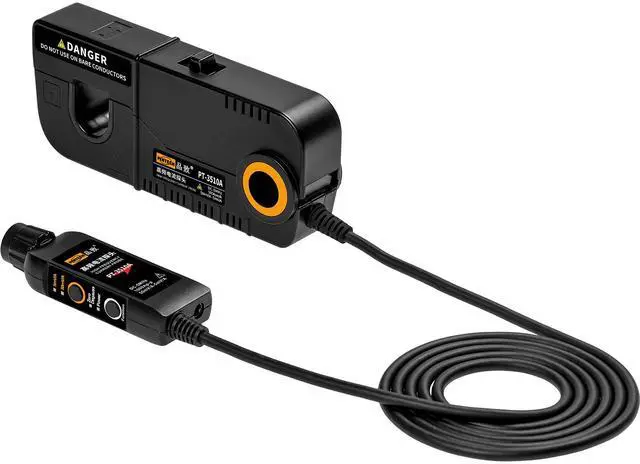
The PINTECH PT-3510A is a high-frequency AC/DC oscilloscope current probe for measuring up to 1000A with 5MHz bandwidth and a standard BNC connection, making it suitable for engineers, technicians, and lab users who need fast current waveform capture on compatible oscilloscopes.
| Attribute | Value |
|---|---|
| Best For | Engineers and technicians needing an oscilloscope-compatible AC/DC current probe for electrical testing and measurement tasks |
| Model Identifiers | PINTECH PT-3510A sold as an individual unit |
| Accuracy And Measurement | Specified accuracy ±1% + 1mV for measured signals |
| Certifications | CE certification |
| Availability | First listed on Newegg March 12, 2026 |
Q: Should I choose the PINTECH PT-3510A or a lower-bandwidth current probe like the Micsig CP2100A for SMPS and inverter work?
A: Choose the PT-3510A when you need to capture higher-frequency current waveforms, larger current ranges, or faster transient behavior. Official specs place the PT-3510A at DC to 5 MHz with up to 1000 A peak and 70 ns rise time, while the Micsig CP2100A is positioned as a DC to 800 kHz, 100 A class probe. Community discussion around power-supply debugging also consistently notes that switching waveforms often need more bandwidth than entry-level current probes provide. The trade-off is that lower-bandwidth probes can still be a practical fit for basic current viewing on lower-frequency power circuits when extreme current range and faster edges are not required.
Q: Is the PINTECH PT-3510A a better fit than a 100 A or 200 A current probe?
A: The PT-3510A is the better fit when your measurement priority is high current headroom rather than small-current sensitivity. Its official positioning is a 1000 A peak AC/DC current probe with dual conversion ratios, which makes it more suitable for large motors, inrush testing, power distribution, and higher-current converter work. A 100 A or 200 A class probe is usually the better choice when the main goal is measuring lower currents with more sensitivity and finer scaling. The trade-off is straightforward: the PT-3510A favors range and overload margin, while lower-range probes generally favor detail at smaller currents.
Q: Should I buy the PINTECH PT-3510A or move up to a premium Tektronix current probe?
A: Choose the PT-3510A when you need an AC/DC clamp current probe with standard BNC connectivity, broad oscilloscope compatibility, and MHz-class bandwidth for general lab and power-electronics work. Move up to a premium Tektronix current probe when you need much higher bandwidth, tighter integration with compatible Tek oscilloscopes, and advanced probe controls such as automatic scaling and degauss support through TekVPI. The trade-off is that Tektronix probes are positioned for higher-performance workflows, while the PT-3510A is better aligned with users who prioritize wider compatibility and high-current coverage over deep platform integration.
Q: Is the PINTECH PT-3510A better for performance-first bench testing or for portable field use?
A: The PT-3510A makes more sense for performance-first bench testing than for lightweight portable use. Its official design centers on high-current AC/DC waveform measurement, 5 MHz bandwidth, and a powered probe body with clamp jaws, which fits oscilloscope-based diagnostics on the bench. For field use, buyers often prioritize smaller, lighter probes or USB-powered lower-range models that are easier to carry and deploy. The trade-off is that the PT-3510A gives you more measurement headroom and bandwidth, while portability-focused options usually give up some range or performance for convenience.
Q: Will this probe work with my oscilloscope, or does it need a special interface?
A: It is most suitable for oscilloscopes that accept a standard BNC input and let you apply manual scaling for current probes. The PT-3510A is described with a standard BNC connector and is positioned as compatible with oscilloscopes, but buyers should still confirm their scope can use an external current probe correctly. In comparable products, BNC compatibility is common, but some probes also require matching scaling, bandwidth support, or an external power method. This makes the PT-3510A a better fit for bench scopes and users who already understand probe setup than for first-time buyers expecting automatic probe recognition.
Q: Who is this current probe best for?
A: This probe is best for technicians, power electronics users, service labs, and advanced hobbyists who need to view AC and DC current waveforms on an oscilloscope without breaking the circuit. Its stated 1000A maximum current, DC-5MHz bandwidth, and 1% accuracy make it more appropriate for electrical measurement and waveform analysis than for basic household troubleshooting. It is less suitable for casual users who only need simple go/no-go current checks, because a clamp meter is usually easier for that job.
Q: Is this a good choice for low-current precision work, or is it mainly for high-current jobs?
A: It is mainly a high-current oscilloscope probe. The PT-3510A's headline spec is 1000A maximum current, which makes it better matched to inverter, motor drive, power supply, industrial, and automotive high-current waveform work than to very small-signal current analysis. If your main use is low-current debugging, a lower-range current probe often gives better sensitivity and easier interpretation. This is a common trade-off across current probes: higher current capacity usually comes with less focus on very small current detail.
Q: What are the main trade-offs versus a premium current probe from Fluke or Keysight?
A: The PT-3510A appears to offer strong headline specs for current range and bandwidth at a marketplace price point, but the trade-off is usually ecosystem depth and documentation. Premium probes from Fluke and Keysight more clearly document scope compatibility, scaling behavior, bandwidth limits, and use cases across different current ranges. A buyer choosing the PT-3510A should weigh its value and broad compatibility against the lower confidence that can come with less-established listing detail, support material, and accessory ecosystem.
Q: Can it handle large cables and common bench testing setups?
A: It should fit many typical conductors used in bench and field electrical testing, but not every cable. The listed jaw diameter is 0.79 inch, so buyers should compare that opening to the actual outside diameter of the conductor or cable they plan to clamp. For decision-making, this means it is likely practical for many single-conductor measurement tasks, but it may be limiting on thicker bundled cables or installations where conductor access is tight.
Q: Who is this current probe suitable for?
A: This probe is best suited to users who need to view current waveforms on an oscilloscope, especially for power electronics, ripple, shunt, or mixed AC/DC current measurements. It is more appropriate for bench diagnostics and engineering work than for basic multimeter-only troubleshooting. The main fit is users who specifically need a clamp-style AC/DC current probe with BNC scope output and up to 5 MHz bandwidth.
Q: Is the PT-3510A a good choice if I need to measure both AC and DC current on a scope?
A: Yes, if your requirement is oscilloscope-based current measurement for both AC and DC signals. The product data says it measures DC to 5 MHz and supports up to 1000 A with a standard BNC connection, which matches the common use case discussed in forums where users want current waveforms rather than only voltage or steady-state readings. It is less suitable if you only need simple current checks, because a scope current probe is more specialized than a standard meter.
Q: What are the main trade-offs of buying this probe instead of a basic oscilloscope probe?
A: The main trade-off is specialization. A current probe like this is designed to measure current directly, while a standard oscilloscope probe is mainly for voltage signals. That makes the PT-3510A more useful for current waveform analysis, but also less universal and typically less necessary for beginners doing general-purpose scope work. Buyers should choose it when current measurement is the actual need, not as a replacement for ordinary voltage probes.
Q: Is 5 MHz bandwidth enough for most users considering this probe?
A: It depends on the job. A 5 MHz current probe is generally enough for many power, switching, ripple, and low-to-mid frequency waveform measurements, which aligns with how engineers discuss similar use cases online. It is not the right choice if your work depends on capturing very fast current edges or higher-frequency RF behavior, where higher-bandwidth probes are preferred.
Q: Is this a good buy for a beginner setting up a first oscilloscope kit?
A: Usually only if current measurement is a clear requirement from the start. Community discussions around first-scope purchases focus more on getting general-purpose voltage probes first, because they are more broadly useful. The PT-3510A makes more sense as a targeted add-on for users who already know they need to observe AC/DC current waveforms up to 1000 A.


