




 here!
I’m your shopping assistant for PC builds, upgrades, and everything tech.
Got questions? Ask away!
Start a conversation
here!
I’m your shopping assistant for PC builds, upgrades, and everything tech.
Got questions? Ask away!
Start a conversationShipped by GUANGZHOU PINTECH CO LTD

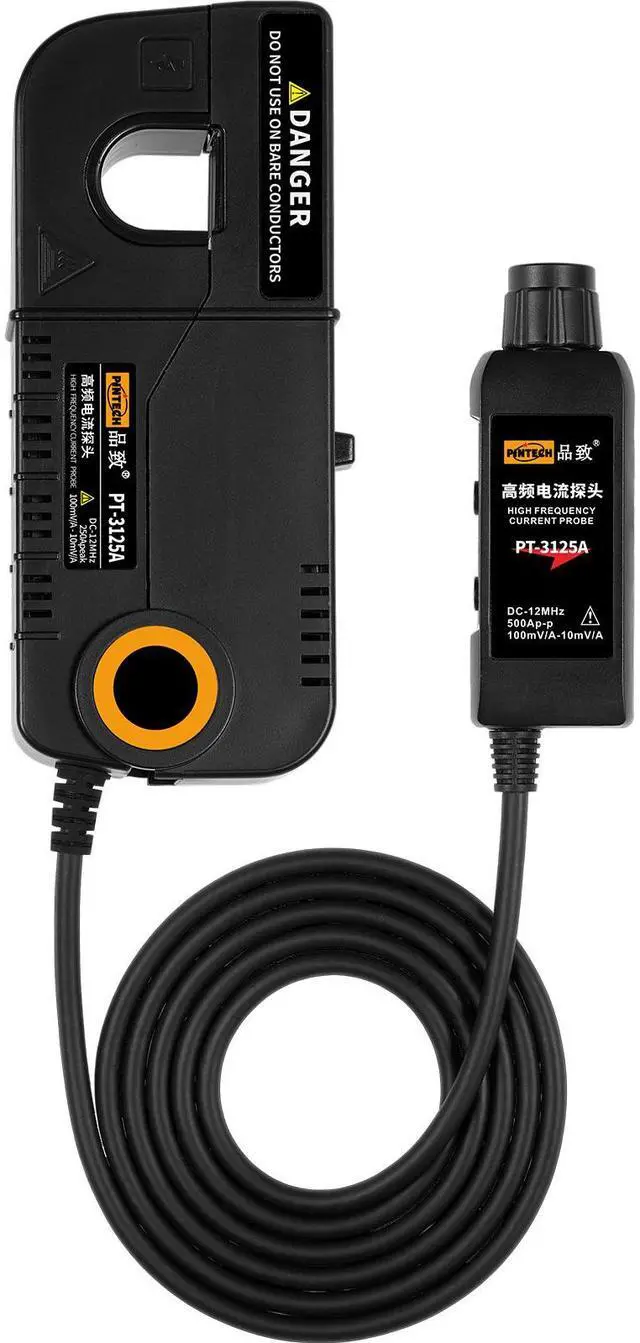
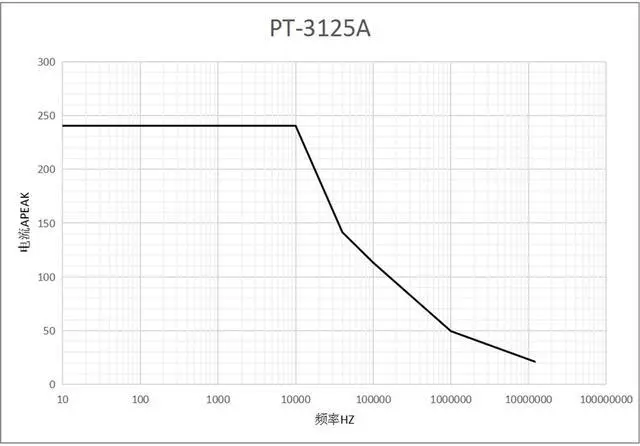
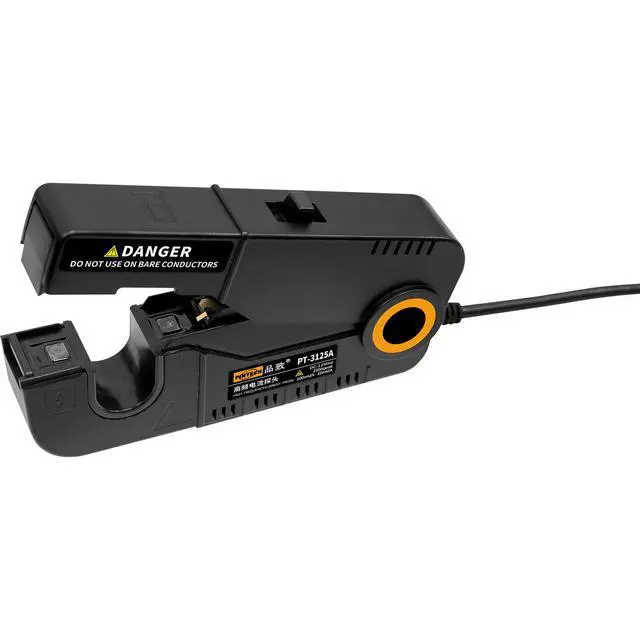
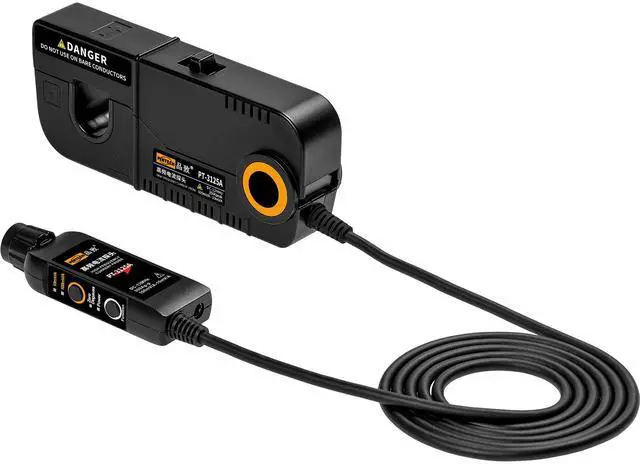
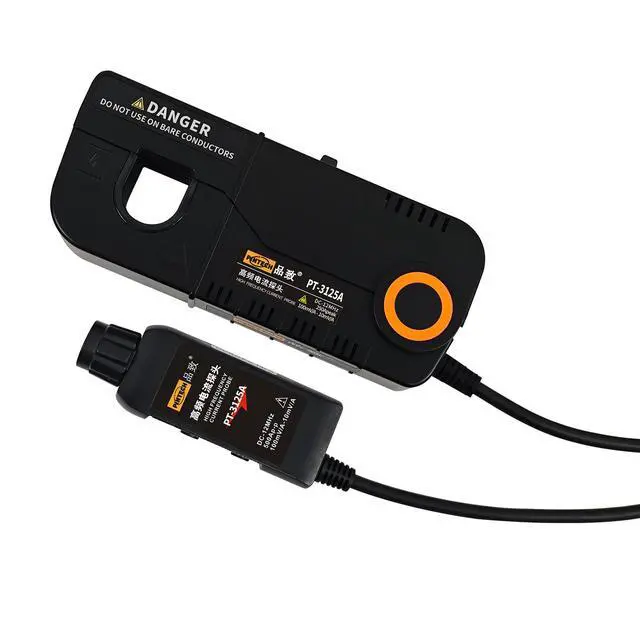
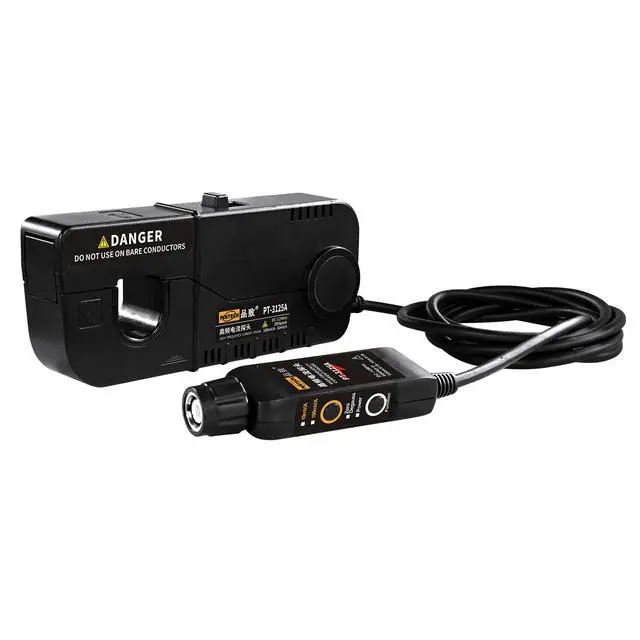
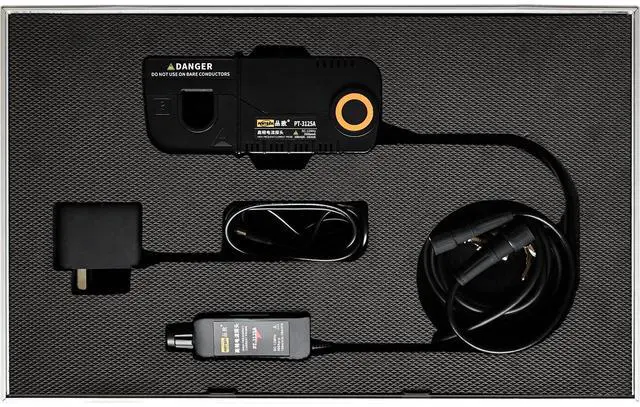



Any questions? Ask CelesteSM will help you find out quickly.
MODEL: PT-3125A
Bandwidth (-3dB): DC-12MHz
AC Current:50Ap-p; 500Ap-p
DC Current:25A; 250A
RMS: 17A; 170A
Accuracy: 1%±5mV; 1%±1mV
Transformation Ratio: 100mV/A(10:1); 10mV/A(100:1)
Noise:20mA rms
Rise Time:30ns
Coupling Method:AC/DC
Clamp Dia: 20mm
Weight: 500g/1.1lb
The PINTECH PT-3125A is a high-frequency AC/DC oscilloscope current probe for measuring up to 500A with 12MHz bandwidth and ±1% accuracy, making it well suited for engineers, electronics technicians, and lab users who need fast, accurate current waveform capture on standard BNC-equipped oscilloscopes.
| Attribute | Value |
|---|---|
| Best For | Technicians and engineers needing an oscilloscope current probe for electrical testing and measuring, suitable for AC and DC current measurement and for use with oscilloscopes that accept standard BNC-style probe connections |
| Model Identifiers | PINTECH PT-3125A (sold each) |
| Type And Compatibility | Electrical Testing & Measuring device — oscilloscope current probe intended to measure current signals and connect to oscilloscopes |
| Accuracy And Certification | ±1%+1mV accuracy; CE certified |
Q: Should I choose the PINTECH PT-3125A or a lower-bandwidth 2MHz to 5MHz current probe?
A: Choose the PT-3125A when you need to see faster current edges, switching behavior, or higher-frequency ripple that a 2MHz to 5MHz probe may smooth out. Its stated DC to 12MHz bandwidth places it above common lower-tier clamp probes in the same family, while still keeping a 500A class measurement range. A 2MHz to 5MHz model is the more practical fit when your work is focused on slower power waveforms and you want to prioritize current range or cost over bandwidth.
Q: Is the PT-3125A a better fit than a higher-current 2MHz probe like the PT-3215A?
A: Choose the PT-3125A if waveform detail matters more than maximum current headroom. In PINTECH's lineup, the PT-3125A is positioned as the higher-bandwidth 12MHz option, while models such as the PT-3215A trade bandwidth down to about 2MHz for higher current capability. That makes the PT-3125A the stronger choice for analyzing switching transients and ripple, while the higher-current alternative is the better fit for larger conductors and heavier current measurements where top-end bandwidth is less important.
Q: Should I buy the PT-3125A or a premium brand AC/DC current probe from Tektronix or HIOKI?
A: Choose the PT-3125A when you want an AC/DC clamp probe with oscilloscope-friendly BNC output and mid-range bandwidth for bench diagnostics without stepping into premium pricing tiers. Choose a higher-end Tektronix or HIOKI probe when you need stronger published ecosystem support, tighter documented performance, or broader confidence in calibration and long-term lab workflows. The trade-off is that premium models often justify their position with more established documentation and service infrastructure, not just raw bandwidth.
Q: For power electronics work, should I use the PT-3125A or a Rogowski coil?
A: Choose the PT-3125A when you need to measure both DC and AC current on an oscilloscope. Community and technical references consistently treat Rogowski coils as AC-only tools, which makes them useful for flexible, high-current switching measurements but not for DC content. The PT-3125A is the better fit when your waveform includes DC offset, startup behavior, or mixed DC plus ripple. A Rogowski coil is the better fit when flexibility around large conductors matters more than DC measurement.
Q: Is the PT-3125A better than using a current shunt with an oscilloscope?
A: Choose the PT-3125A when you want a non-intrusive clamp-style measurement that does not require inserting a shunt into the current path. That is especially useful for troubleshooting live power circuits or comparing current waveforms quickly across setups. A shunt-based approach can still be the better fit when budget matters most or when you can tolerate inserting measurement hardware into the circuit and managing the voltage-drop trade-off.
Q: Will this current probe work with most oscilloscopes?
A: Usually yes, if your oscilloscope accepts a standard BNC input and can display a voltage signal from an external current probe. The PT-3125A is described as using a standard BNC connector, so it is broadly compatible at the connection level. The main trade-off is that universal BNC fit does not guarantee automatic scaling or probe recognition, so users may need to set volts-per-amp manually on the oscilloscope.
Q: Who is the PT-3125A best suited for?
A: It is best suited for users who need to view current waveforms on an oscilloscope, including electronics troubleshooting, power analysis, inverter or motor work, and bench testing where both DC and AC current matter. It is less suited for casual household use because a 12 MHz, 500 A current probe is a specialized measurement tool rather than a general multimeter accessory.
Q: Is this a good choice if I need to measure both DC and AC current waveforms?
A: Yes. The PT-3125A is positioned for both DC and AC current measurement, which is a key decision point buyers repeatedly look for when comparing current probes. That makes it more versatile than AC-only clamp solutions when you need to inspect ripple, startup behavior, switching activity, or mixed DC-plus-AC waveforms on a scope.
Q: What are the main trade-offs versus a lower-cost or lower-bandwidth current probe?
A: The PT-3125A’s value is higher current capacity and wider bandwidth, which makes it more useful for capturing fast-changing current waveforms than basic low-bandwidth probes. The trade-offs are that specialized current probes are typically more expensive, may require more setup knowledge, and still need users to confirm jaw size, sensitivity, and scope scaling for their exact application.
Q: Is this overkill for basic bench work or beginner electronics?
A: For many beginners, yes. If you only need occasional low-current checks, a multimeter or a simpler probe may be more practical. The PT-3125A makes more sense when your decision depends on seeing waveform shape, transient behavior, or higher-current switching events that simpler tools cannot show clearly.
Q: Is the PT-3125A a sensible choice for general oscilloscope current measurements?
A: Yes, if you need a clamp-style current probe for both DC and AC measurements and your work fits within its stated 500A range and 12MHz bandwidth. It is better suited to general bench diagnostics, power electronics troubleshooting, and waveform observation than to buyers who need very high-bandwidth switching-edge analysis or brand-verified lab-grade ecosystem support.
Q: Who is the PT-3125A most suitable for?
A: It is most suitable for users who need to view current waveforms directly on an oscilloscope without inserting a shunt, especially for repair, inverter, motor, battery, and power-supply work. It is less suitable for users doing advanced high-speed SMPS development where probe bandwidth and mechanical loading on the circuit are more critical.
Q: Is 12MHz enough bandwidth for this kind of current probe?
A: It depends on the job. For many lower-to-mid-frequency current waveform checks, 12MHz is comfortably above the sub-megahertz probes often discussed by hobbyists. But if you need to inspect fast switching edges, ringing, or modern high-speed SMPS behavior in detail, users repeatedly treat bandwidth as a key limitation, so 12MHz may still be a trade-off rather than a full solution.
Q: What are the main trade-offs of buying the PT-3125A?
A: The main trade-offs are bandwidth, physical jaw size, and confidence in measurement context versus premium probes. Its 500A range and clamp form factor are practical advantages, but a 0.79-inch jaw opening may not fit every conductor arrangement, and buyers doing precision switching analysis may still prefer higher-bandwidth or more established professional probe families.



