




 here!
I’m your shopping assistant for PC builds, upgrades, and everything tech.
Got questions? Ask away!
Start a conversation
here!
I’m your shopping assistant for PC builds, upgrades, and everything tech.
Got questions? Ask away!
Start a conversationShipped by GUANGZHOU PINTECH CO LTD

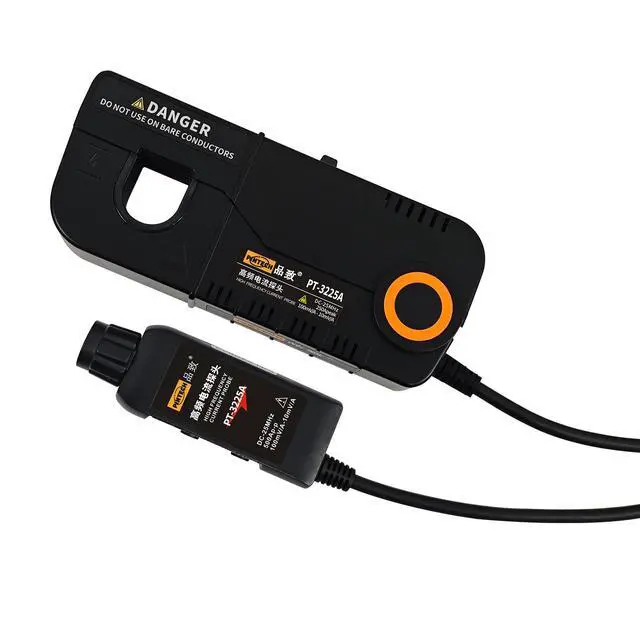
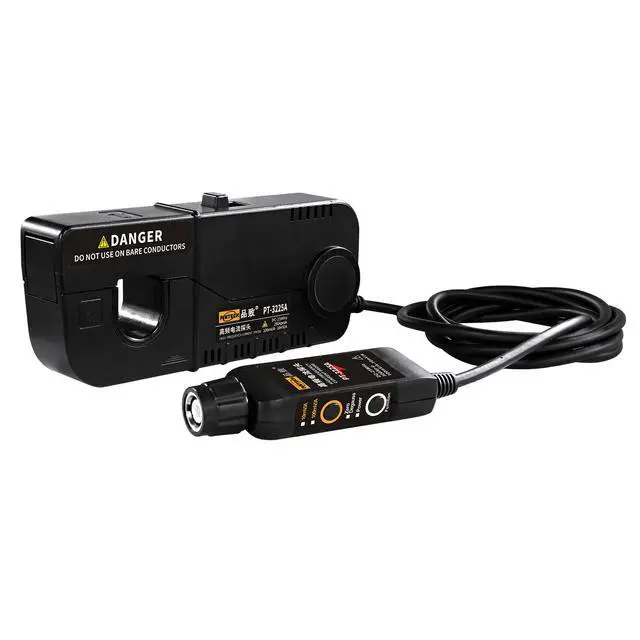



Any questions? Ask CelesteSM will help you find out quickly.
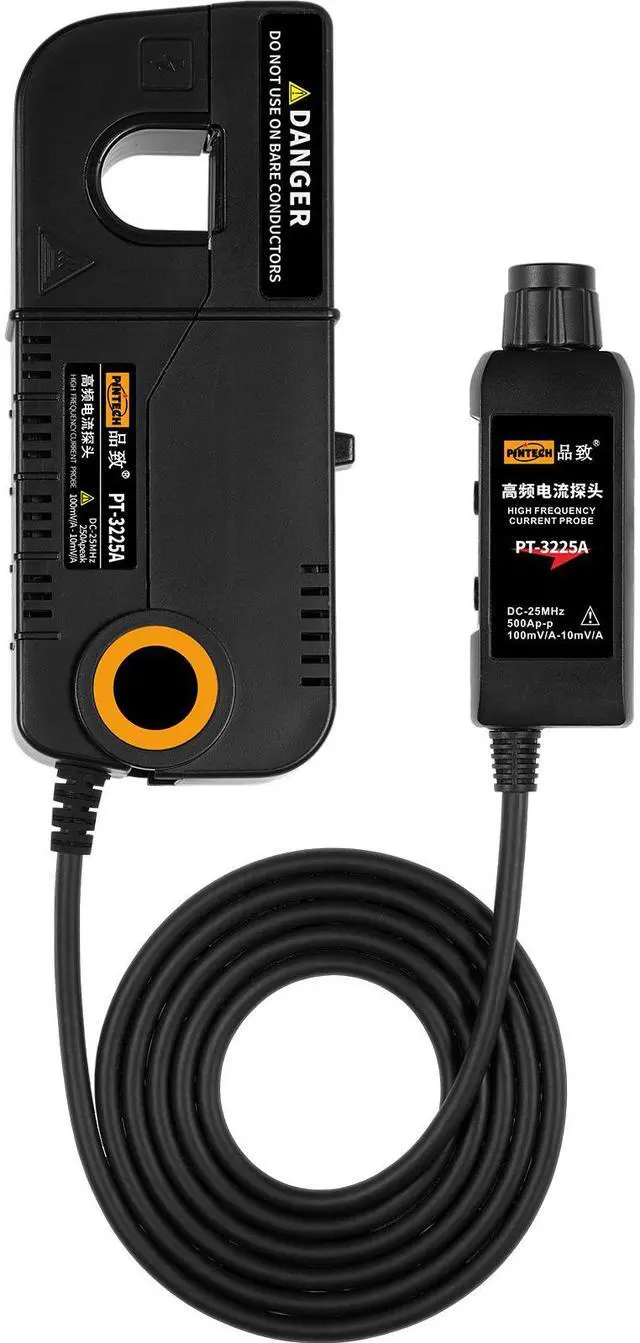
MODEL: PT-3225A
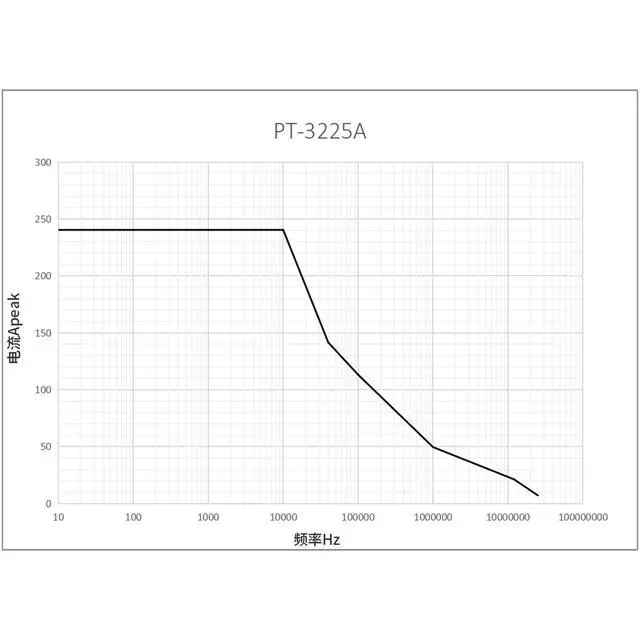
Bandwidth (-3dB): DC-25MHz
AC Current:50Ap-p; 500Ap-p
DC Current:25A; 250A
RMS: 17A; 170A
Accuracy: 1%±5mV; 1%±1mV
Transformation Ratio: 100mV/A(10:1); 10mV/A(100:1)
Noise:20mA rms
Rise Time:14ns
Coupling Method:AC/DC
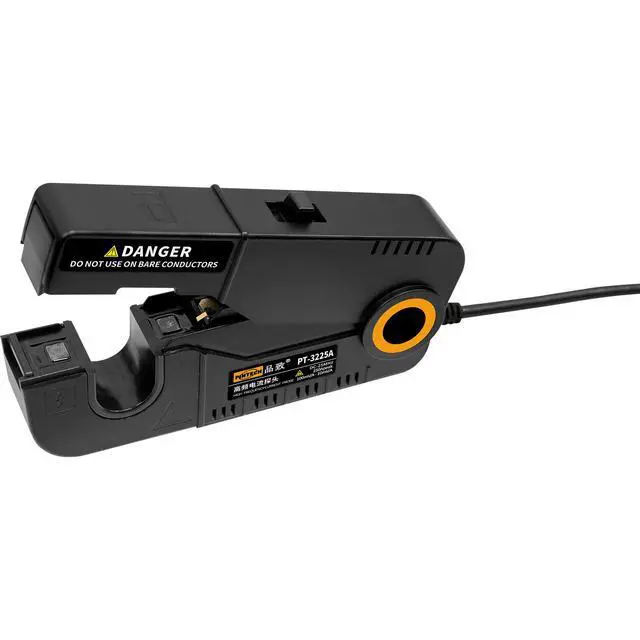
Clamp Dia: 20mm
Weight: 500g/1.1lb
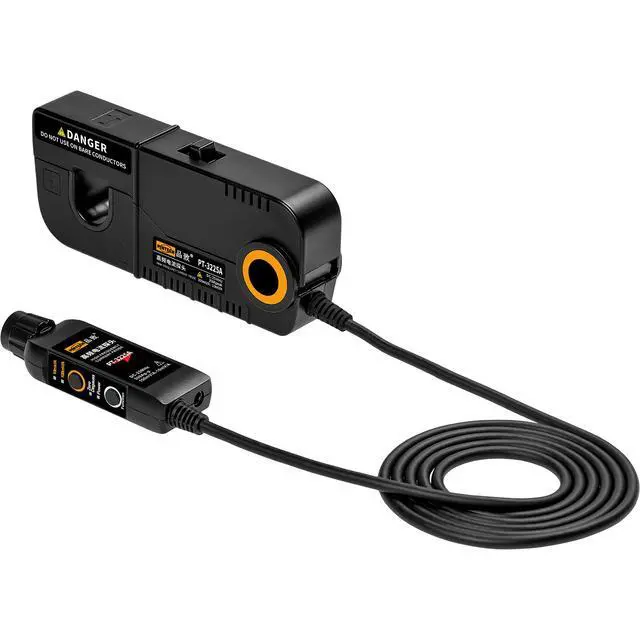
The PINTECH PT-3225A is a high-frequency AC/DC current probe for oscilloscopes, built for measuring current waveforms up to 500A with DC-25MHz bandwidth and a standard BNC connection. It is best suited for electronics engineers, lab technicians, and power diagnostics users who need accurate current capture on compatible oscilloscopes.
| Attribute | Value |
|---|---|
| Best For | AC and DC current measurement with oscilloscopes and general electrical test setups; suited for lab troubleshooting and field diagnostics |
| Model Identifiers | PINTECH PT-3225A |
| Product Type | Electrical testing and measuring equipment |
| Accuracy | ±1%+1mV accuracy for measured signals |
| Certifications | CE |
| Selling Unit | Sold as each |
Q: Should I choose the PINTECH PT-3225A or a 2 MHz high-current probe for inverter and switching power measurements?
A: Choose the PT-3225A when you need to see faster current edges and higher-frequency switching detail. Official PINTECH materials place the PT-3225A at DC to 25 MHz with 500 A peak capability, while lower-bandwidth high-current alternatives in the same family are typically around 2 MHz. In practice, that makes the PT-3225A the better fit for waveform analysis on modern power electronics, while a 2 MHz probe is the more practical choice when current range matters more than bandwidth.
Q: Is the PT-3225A a better choice than the lower-tier PINTECH PT-3215A?
A: The PT-3225A is the better choice when measurement bandwidth is the priority. PINTECH lists the PT-3225A at 25 MHz with faster rise time, while the PT-3215A is a lower-bandwidth model oriented more toward higher current handling. That means the PT-3225A fits engineers who need cleaner visibility into switching behavior, and the PT-3215A fits buyers who mainly need more current headroom with less emphasis on high-frequency detail.
Q: How does the PT-3225A compare with a Tektronix TCP303-class setup?
A: The PT-3225A is the simpler option if you want a standalone BNC-connected current probe for general oscilloscope use. A Tektronix TCP303-class solution is part of a probe-plus-amplifier ecosystem and is positioned for lab environments already using compatible Tektronix current probe systems. Spec-wise, the TCP303 path is rated to 15 MHz with 500 A peak, while the PT-3225A is positioned at 25 MHz and 500 A peak, so the PT-3225A is easier to justify when interface simplicity and higher stated bandwidth matter more than staying inside a Tektronix accessory platform.
Q: Should I buy the PT-3225A or move up to a higher-end 50 MHz current probe system?
A: Move up to a 50 MHz-class system when your measurements depend on even faster transient fidelity, very short rise times, or you already work inside a premium probe ecosystem. The PT-3225A is the more balanced choice when 25 MHz bandwidth and 500 A peak coverage already match the application, because it avoids the complexity of amplifier-based platforms while still covering many power electronics debug tasks.
Q: Is the PT-3225A better for bench testing than a more portable flexible current probe?
A: Yes, if your priority is oscilloscope waveform analysis rather than just fitting around large conductors. The PT-3225A is a rigid-jaw AC/DC current probe designed for direct scope measurement with stated 25 MHz bandwidth and 1% accuracy, which makes it more suitable for repeatable bench capture of current waveforms. Flexible probes are often easier to route around crowded conductors, but they are typically chosen for convenience and range rather than this level of high-frequency oscilloscope work.
Q: Will this work with a standard oscilloscope, or does it need a special interface?
A: It is intended for standard oscilloscopes that accept a BNC input, because the PT-3225A outputs through a standard BNC connector. The main buying check is not just the connector: your oscilloscope also needs suitable input settings and enough bandwidth to benefit from a 25 MHz current probe. Compared with some higher-end current probes that require proprietary probe interfaces or external amplifiers, a BNC model is easier to use across mixed-brand benches.
Q: Who is this current probe best suited for?
A: This probe is best suited for users who need to view both DC and AC current waveforms on an oscilloscope, especially in power electronics, motor control, inverter, and switching waveform work where current shape matters, not just RMS value. Its 500 A maximum range and 25 MHz bandwidth make it more appropriate for bench diagnostics and development work than for casual household electrical checks.
Q: Is this a better buy than a lower-bandwidth current clamp for general troubleshooting?
A: It is a better fit only if you need to capture fast current transients. The PT-3225A is specified for DC to 25 MHz, which is far above the 100 kHz to 300 kHz range common in many lower-cost current probes. For slow power checks or basic troubleshooting, a lower-bandwidth probe can be more cost-effective. For switching edges, pulse behavior, and waveform detail, the higher-bandwidth PINTECH design is the stronger choice.
Q: Can this replace a multimeter clamp meter for current measurement?
A: Not fully. This probe is for oscilloscope-based waveform viewing, so its strength is showing how current changes over time in both DC and AC circuits. A clamp meter is usually better for quick field readings and simple numeric measurements. This probe is the better tool when you need timing, ripple, inrush, switching behavior, or pulse shape rather than just a current number.
Q: Are there any practical trade-offs to know before buying?
A: Yes. The main trade-offs are cost, bench-oriented use, and fit for the job. A 25 MHz, 500 A AC/DC probe is specialized equipment, so it makes sense when you need high-current waveform analysis and want better transient visibility than budget probes provide. It is less compelling if your work is mostly low-current, low-frequency, or simple maintenance measurements. Buyers should also confirm jaw size, current range, and oscilloscope compatibility before purchase.
Q: Is a 25 MHz, 500 A current probe worth buying for switch-mode power supply and power electronics work?
A: It is mainly suitable when you need to view fast current waveforms in power electronics, not just average current. Reddit discussions around oscilloscope current probes repeatedly focus on bandwidth as the key buying factor for SMPS work. A 25 MHz probe is far above the low-MHz range often debated for hobby and bench use, so it is better aligned with switching waveform analysis. The trade-off is that this class of probe is more specialized than a basic current clamp and only makes sense if your measurements actually need oscilloscope-level bandwidth.
Q: Who is the PT-3225A most suitable for?
A: It is best suited to users who already have an oscilloscope and need direct current waveform measurement on wires or conductors, especially in power electronics, inverter, motor drive, or SMPS troubleshooting. Based on the product data, its strengths are AC/DC measurement, 25 MHz bandwidth, and a standard BNC connection. It is less suitable for beginners who only need general voltage probing or simple current checks, because a dedicated current probe is a more specialized tool.
Q: What are the main trade-offs of this probe compared with lower-bandwidth or simpler current measurement options?
A: The main trade-off is specialization versus simplicity. Reddit discussions show buyers often weigh whether extra bandwidth gives real value for their work. A probe like this offers faster waveform capture and AC/DC capability, but it is a more deliberate purchase than a lower-bandwidth current probe or a basic clamp meter. If your work does not require observing switching edges, ripple, or transient current behavior, the extra capability may be unnecessary.
Q: Will it work with most oscilloscopes?
A: It should work with most oscilloscopes that accept a standard BNC-connected external probe, because the product information states it uses a standard BNC connector. Community discussions around oscilloscope probe compatibility commonly treat BNC as the normal physical interface. Buyers should still confirm that their scope's input range, scaling workflow, and bandwidth are appropriate for using an external current probe.
Q: Is this a good choice if I only need occasional general-purpose electrical measurements?
A: Usually no. This probe is better for users with a defined need to inspect current waveforms, not for occasional general measurement. The product data emphasizes high-frequency AC/DC current capture and oscilloscope use, which makes it a niche tool rather than a broad replacement for a multimeter or simple clamp meter. For infrequent basic current checks, the capability may exceed the actual need.


