




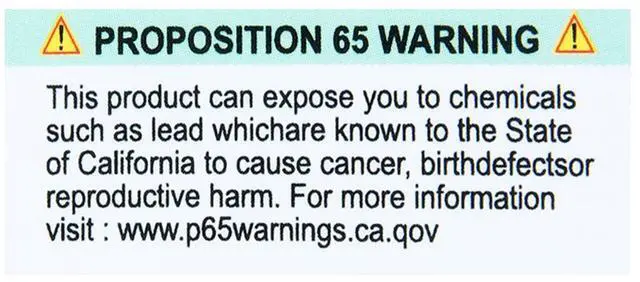




WARNING: This product can expose you to chemicals including Lead which is known to the State of California to cause cancer and birth defects or other reproductive harm. Remind to wash your hands after using it.
Specification
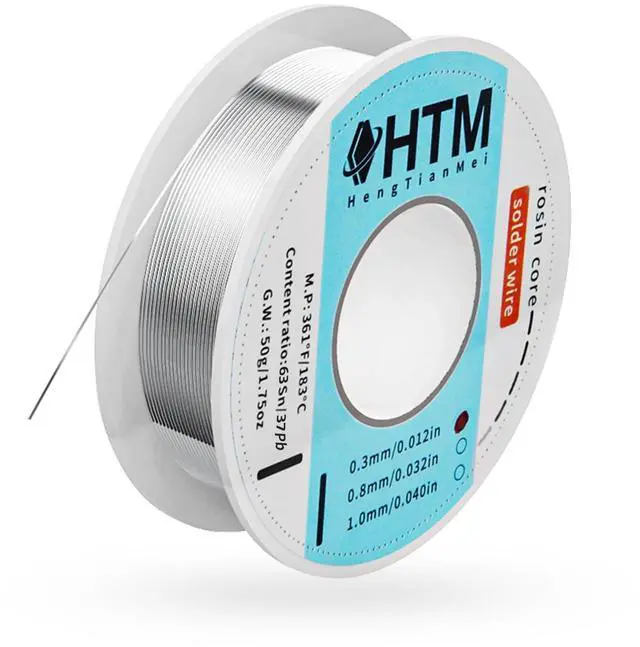
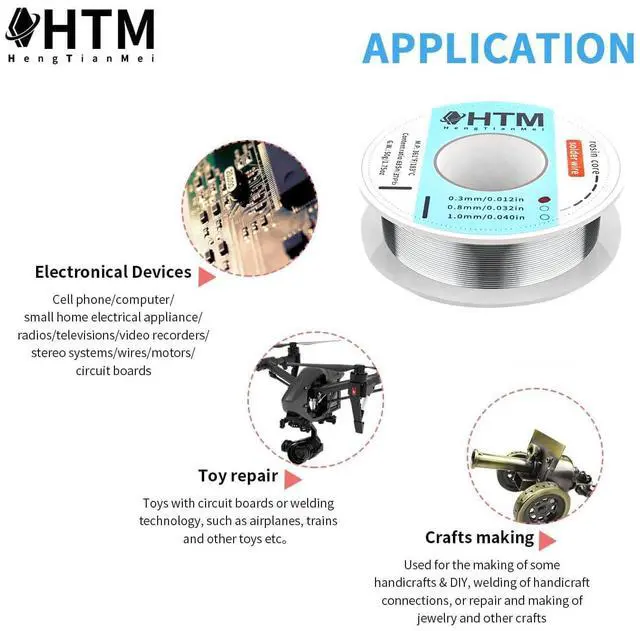
HTM 63/37 solder wire
Features
1. Built-in rosin core
2. Good fluidity
3. Low melting point (361°F/183°C)
4. Solder joints are fuller and stronger without impurities
5. Good use experience

What is the use of rosin cores?
This solder wire contains a rosin core, so it helps its fluidity and use effect, so that when soldering tin drops can quickly stick to the circuit board, and the solder joint will be very full.
Because the rosin core as a flux its melting point is lower than the solder material, weight, viscosity, and surface tension are smaller than the solder wire, so when soldering, the flux melts first and quickly covers the surface of the solder, playing a role in isolating the air to prevent oxidation of the metal surface.
And can react with the solder and the surface oxide film of the metal to be soldered under the high temperature of welding, so that it melts and restores the pure metal surface.
Why is Sn63-Pb37 (63/37) solder wire better for use?
Because the solder joints soldered with solder wire are bee-like under the microscope, and as the tin (Sn) content decreases, the holes will become larger and the solidity of the solder joints will gradually decrease.
And as the lead (Pb) content rises the rate of dross generation also gradually increases, and the brightness of the solder joint gradually decreases.
There are also many customers who use lead-free solder wire for the sake of their health, but the melting point of lead-free solder wire is higher (above 200°C/392°F), and the difficulty of pure tin soldering rises, and the fluidity is not strong and the diffusivity is poor.
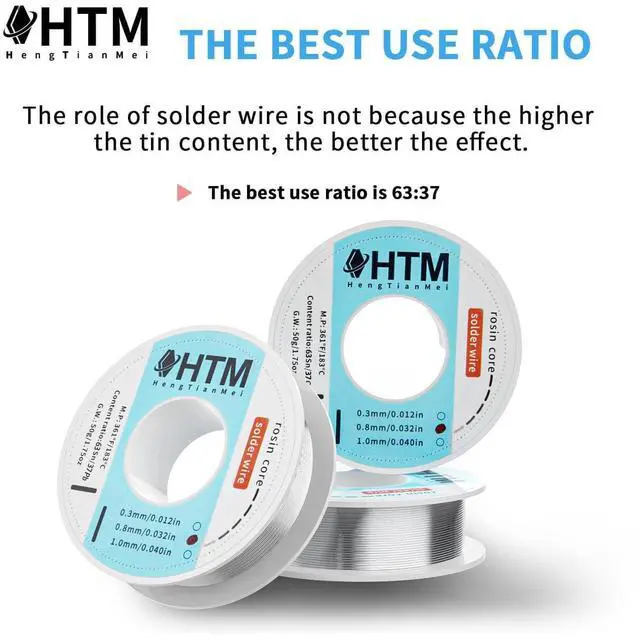
Therefore, the Sn63-Pb37 (63/37) solder wire has a good ratio of tin to lead content, and is a model worth buying, both in terms of its fluidity and melting point, as well as the solidity and brightness of the solder joint and the feeling of use.


We have a professional team and always ready to provide the best service to each of our customers and expect the cooperation are beginning, If you have any question.
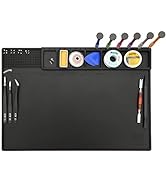
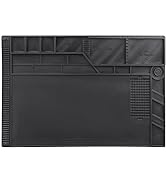
soldering mat
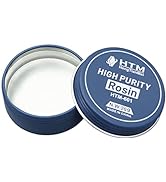
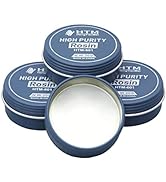
flux

WARNING: This product can expose you to chemicals including Lead which is known to the State of California to cause cancer and birth defects or other reproductive harm. Remind to wash your hands after using it.
Specification
| Brand | HengTianMei |
|---|---|
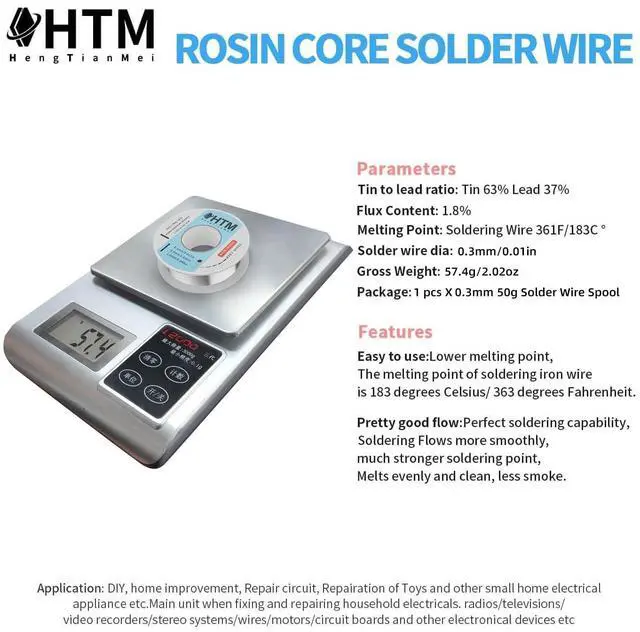
| Tin to Lead Content Ratio | Tin 63%- Lead 37% (Sn63-Pb37) |
| Melting Point | 361°F/183°C |
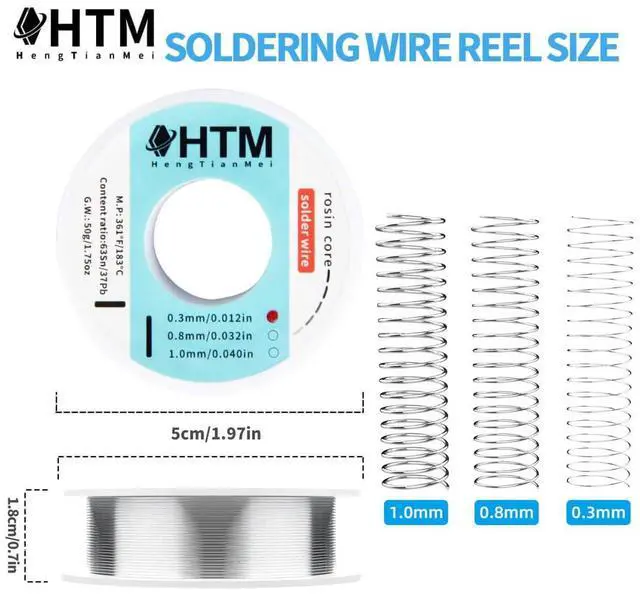
| Diameter | 0.3 mm/0.01 inch/29 gauge |
| Solder wire flux content | 1.8% |
| Weight | 50g/1.76oz(The weight may have an error of 1-3 grams) |
HTM 63/37 solder wire
Features
1. Built-in rosin core
2. Good fluidity
3. Low melting point (361°F/183°C)
4. Solder joints are fuller and stronger without impurities
5. Good use experience
What is the use of rosin cores?
This solder wire contains a rosin core, so it helps its fluidity and use effect, so that when soldering tin drops can quickly stick to the circuit board, and the solder joint will be very full.
Because the rosin core as a flux its melting point is lower than the solder material, weight, viscosity, and surface tension are smaller than the solder wire, so when soldering, the flux melts first and quickly covers the surface of the solder, playing a role in isolating the air to prevent oxidation of the metal surface.
And can react with the solder and the surface oxide film of the metal to be soldered under the high temperature of welding, so that it melts and restores the pure metal surface.
Why is Sn63-Pb37 (63/37) solder wire better for use?
Because the solder joints soldered with solder wire are bee-like under the microscope, and as the tin (Sn) content decreases, the holes will become larger and the solidity of the solder joints will gradually decrease.
And as the lead (Pb) content rises the rate of dross generation also gradually increases, and the brightness of the solder joint gradually decreases.
There are also many customers who use lead-free solder wire for the sake of their health, but the melting point of lead-free solder wire is higher (above 200°C/392°F), and the difficulty of pure tin soldering rises, and the fluidity is not strong and the diffusivity is poor.
Therefore, the Sn63-Pb37 (63/37) solder wire has a good ratio of tin to lead content, and is a model worth buying, both in terms of its fluidity and melting point, as well as the solidity and brightness of the solder joint and the feeling of use.


