


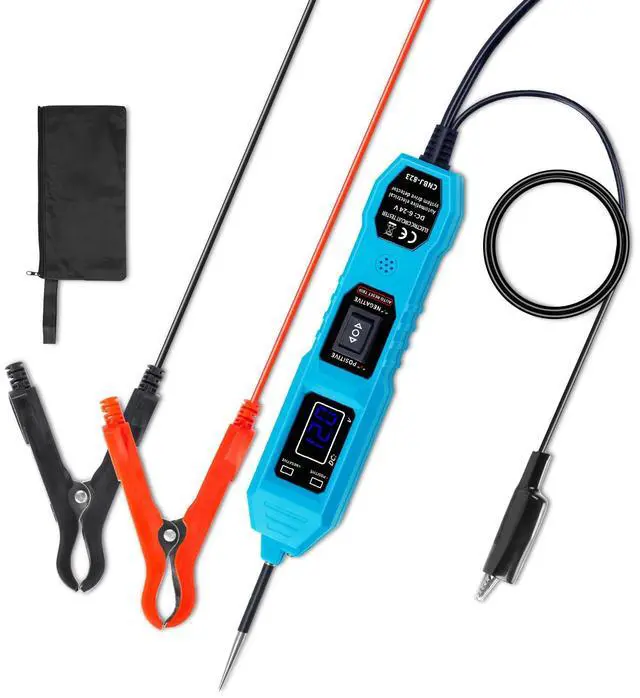
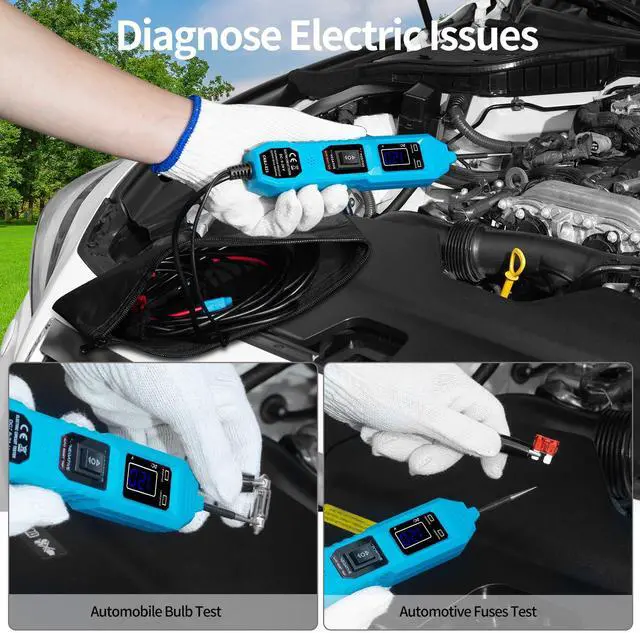


Aochinmoto circuit tester is a useful tool for diagnosing automotive electrical issues.

A handy, easy to use, circuit tester without the complexity of a meter.
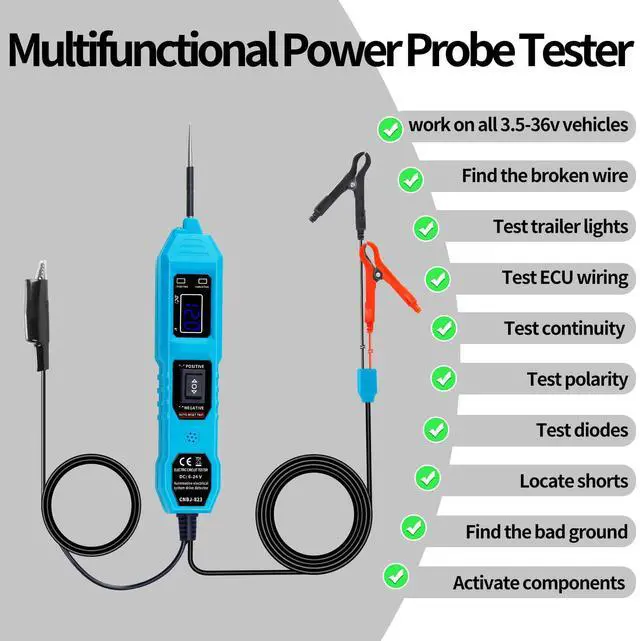
Aochinmoto test light is a nice size unit with substantial 14.7 feet length cord. Performs the following tests: self test, Voltage & Polarity Test, polarity detection, on off test, offline test of components, online component inspection, jumper operation, and grounding testing, Locate Short, Activate Component, Trailer Lights and Connections Test and etc. You can check system failure without efforts yourself with this electrical system diagnostic tool.

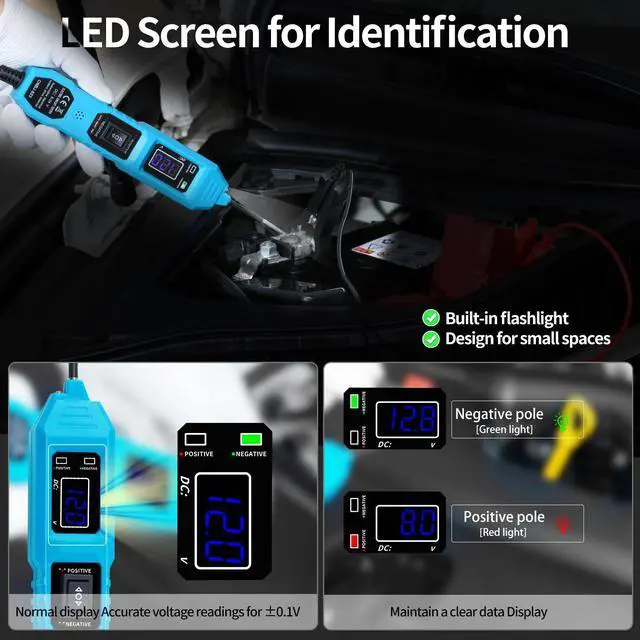
The tester's power probe checks the car's contact polarity without a key press: red LED for positive, green for negative.


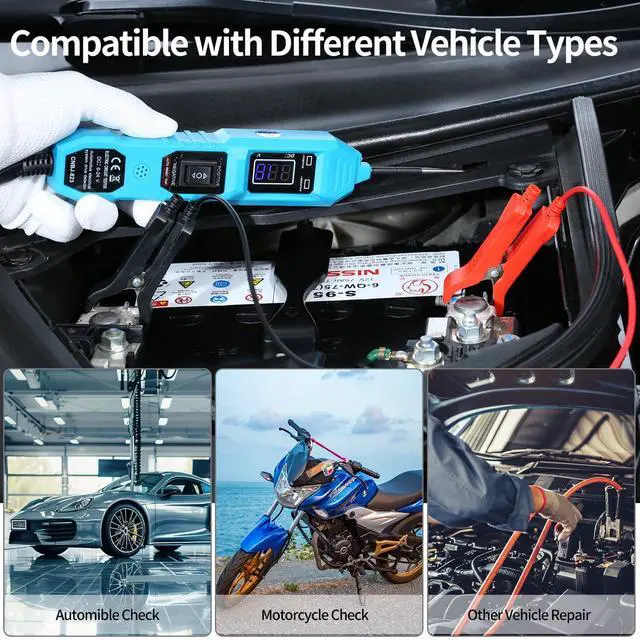
Used to test auto battery, automotive circuits voltage and polarity, connect the Alligator Clip either to the ground or positive.
Circuit Testing
Only need to put the red and black clips on the positive and negative clips on the car's battery, the test light can be used.
The automotive circuit tester’s probe checks the car's contact polarity without a key press: red LED for positive, green LED for negative.
Backlight Display
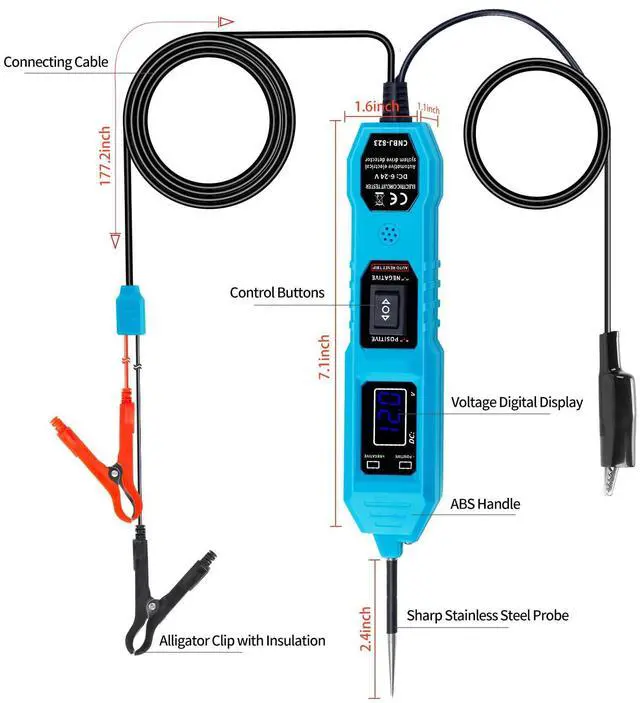
LCD digital display easily read.
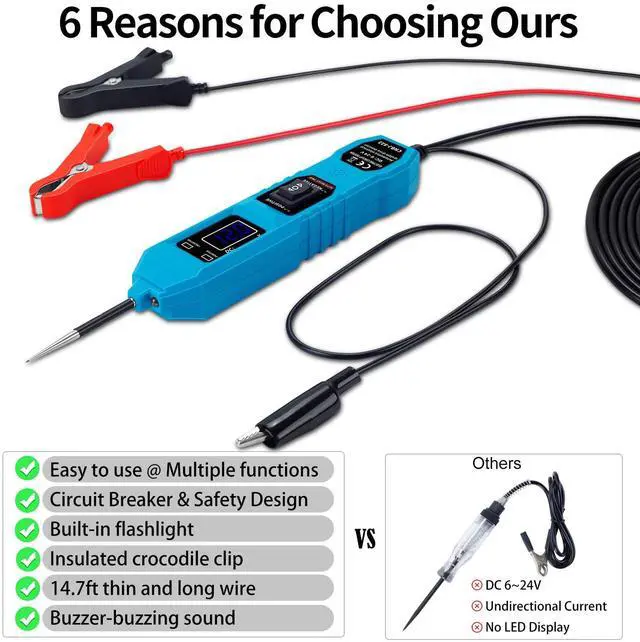
The power probe tester has built-in flashlight which is convenient for detection and maintenance in the dark place, and can also be used as a lighting lamp.
Use the advanced high-sensitivity probe to quickly and accurately detect electrical system problems.
Made with sharp stainless steel probe for piercing wires and for hard to reach areas.
The long leads (14.7ft) allows me to easily bring power and ground from the battery to the dash or where ever you need to test. This came in convenient when working on an RV and also for some trailer wiring that we were working with.
Large size alligator clip secure the input power connection when it is in use.
With a storage bag
The package contains tester, accessories, instruction manual and a storage bag
Only for DC 3-65V circuits voltage testing, can't be used for any AC wires or circuits.
Aochinmoto circuit tester is a useful tool for diagnosing automotive electrical issues.
A handy, easy to use, circuit tester without the complexity of a meter.
Aochinmoto test light is a nice size unit with substantial 14.7 feet length cord. Performs the following tests: self test, Voltage & Polarity Test, polarity detection, on off test, offline test of components, online component inspection, jumper operation, and grounding testing, Locate Short, Activate Component, Trailer Lights and Connections Test and etc. You can check system failure without efforts yourself with this electrical system diagnostic tool.
The tester's power probe checks the car's contact polarity without a key press: red LED for positive, green for negative.
Used to test auto battery, automotive circuits voltage and polarity, connect the Alligator Clip either to the ground or positive.
Circuit Testing
Only need to put the red and black clips on the positive and negative clips on the car's battery, the test light can be used.
The automotive circuit tester’s probe checks the car's contact polarity without a key press: red LED for positive, green LED for negative.
Backlight Display
LCD digital display easily read.
The power probe tester has built-in flashlight which is convenient for detection and maintenance in the dark place, and can also be used as a lighting lamp.
Use the advanced high-sensitivity probe to quickly and accurately detect electrical system problems.
Made with sharp stainless steel probe for piercing wires and for hard to reach areas.
The long leads (14.7ft) allows me to easily bring power and ground from the battery to the dash or where ever you need to test. This came in convenient when working on an RV and also for some trailer wiring that we were working with.
Large size alligator clip secure the input power connection when it is in use.
With a storage bag
The package contains tester, accessories, instruction manual and a storage bag
Only for DC 3-65V circuits voltage testing, can't be used for any AC wires or circuits.