





- I need to remove old stickers and dried paint spots from my kitchen windows and glass stovetop — how does the2-pack retractable razor blade scraper set work for these tasks, and what does the20extra replacement blades in the set cover in terms of blade supply?
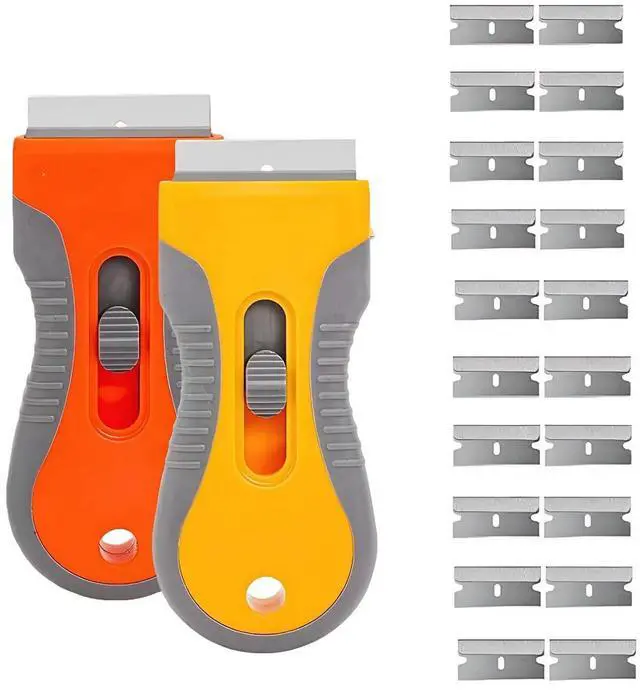
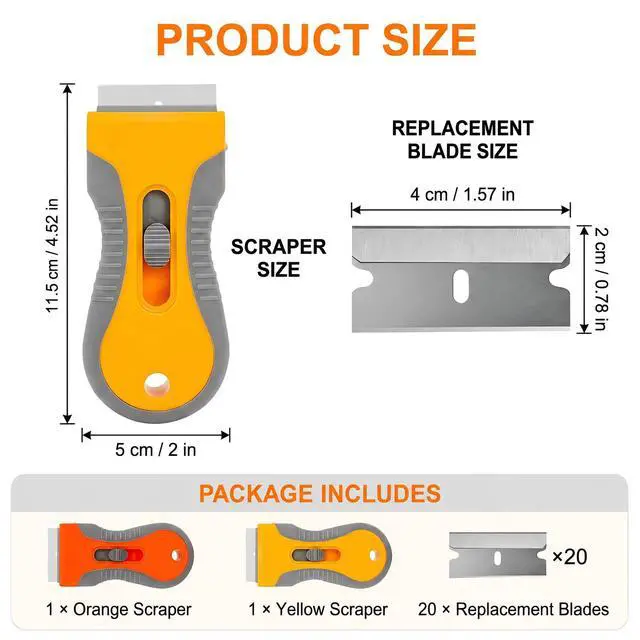
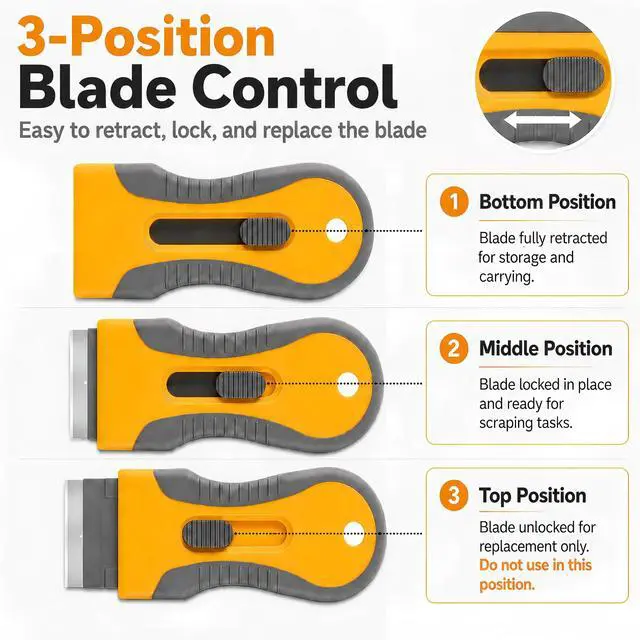
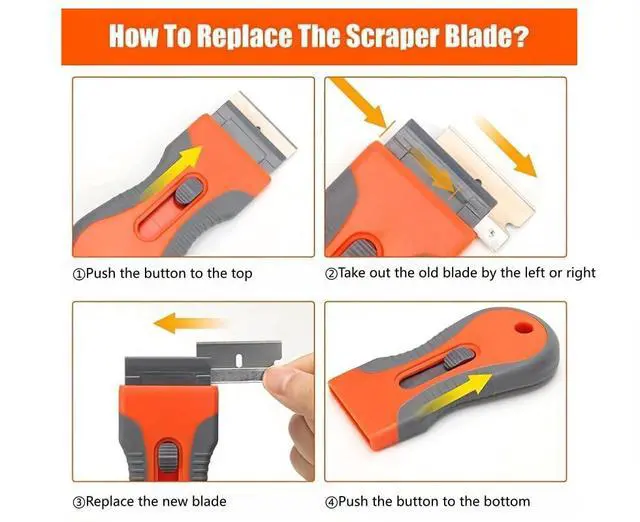
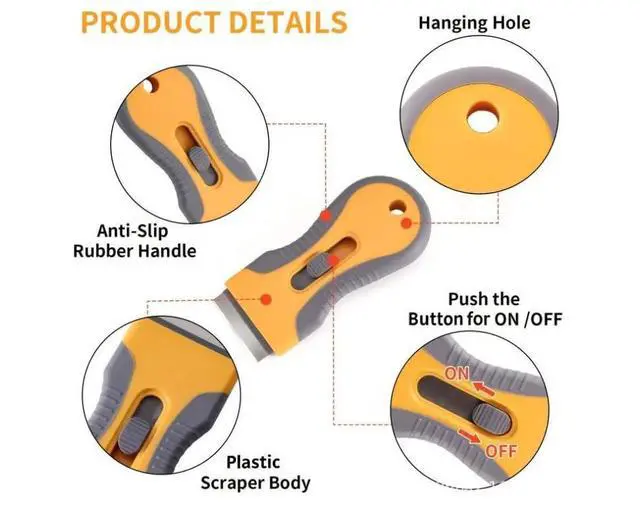
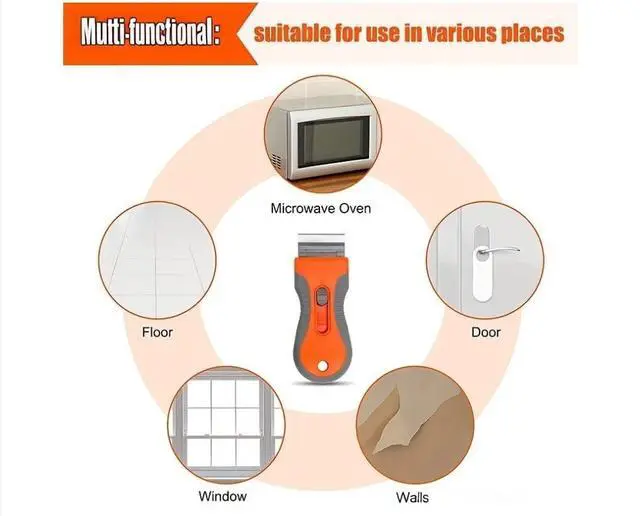
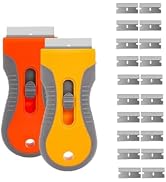
- This2-pack retractable razor blade scraper set includes two scraper handles and20 extra replacement blades, designed for removing stickers, labels, paint, decals, dried spills, tape residue, and adhesive buildup from glass, windows, stovetops, ceramic surfaces, tiles, mirrors, and countertops during normal scraping use. The two scraper handles allow one to be kept in the kitchen for stovetop and window cleaning tasks and one to be stored in a toolbox or cleaning caddy for other household or workshop scraping tasks, so both are available without needing to retrieve a single tool from a different location. The 20 extra replacement blades provide a supply of fresh blades beyond the blades already loaded in the two handles at the time of purchase. Replacing a dull blade with a fresh blade from the replacement supply is recommended when the blade no longer removes the target material cleanly during normal scraping — a sharper blade requires less applied pressure to remove dried paint spots, sticker adhesive, and tape residue from a surface than a dull blade, which reduces the force applied to the surface during scraping. The retractable mechanism on each handle is designed to keep the blade recessed into the handle body when not in use, which reduces blade exposure during storage in drawers, toolboxes, or cleaning caddies between uses. The safety lock on each handle is designed to hold the blade in the extended position during scraping to reduce blade movement during normal use.
- I have standard window glass, a glass stovetop, and some ceramic tile in my bathroom — will a razor blade scraper work on these glass and ceramic surfaces without leaving scratch marks, and are there any surface types where extra caution is needed?
- A razor blade scraper is designed for use on glass surfaces including windows, mirrors, glass cooktops, and smooth ceramic tile surfaces for removing dried paint spots, sticker adhesive, decals, tape residue, and dried spills during normal scraping use. For standard flat window glass and glass stovetop surfaces, using a sharp blade from the replacement supply rather than a dull blade reduces the force needed to remove the target material, which in turn reduces the contact pressure on the glass surface during scraping. Holding the blade at a low angle — approximately 30 degrees or less relative to the glass surface — rather than at a steep angle reduces the likelihood of the blade edge marking the glass surface during the scraping stroke. Applying a small amount of water or a cleaning solution to the glass surface before scraping provides lubrication between the blade and the glass surface, which supports smoother blade movement across the surface during normal scraping use. For glass surfaces with a special coating — such as low-emissivity window coatings, anti-reflective coatings, or tinted film applied to the glass surface — a razor blade scraper may damage the coating layer, and checking the glass manufacturer's cleaning recommendations before using a blade scraper on a coated glass surface is recommended. For textured or unglazed ceramic tile surfaces, a razor blade scraper is not suited, as the blade cannot move smoothly across a rough or textured surface without the risk of the blade catching on the surface texture.
- I need to scrape dried latex paint drips off my window glass after a painting project — are the razor blades in this set sharp enough to remove dried paint from glass, and how should I approach paint removal on glass to get a clean result?
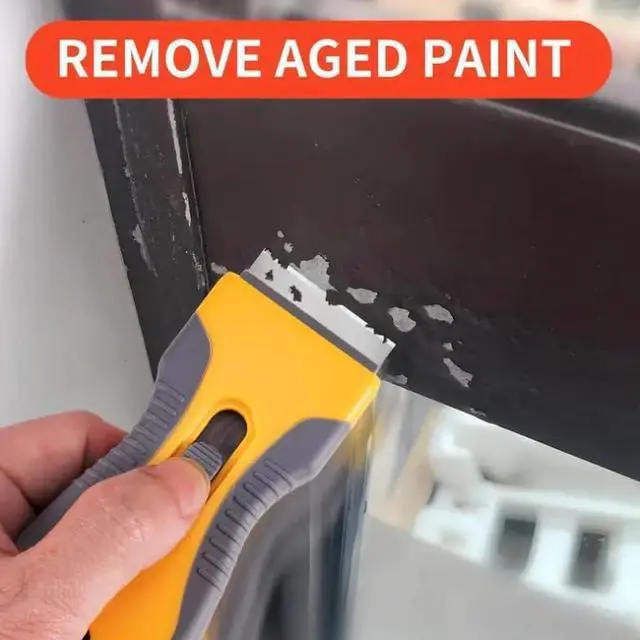
- The single-edge razor blades (included + 20-piece refills) are standard size, perfect for scraping dried paint spots, drips and overspray off glass surfaces. For dried latex paint (water-based, brittle on non-porous glass), use a sharp blade at a low angle to get under the paint edge and lift it off. A fresh blade from the refills cuts down the force needed to start scraping, vs. a used one.For thick paint drips or multiple dried layers, scrape from the paint edge inward (don’t press directly into the center) to reduce blade resistance. Lightly dampen the dried latex paint with water first to soften it for easier scraping. Oil-based paint dries harder and sticks more to glass—you’ll need multiple passes with a sharp blade for full removal. Replace the blade with a fresh refill when it starts to feel dull or less effective while scraping.


Every Detail, Considered.
We focus on the details, so you can live with ease. From damage-free hanging to precise repairs, from home protection to daily maintenance, each tool is born from an insight into simpler living. We believe real convenience lies in the nuances—effortless, trace-free, yet making every day smoother and more secure. With expertise and thoughtful design, we turn the mundane into the simple. This is the everyday wisdom we bring to you.
Little Tools-Make Home Better
Every Detail, Considered.
We focus on the details, so you can live with ease. From damage-free hanging to precise repairs, from home protection to daily maintenance, each tool is born from an insight into simpler living. We believe real convenience lies in the nuances—effortless, trace-free, yet making every day smoother and more secure. With expertise and thoughtful design, we turn the mundane into the simple. This is the everyday wisdom we bring to you.
Little Tools-Make Home Better


- I need to remove old stickers and dried paint spots from my kitchen windows and glass stovetop — how does the2-pack retractable razor blade scraper set work for these tasks, and what does the20extra replacement blades in the set cover in terms of blade supply?
- This2-pack retractable razor blade scraper set includes two scraper handles and20 extra replacement blades, designed for removing stickers, labels, paint, decals, dried spills, tape residue, and adhesive buildup from glass, windows, stovetops, ceramic surfaces, tiles, mirrors, and countertops during normal scraping use. The two scraper handles allow one to be kept in the kitchen for stovetop and window cleaning tasks and one to be stored in a toolbox or cleaning caddy for other household or workshop scraping tasks, so both are available without needing to retrieve a single tool from a different location. The 20 extra replacement blades provide a supply of fresh blades beyond the blades already loaded in the two handles at the time of purchase. Replacing a dull blade with a fresh blade from the replacement supply is recommended when the blade no longer removes the target material cleanly during normal scraping — a sharper blade requires less applied pressure to remove dried paint spots, sticker adhesive, and tape residue from a surface than a dull blade, which reduces the force applied to the surface during scraping. The retractable mechanism on each handle is designed to keep the blade recessed into the handle body when not in use, which reduces blade exposure during storage in drawers, toolboxes, or cleaning caddies between uses. The safety lock on each handle is designed to hold the blade in the extended position during scraping to reduce blade movement during normal use.
- I have standard window glass, a glass stovetop, and some ceramic tile in my bathroom — will a razor blade scraper work on these glass and ceramic surfaces without leaving scratch marks, and are there any surface types where extra caution is needed?
- A razor blade scraper is designed for use on glass surfaces including windows, mirrors, glass cooktops, and smooth ceramic tile surfaces for removing dried paint spots, sticker adhesive, decals, tape residue, and dried spills during normal scraping use. For standard flat window glass and glass stovetop surfaces, using a sharp blade from the replacement supply rather than a dull blade reduces the force needed to remove the target material, which in turn reduces the contact pressure on the glass surface during scraping. Holding the blade at a low angle — approximately 30 degrees or less relative to the glass surface — rather than at a steep angle reduces the likelihood of the blade edge marking the glass surface during the scraping stroke. Applying a small amount of water or a cleaning solution to the glass surface before scraping provides lubrication between the blade and the glass surface, which supports smoother blade movement across the surface during normal scraping use. For glass surfaces with a special coating — such as low-emissivity window coatings, anti-reflective coatings, or tinted film applied to the glass surface — a razor blade scraper may damage the coating layer, and checking the glass manufacturer's cleaning recommendations before using a blade scraper on a coated glass surface is recommended. For textured or unglazed ceramic tile surfaces, a razor blade scraper is not suited, as the blade cannot move smoothly across a rough or textured surface without the risk of the blade catching on the surface texture.
- I need to scrape dried latex paint drips off my window glass after a painting project — are the razor blades in this set sharp enough to remove dried paint from glass, and how should I approach paint removal on glass to get a clean result?
- The single-edge razor blades (included + 20-piece refills) are standard size, perfect for scraping dried paint spots, drips and overspray off glass surfaces. For dried latex paint (water-based, brittle on non-porous glass), use a sharp blade at a low angle to get under the paint edge and lift it off. A fresh blade from the refills cuts down the force needed to start scraping, vs. a used one.For thick paint drips or multiple dried layers, scrape from the paint edge inward (don’t press directly into the center) to reduce blade resistance. Lightly dampen the dried latex paint with water first to soften it for easier scraping. Oil-based paint dries harder and sticks more to glass—you’ll need multiple passes with a sharp blade for full removal. Replace the blade with a fresh refill when it starts to feel dull or less effective while scraping.