Your Browsing History





Any questions? Our AI beta will help you find out quickly.
Compliant with PCI Express MINI card Electromechanical Specification 1.2
Compliant with PCI Express base specification Revision1.1
Compliant with PCI bus power management interface specification Revison1.2
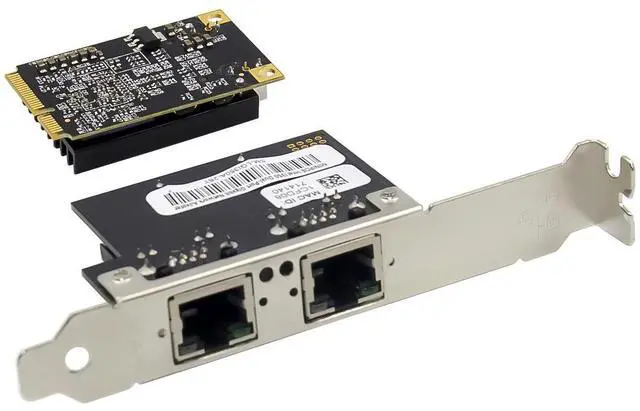
Complies with dual port 1GbE RJ45 port
Complies with the IEEE802.3ab ,IEEE802.3u and IEEE802.3 specifications
Half duplex at 10/100Mbp operation and full duplex operation at all supported speeds
Layer 2 functions: IEEE 802.3x Flow Control - IEEE 802.1q VLAN
Supports Receive-side scaling (RSS)
Supports IPv 4, IPv 6 protocols
Supports Jumbo Frames up to 9.5K
Supports UDP.TCP and IP Checksum offloading
Statistics for management and RMON
Support for virtual machines device queues
Next Generation VMDq Support (8VMs)
Interrupt throttling control to limit maximum interrupt rate and improve CPU usage
Chipset: Intel NHI350AM2
Drivers support for FreeBSD, Linux , VMWare ESXi, Win7/ Win-server2012/ Win-server2008/ Win8/Win8.1/Win-server2016/win10
Package content
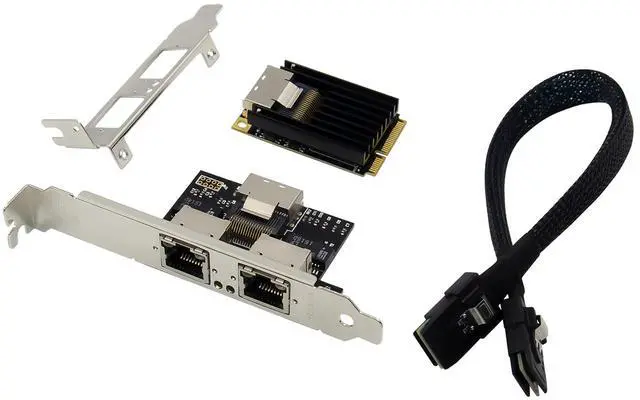
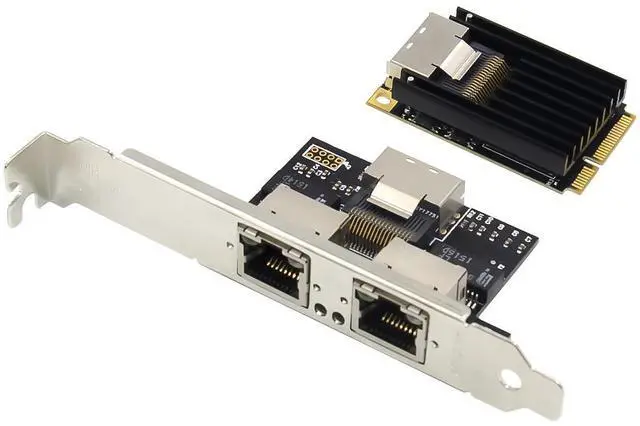
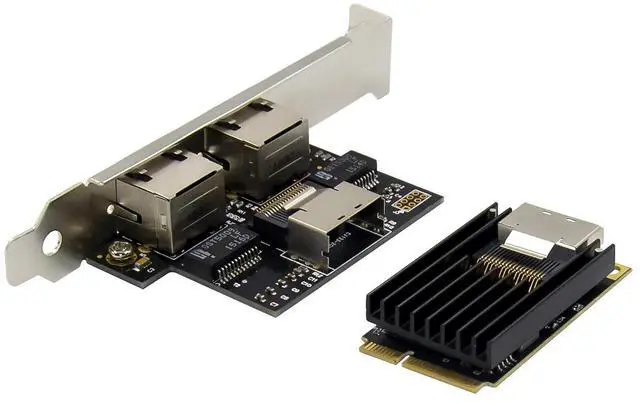
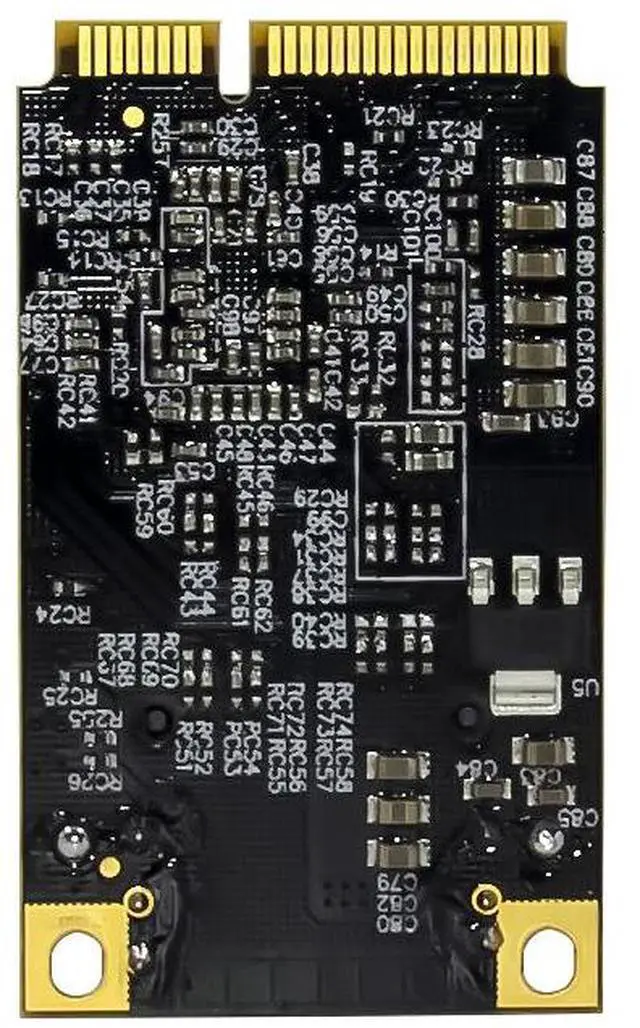
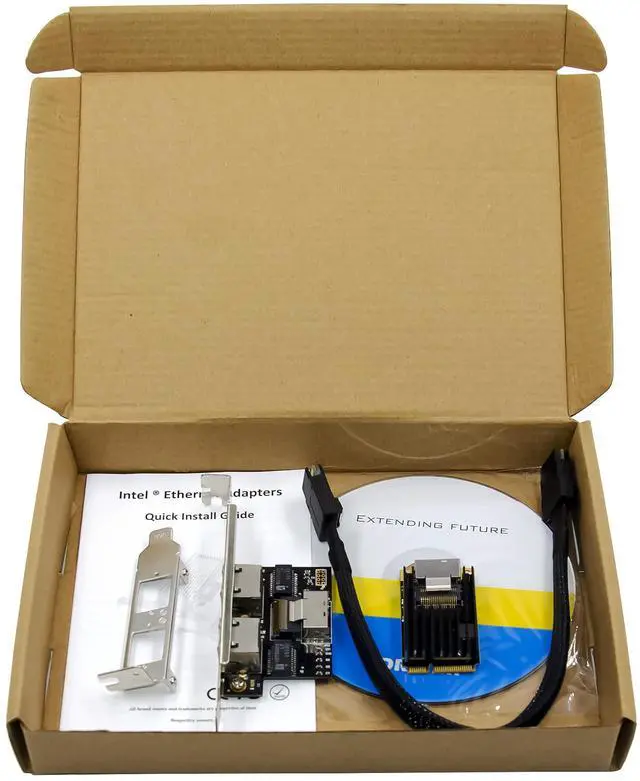
1 x MINIPCIE Intel I350 Dual-Port Gigabit server card Main board
1 x MINIPCIE Intel I350 Dual-Port Gigabit server card daughter board
1 x Users Manual
1 x CD Driver
1 x Low profile bracket
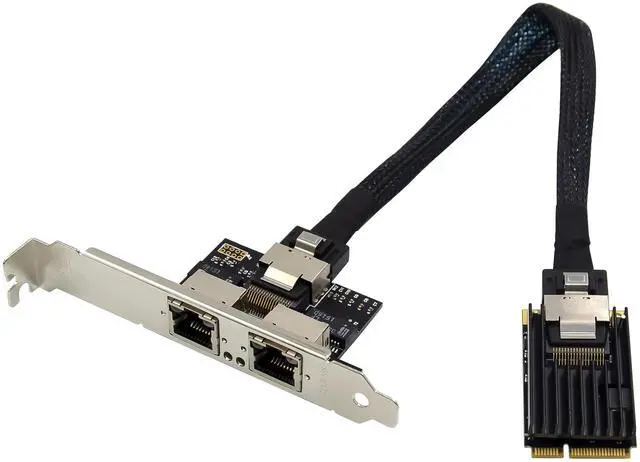
1 x SAS Cable
Accessories
System Requirements
FreeBSD, Linux , VMWare ESXi, Win7/ Win-server2012/ Win-server2008/ Win8/Win8.1/Win-server2016/win10
One Available MINIPCIE slot
Cabling Requirements:
Intel 1 Gigabit adapters
For 1000BASE-T OR 100BASE-TX.use Category 5 or Category5e wiring, twisted 4-pair copper:
Make sure you use Category 5 cabling that complies with the TIA-568 wiring specification For more information on this specification.
Length is 100 meters max.
Category 3 wiring supports only 10Mbps
CAUTION: If using less than 4-pair cabling, you must manually configure the speed and duplex setting of the adapter and the link partner. In addition,with2-and3-pair cabling the adapter can only achieve speeds of up to 100Mbps
For 100BASE-TX.use Category 5 wiring.
For10BASE-T.use Category 3 or 5wiring
Hardware installation
1.Turn off your computer and all external devices connected to it.
2.Open the computer case. Refer to your computer user manual for more details
3.Find an available Mini PCIe slot and remove the slot bracket, Save the bracket screw for later use.
4.Insert the main card to the Mini PCIe slot firmly and evenly ,Take care not to force it into the slot. Once you have properly positioned the main card into the slot, secure it with the screw you have just saved.
5.Connect the SAS cable between the main card and the daughter card.
6.Find an empty expansion slot on the back panel of the computer case and remove the metal bracket. Save the bracket for later use.
7.Place the bracket of the daughter card on the expansion slot on the back panel and secure it with the bracket screw you have just saved.
8.Connect the system to network by inserting the CAT-5 or CAT-5e cable into RJ45 Port on the daughter card.
Secure the computer case and switch on your computer.Install Drivers and software
Windows Operating Systems
You must have administrative rights to the operating system to install the drivers.
1.insert the CD driver bound with Intel network driver into your CD-ROM drive(also you can download the latest drivers from support website):
2.if the Found New Hardware Wizard screen is displayed, click Cancel
3.start the autorun located in the software package, the autorun may automatically start after you have extracted files.
4.Click install Drivers and Software
5.Follow the instructions in the install wizard to finish it
Installing Linux Drivers from Source Code
1.Download and expand the base driver tar file.
2.Compile the driver module
3.Install the module using the modprobe command
4.Assign an IP address using the ifconfig command
Support
More information and settings, please refer to the Intel Adapter User Guides or you can contact us.