

Your Browsing History
- Free 30-day Returns
$499.99
Ships from Canada.


Meet Your Seller


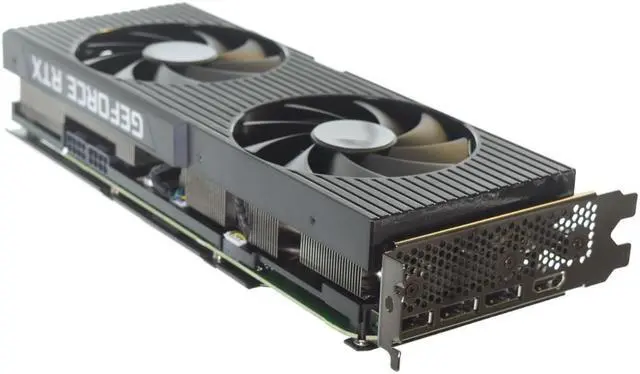

Dell 4Y12V NVIDIA GeForce RTX 3080 10GB Graphics Card - GDDR6X - PCI Express x16 4.0 - DirectX 12
REFURBISHED Product Type
- Product Name : Dell 4Y12V NVIDIA GeForce RTX 3080 10GB Graphics Card
- Video Chipset/GPU Model : NVIDIA GeForce RTX 3080
- Graphics Memory : 10 GB
- Memory Type : GDDR6X
- Interface : PCI Express x16 4.0
+
+
Overview
Specs
Reviews

Any questions? Our AI mode will help you find out quickly.
Try me now
The card supports DirectX 12 Ultimate and is based on the GA102 graphics processor in its GA102-200-KD-A1 variant. It is manufactured using an 8 nm process. This guarantees that GeForce RTX 3080 will support all current video games. Future video games will support hardware raytracing, variable-rate shading, and other features thanks to the DirectX 12 Ultimate capability. With a die area of 628 mm2 and 28, 300 million transistors, the GA102 graphics processor is a sizable chip. NVIDIA has disabled some shading units on the GeForce RTX 3080 in order to reach the product's target shader count, in contrast to the fully unlocked GeForce RTX 3090 Ti, which uses the same GPU but has all 10752 shaders enabled.
It has 96 ROPs, 272 texture mapping units, and 8704 shading units. 272 tensor cores are also included, which accelerate machine learning applications. 68 acceleration cores for raytracing are also on the card. The GeForce RTX 3080 and 10 GB GDDR6X memory have been matched by NVIDIA, and they are connected by a 320-bit memory interface. Memory runs at 1188 MHz, while the GPU operates at a frequency of 1440 MHz that can be increased to 1710 MHz. The NVIDIA GeForce RTX 3080 has two slots and uses a single 12-pin power connector with a maximum power draw of 320 W.
Some display outputs are: 3 DisplayPort 1.4 a, 1 HDMI 2.1. PCI-Express 4.0 x16 is used to connect GeForce RTX 3080 to the rest of the hardware. Dimensions of the card are 285 mm x 112 mm x 40 mm, and it has a dual-slot cooling system.
It has 96 ROPs, 272 texture mapping units, and 8704 shading units. 272 tensor cores are also included, which accelerate machine learning applications. 68 acceleration cores for raytracing are also on the card. The GeForce RTX 3080 and 10 GB GDDR6X memory have been matched by NVIDIA, and they are connected by a 320-bit memory interface. Memory runs at 1188 MHz, while the GPU operates at a frequency of 1440 MHz that can be increased to 1710 MHz. The NVIDIA GeForce RTX 3080 has two slots and uses a single 12-pin power connector with a maximum power draw of 320 W.
Some display outputs are: 3 DisplayPort 1.4 a, 1 HDMI 2.1. PCI-Express 4.0 x16 is used to connect GeForce RTX 3080 to the rest of the hardware. Dimensions of the card are 285 mm x 112 mm x 40 mm, and it has a dual-slot cooling system.
Warranty & Returns
Warranty, Returns, And Additional Information
Warranty
- Please contact the Seller directly for warranty information. Warranty information may also be found on the Manufacturer's website.
- CONTACT
Return Policies
- Return for refund within: 30 days
- Return for replacement within: non-replaceable
- This item is covered by QYTech Return Policy
Manufacturer Contact Info
- For a directory of all our manufacturers, please click below.
- Manufacturers Directory
LOADING...