here!
I’m your shopping assistant for PC builds, upgrades, and everything tech.
Got questions? Ask away!
Start a conversation
here!
I’m your shopping assistant for PC builds, upgrades, and everything tech.
Got questions? Ask away!
Start a conversation



Any questions? Ask CelesteSM will help you find out quickly.
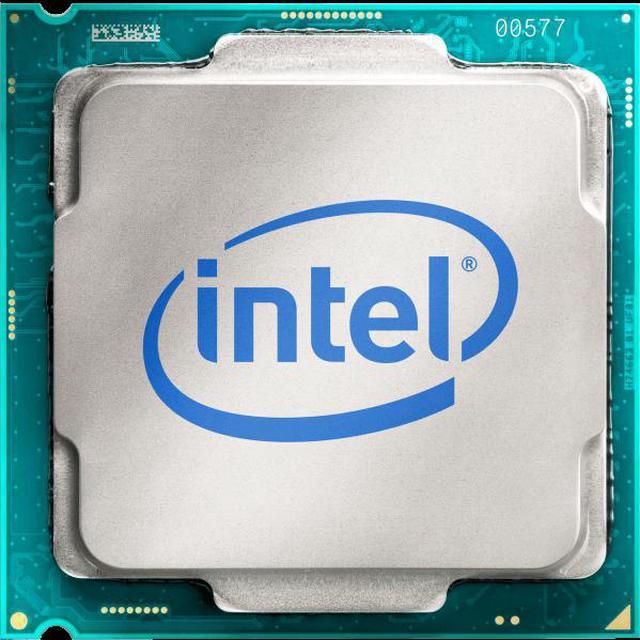
The Intel Core i5-8400 is an 8th Gen, 6-core/6-thread desktop processor running at 2.8 GHz, with 9 MB cache, Intel UHD Graphics 630, and an LGA1151 socket. It is suitable for compatible desktop upgrades, everyday computing, office work, media playback, and value-focused systems that do not require a discrete graphics card.
| Attribute | Value |
|---|---|
| Best For | Desktop systems requiring an Intel Core i5-8400 processor |
Q: Is the Intel Core i5-8400 better than the Core i5-10400?
A: The Core i5-10400 is the stronger choice for a new system because it has 6 cores and 12 threads, a higher maximum turbo frequency, and a newer LGA1200 platform. The i5-8400 is the better fit for upgrading an existing compatible LGA1151 system, especially when the motherboard and DDR4 memory will be reused.
Q: Should I choose the i5-8400 or the i7-8700 for gaming and productivity?
A: Choose the i5-8400 for general gaming and everyday desktop use when it is substantially less expensive. Choose the i7-8700 for heavier multitasking, streaming, video work, and other threaded applications because it has 6 cores and 12 threads compared with the i5-8400's 6 cores and 6 threads. Both use the LGA1151 Coffee Lake platform, but motherboard BIOS support should be verified before upgrading.
Q: Is the i5-8400 worth choosing over the i5-9400F?
A: The i5-9400F is only a modest performance step above the i5-8400 because both processors have 6 cores, 6 threads, and a similar Coffee Lake design. Choose the i5-8400 when you need integrated Intel UHD Graphics 630 or Quick Sync support. Choose the i5-9400F when you already use a discrete graphics card and it is available at a similar or lower price; replacing an i5-8400 with a 9400F usually provides limited benefit.
Q: How much better is the i5-8400 than the i3-8100?
A: The i5-8400 is the better choice for modern multitasking and CPU-heavy games because it has 6 cores and 6 threads, compared with 4 cores and 4 threads on the i3-8100. The i3-8100 can suit basic office use and entry-level gaming, while the i5-8400 provides more headroom for background applications, game streaming, and sustained workloads on the same general Coffee Lake platform.
Q: Does the OEM or tray i5-8400 include a CPU cooler?
A: This Newegg listing is for an OEM or tray i5-8400, so buyers should not assume that a retail box, stock cooler, or standard retail warranty is included. Intel identifies thermal solutions as part of boxed processor packaging, while tray processors are supplied in bulk for system builders. Choose a boxed version or purchase a compatible LGA1151 cooler separately if building a complete PC.
Q: Will this processor work with any LGA1151 motherboard?
A: No. The Intel Core i5-8400 requires a compatible Intel 300-series motherboard, such as a model using the H310, B360, H370, Q370, or Z370/Z390 chipset. An LGA1151 socket alone is not sufficient because some older LGA1151 motherboards do not support 8th-generation processors.
Q: Does this OEM/tray processor include a CPU cooler?
A: Do not assume that a cooler is included. This product is identified as OEM/tray, while boxed retail versions may include a fan and cooler. Buyers should confirm the package contents with the seller and plan for a compatible LGA1151 CPU cooler if one is not supplied.
Q: Can this processor run a desktop without a separate graphics card?
A: Yes. The Core i5-8400 includes Intel UHD Graphics 630, so it can provide display output when paired with a compatible motherboard that has video outputs. It is suitable for everyday desktop work, video playback, and basic graphics tasks, but a separate graphics card is recommended for demanding modern gaming or GPU-intensive applications.
Q: Who is the Intel Core i5-8400 best suited for?
A: It is best suited for upgrading an existing compatible desktop or building a budget system around an available Intel 300-series motherboard. Its 6 cores, 6 threads, 2.8 GHz base frequency, up to 4.0 GHz turbo frequency, and integrated graphics support office work, web browsing, media playback, light content creation, and gaming with an appropriate graphics card. It is less suitable when the goal is a new platform with current-generation features or long-term upgrade flexibility.
Q: Is the Intel Core i5-8400 still worth buying?
A: It is mainly suitable as a low-cost replacement for an existing compatible 8th- or 9th-generation Intel system. For a new PC build, its older LGA1151 platform and limited upgrade path make a newer CPU and motherboard combination the more practical choice.
Q: Is the i5-8400 suitable for gaming?
A: It remains suitable for budget 1080p gaming when paired with an appropriate dedicated graphics card, especially for older or less CPU-intensive games. It can become a performance limit with newer GPUs, high-refresh gaming, and CPU-heavy titles.
Q: Can the i5-8400 be used without a dedicated graphics card?
A: Yes, its Intel UHD Graphics 630 can provide display output and handle older, lightweight, or esports games with reduced settings. It is not a good choice for modern demanding games without a dedicated GPU.
Q: Can the i5-8400 be upgraded without replacing the motherboard?
A: Only certain 8th- and 9th-generation Intel processors may work, and compatibility depends on the motherboard chipset, BIOS, and system manufacturer. Moving to a newer CPU generation generally requires a new motherboard, so verify the exact board before buying this OEM processor.