




 here!
I’m your shopping assistant for PC builds, upgrades, and everything tech.
Got questions? Ask away!
Start a conversation
here!
I’m your shopping assistant for PC builds, upgrades, and everything tech.
Got questions? Ask away!
Start a conversation



Any questions? Ask CelesteSM will help you find out quickly.
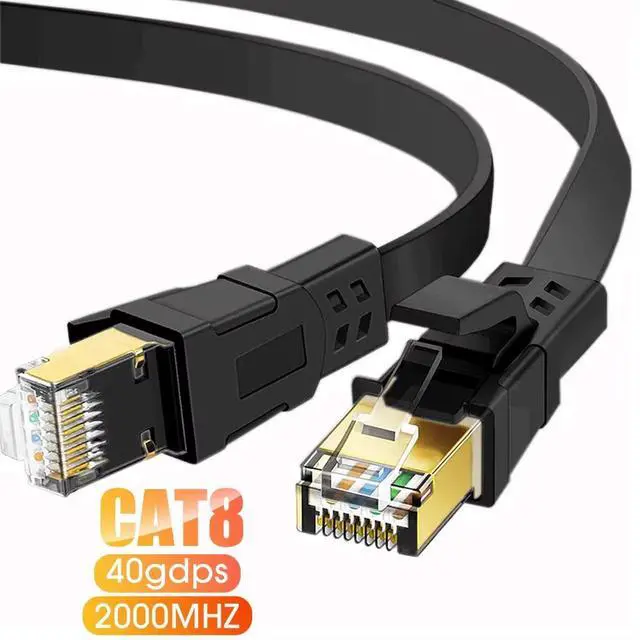
Hannord 40 Gigabit Cat 8 Ethernet Cable
Built for Future-Proof Speed and Reliable Connectivity
Hannord cat 8 Network cable is not only superior in speed to the previous version but also has a significant improvement in durability quality. It also has stricter specifications for noise restriction and crosstalk than any of its predecessors.
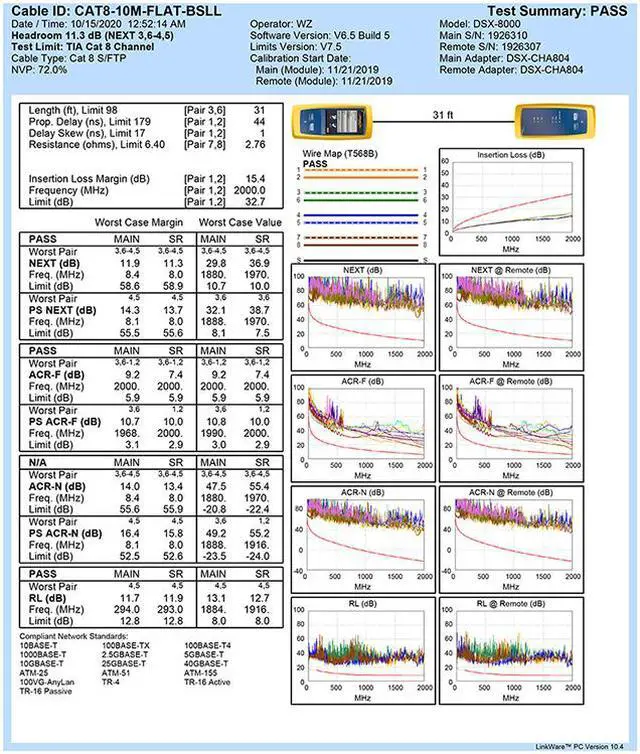
Bandwidth up to 2000MHz
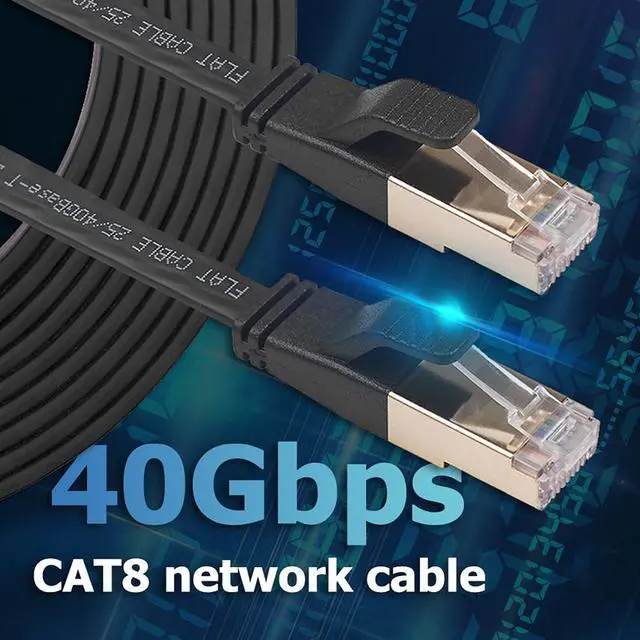
Transmitting speed up to 40Gbps
SSTP Double sheltered network cable
Thicker and durable PVC housing material
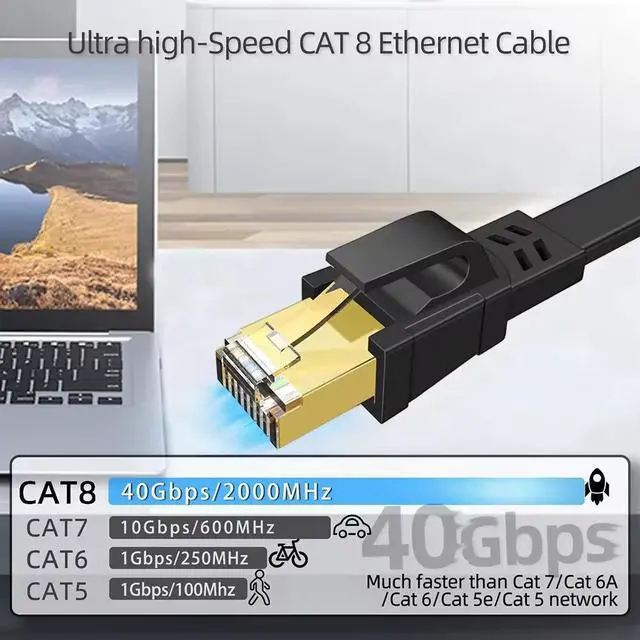
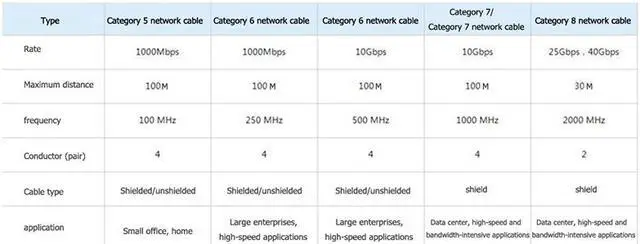
Compatible but faster than Cat 5, Cat 6, Cat 7 Ethernet cables


Fast and Furious
Hannord Cat8 ethernet cord achieve higher performance than cat7, cat6e, cat6 or traditional cat5/cat5e network and offers a maximum networking speed at 40Gbps for you to surf the Internet, stream videos, music and other data without the hassles of slow network, boosting your online gaming and office working experience.
Easy Your Life
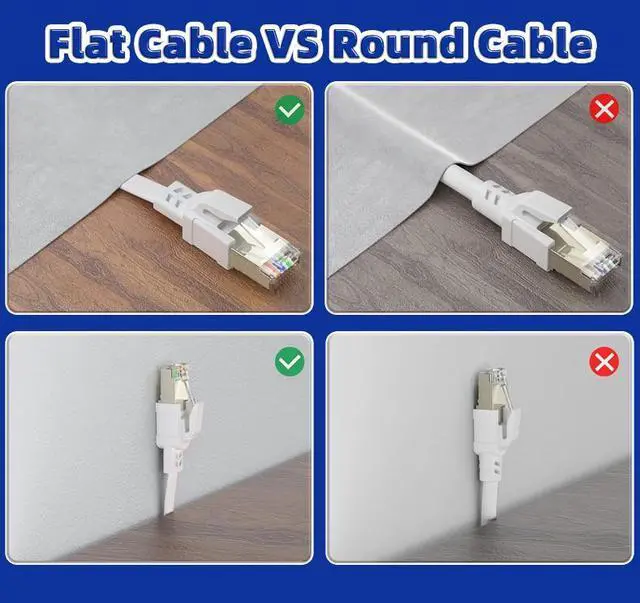
The Flat Ethernet cables are super flexible and much easier to manage when run under the carpet, doors, rotating arms and drawers or along walls, meeting all your expectations for home and office, hotel and public network location. The flat design helps avoid tangled cords and save room and maintain the aesthetic appearance of your room.
Excellent Workmanship
Sheltered with high quality UV-resistant PVC jacket and premium material, Cat8 Ethernet wire is more Durable, flexible, waterproof, anti-corrosion, anti-aging, toughness for use. It can withstand direct sunlight and extreme cold & humid & hot weather yet still working efficiently. Great quality Cat 8 patch cable suitable for the indoor or outdoor usage.
High Performance Quality
Premium quality is the core element of a reliable brand. Hannord Cat8 Cable is made of 100% pure copper core, aluminium foil shelter, 4 sheltered twisted pair (STP) of copper wires, upgraded PVC outer cover with two Gold Plated RJ45 connectors on each end.
Specifications
Bandwidth: 2000MHz
Data Transfer Speed: 40Gbps
Conductors: 30 AWG Stranded Bare Copper
Connectors: Gold-Plated RJ45
Jacket Material: PVC
Width: 0.36in (9.1mm)
Thickness: 0.11in (2.8mm)
Package Includes
1 Pack * High-Speed CAT8 Flat Internet Cable
Wide Compatibility
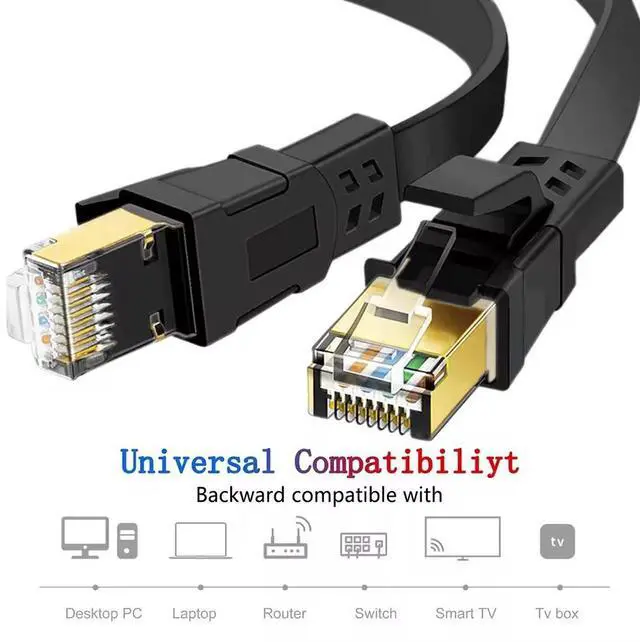
Our RJ45 Cat-8 Ethernet patch cables backward compatible with Cat5, Cat5E, Cat6, Cat6A and Cat7 equipment and provides universal connectivity for everything from routers, computers, printers, servers, and switch boxes to network media players, network-attached storage devices, VoIP phones, and other standard office equipment.
The RJ45 internet cable backward compatible with Cat5, cat6, and Cat 7 equipment and works perfectly with networking switch, routers, modem, PS3, PS4, X-box, patch panel, servers, networking printers, laptop, coupler, hubs, smart TV, and other device with RJ45 connectors.
NOTE: Your network speed is determined by many factors which include the cable, your router, switch boxes, other network components, and also Internet service provider.
You Good Choice for Wired Home and Office !
The Hannord Cat 8 Ethernet Cable is a 6-foot, black, shielded RJ45 cable rated for up to 40Gbps and 2000MHz. It suits gamers, streamers, and home or office users who want a fast wired connection for routers, modems, PCs, consoles, hubs, and other network devices.
| Attribute | Value |
|---|---|
| Best For | Wired Ethernet connections between RJ45-equipped networking devices such as routers, modems, hubs, and compatible gaming equipment |
| Cable Category And Shielding | Cat 8 shielded Ethernet cable for protected wired network connections |
| Length And Color | 6 ft cable in black |
Q: Is the Hannord Cat 8 cable better than Cat 6A for a home network?
A: Choose the Hannord Cat 8 cable when you need a short, shielded patch cable for equipment that supports 25Gbps or 40Gbps Ethernet. For typical home networks using 1Gbps, 2.5Gbps, or 10Gbps hardware, Cat 6A usually provides the same practical performance and supports 10Gbps over longer distances. This 6-foot Hannord cable is most suitable for short connections between a router, switch, gaming PC, NAS, or console.
Q: Should I buy this Hannord Cat 8 cable instead of a Cat 6 cable for gaming?
A: Buy the Hannord Cat 8 cable if you want a shielded, flexible 6-foot cable for a short connection and your networking hardware supports more than 1Gbps. For ordinary online gaming, a quality Cat 6 cable is generally sufficient because latency and connection quality depend more on the network hardware, internet service, and server route than on the cable category. The Hannord cable is mainly an upgrade for short, high-speed wired links rather than a guaranteed gaming-latency improvement.
Q: Is Hannord Cat 8 a better choice than Cat 7 for a 6-foot Ethernet connection?
A: The Hannord Cat 8 cable is the more appropriate choice if your priority is a short, shielded connection rated for 25Gbps or 40Gbps networking. For standard home devices, Cat 7 and Cat 8 will usually deliver the same negotiated speed because the router, switch, and network adapters determine the active link rate. Choose Cat 8 when its 6-foot length, flat design, and advertised shielding fit your setup; choose Cat 7 when it is less expensive and your equipment operates at up to 10Gbps.
Q: Is this flat Hannord Cat 8 cable better than a round Ethernet cable for a home office?
A: Choose the Hannord cable when portability, low-profile routing, and easy placement under carpets or along door seams matter more than maximum installation robustness. Its 6-foot flat design is convenient for connecting nearby devices such as a laptop dock, console, router, or desktop. Choose a round cable for permanent runs, frequent pulling, or installations where bend protection and physical durability are more important than hiding the cable.
Q: Will this cable work with my router, modem, PC, Xbox, or PlayStation?
A: Yes. It uses standard RJ45 connectors and is suitable for devices with Ethernet ports, including routers, modems, computers, hubs, and gaming consoles. It cannot connect directly to a USB-only port without a compatible Ethernet adapter.
Q: Can this Ethernet cable improve gaming stability or reduce lag compared with Wi-Fi?
A: A wired Ethernet connection can be more stable and may reduce latency or interference compared with Wi-Fi, depending on the network. This cable does not guarantee lower ping or faster internet because performance is also limited by the router, gaming device, internet service, and network conditions.
Q: Will the cable actually deliver 40Gbps on my home network?
A: The cable is rated for up to 40Gbps and up to 2,000MHz, but the actual connection speed depends on the Ethernet ports and networking equipment at both ends. Most home routers, computers, and gaming consoles will operate below 40Gbps, so the cable rating does not by itself increase internet speed.
Q: Is this 6-foot flat cable suitable for routing through a room or along a doorway?
A: Yes. The flat design is intended for short connections where the cable needs to fit under carpets, along edges, or through narrow spaces such as door seams. The 6-foot length is best for nearby devices; measure the route first if the router and device are in separate rooms.
Q: Can this cable be used outdoors?
A: The product information describes the jacket as weatherproof and UV-resistant for indoor or outdoor use. It is suitable for short outdoor connections, but the provided specifications do not state that it is rated for direct burial or permanent underground installation.
Q: Is the Hannord Cat 8 cable worth buying for a typical home internet connection?
A: Usually, no. The cable is rated for up to 40Gbps, but typical home routers, computers, consoles, and internet plans often operate at 1Gbps or less. Cat 5e or Cat 6 is generally sufficient unless the network hardware supports higher speeds.
Q: Will this Cat 8 cable improve gaming speed or reduce ping?
A: Not by itself. Gaming speed and ping are mainly limited by the internet connection, router, network adapter, and server path. A wired connection can improve stability compared with weak Wi-Fi, but Cat 8 does not normally provide a gaming advantage over a working Cat 5e or Cat 6 cable.
Q: Who is the Hannord Cat 8 cable suitable for?
A: It is most suitable for short, shielded connections between compatible high-speed networking equipment, such as a multi-gigabit router, switch, computer, or server. Its 6-foot flat design may also suit users who need flexible cable routing around desks, carpets, or door gaps.
Q: What are the main trade-offs of this flat Cat 8 cable?
A: The flat design is easier to route and hide, but community discussions frequently raise concerns about the quality and certification of inexpensive flat Cat 7 and Cat 8 cables. The cable may also be unnecessary for ordinary 1Gbps networks, while its advertised 40Gbps capability requires compatible equipment and short runs.
Q: Is a Cat 8 cable a good choice for future-proofing?
A: Only in a limited situation. Cat 8 can make sense for a short-term, high-speed local network when the connected equipment already supports multi-gigabit speeds. For most homes, buying Cat 8 solely for future-proofing offers little immediate benefit, and future networking standards or equipment may change before the extra capacity is used.


