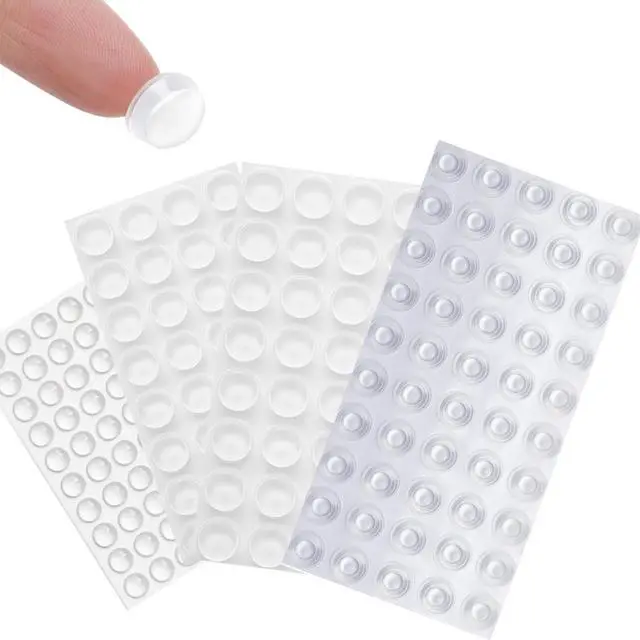
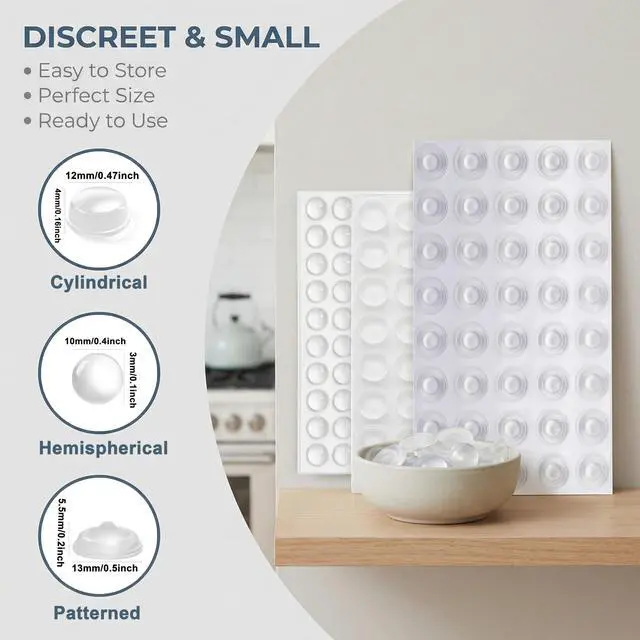
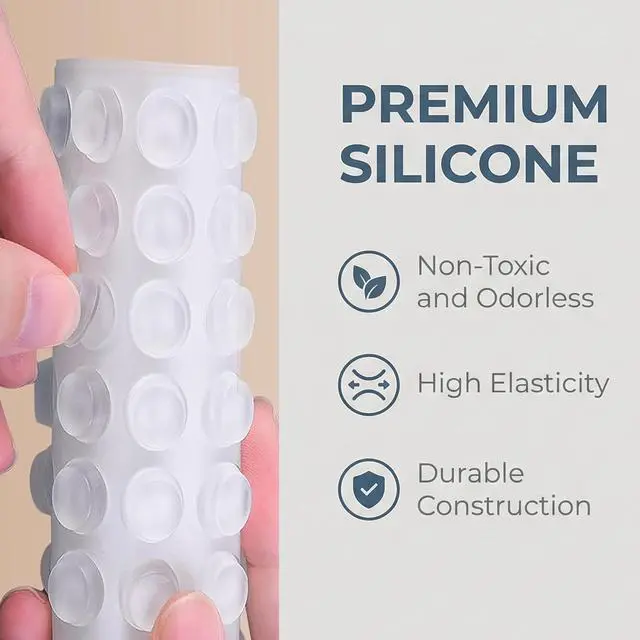
164 Pads, 3 Shapes One Pack That Covers the Whole House Most bumper packs give you one shape and leave you short on options. This set comes with 164 clear silicone pads across 3 practical shapes, so you have the right fit for cabinet doors, drawer fronts, cutting boards, picture frames, table legs, decorative items, and other contact points throughout the home without needing to order multiple packs to cover everything.
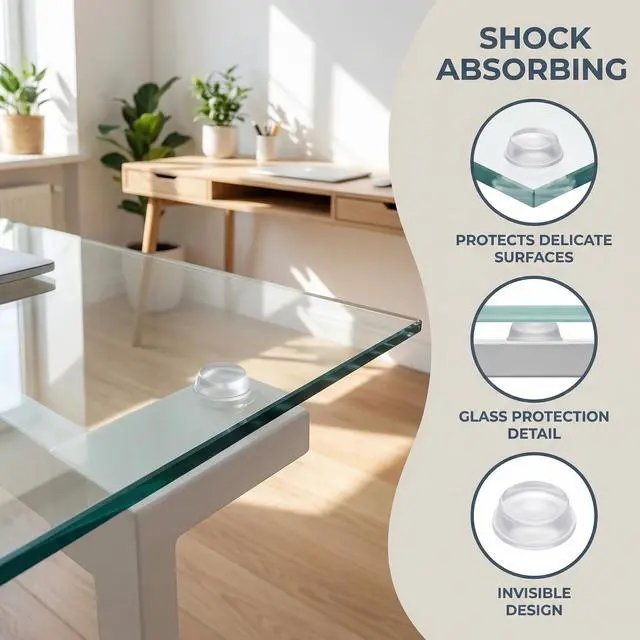
Clear Silicone That Protects Without Showing Invisible on the Surface, Effective Underneath These bumper pads are made from transparent silicone that blends into nearly any surface color or finish. Once applied, they cushion contact points on cabinets, drawers, frames, and furniture helping prevent scratches, scuff marks, and surface dents while staying subtle enough that guests won't notice them at all. Protection that works quietly in the background.
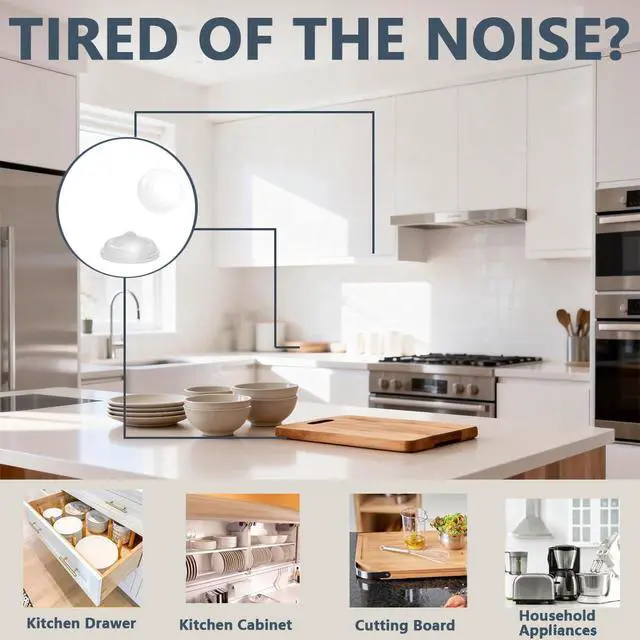
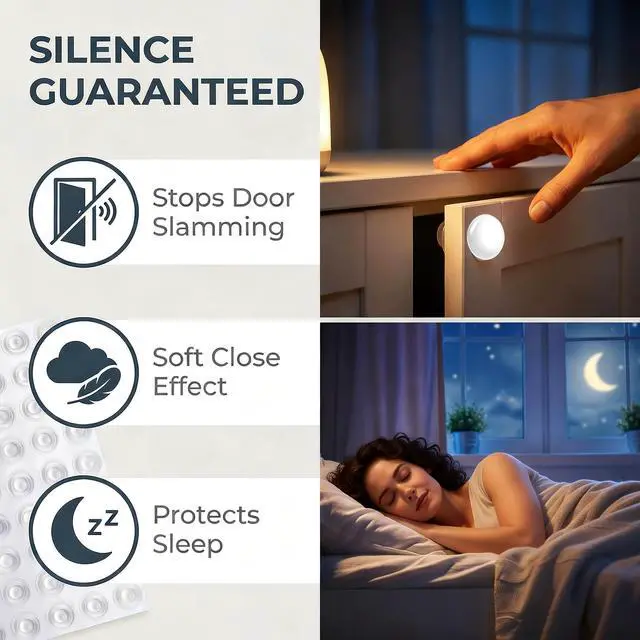
No-Slam Cushioning That Quiets Cabinet Doors, Drawers, and More That sharp crack of a cabinet door closing repeated dozens of times a day in a busy kitchen, bathroom, or bedroom adds up fast. These adhesive bumpers absorb the closing impact before it becomes noise, softening the contact between door and frame to reduce slamming, knocking, and vibration across every room where cabinets and drawers see regular use.
+
+
Overview
Specs
Reviews
Any questions? Ask CelesteSM will help you find out quickly.
Try me now
I need bumpers for several different spots around the house — cabinet doors, picture frames, and some drawer fronts. Do I need to buy separate packs for each, or will one pack actually cover all of those?
One pack covers all of those applications. This set includes 164 clear silicone bumper pads across 3 practical shapes, which gives you enough quantity and variety to address multiple contact points throughout the house in a single purchase. Cabinet doors typically need one pad at each bottom corner of the door interior — that's two pads per door. Picture frames need one pad at each bottom corner on the back to keep them level and protect the wall surface — again, two pads per frame. Drawer fronts benefit from pads at the corners where the front panel meets the cabinet frame when the drawer closes. With 164 pads in the pack, you have enough to work through a full kitchen of cabinet doors, several rooms of picture frames, and a set of drawers without running short. The 3 shapes in the set are sized for different contact point geometries, so you can match the right shape to each application rather than forcing one size to work everywhere. (Suggested image: flat-lay of all three shape varieties from the pack arranged by type, with small labels indicating which shape works for cabinet door corners, picture frame backs, and drawer fronts respectively)
I have light-colored cabinets and I'm worried that clear bumper pads will still be visible once they're applied — how noticeable are these once they're on?
The bumper pads are made from transparent silicone, which means the material itself has no color to contrast against the surface it's applied to. On light-colored cabinet interiors, white-painted surfaces, natural wood finishes, and glass or tile surfaces, the transparent silicone blends into the surface color and finish without standing out visually. The pads sit at1/2 inch across, which keeps them compact enough to fit in corner positions and along edges without overlapping visible areas of the door or frame. On very dark surfaces, any transparent material will catch light slightly differently than the surrounding surface, so there may be a subtle visual presence — but the clear silicone is specifically chosen for this application because it minimizes that effect across the widest range of surface colors. The pads are designed to sit flat against the surface after application, so there are no raised edges or visible adhesive borders that would draw attention to the pad placement. (Suggested image: close-up of a clear silicone bumper pad applied to a light wood cabinet door interior corner, showing how the transparent pad blends into the wood grain and finish with minimal visual contrast)
I've had bumper pads fall off my cabinets before, especially in the kitchen where there's humidity and grease — what makes these stay on, and is there anything I should do before applying them to get a better bond?
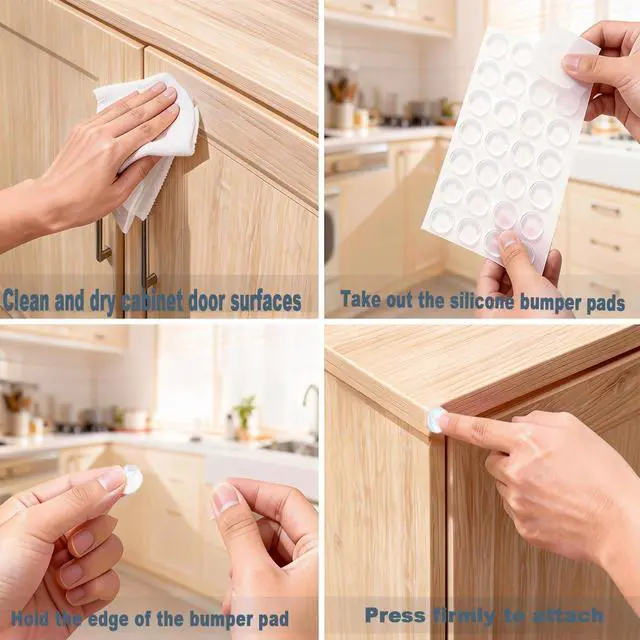
The self-adhesive backing on these pads is designed to bond firmly to clean, smooth, dry surfaces. The most common reason bumper pads fail and fall off is surface contamination at the time of application — grease, dust, moisture, or cleaning product residue on the surface prevents the adhesive from making full contact with the material underneath. In a kitchen environment specifically, cabinet interiors and drawer fronts often have a light film of grease or cleaning product that isn't visible but interferes with adhesive bonding. The preparation step that makes the biggest practical difference is wiping the application area with a clean cloth and a small amount of isopropyl alcohol, then allowing the surface to dry completely before pressing the pad into place. Once the surface is clean and dry, press the pad firmly for several seconds to ensure full contact between the adhesive and the surface. Avoiding application in high-humidity conditions — such as right after running the dishwasher or cooking — also helps the initial bond set properly. (Suggested image: step-by-step installation sequence showing: 1) wiping the cabinet surface with a cloth, 2) peeling the backing from a bumper pad, 3) pressing the pad firmly onto the clean surface with a fingertip)
I need bumpers for several different spots around the house — cabinet doors, picture frames, and some drawer fronts. Do I need to buy separate packs for each, or will one pack actually cover all of those?
One pack covers all of those applications. This set includes 164 clear silicone bumper pads across 3 practical shapes, which gives you enough quantity and variety to address multiple contact points throughout the house in a single purchase. Cabinet doors typically need one pad at each bottom corner of the door interior — that's two pads per door. Picture frames need one pad at each bottom corner on the back to keep them level and protect the wall surface — again, two pads per frame. Drawer fronts benefit from pads at the corners where the front panel meets the cabinet frame when the drawer closes. With 164 pads in the pack, you have enough to work through a full kitchen of cabinet doors, several rooms of picture frames, and a set of drawers without running short. The 3 shapes in the set are sized for different contact point geometries, so you can match the right shape to each application rather than forcing one size to work everywhere. (Suggested image: flat-lay of all three shape varieties from the pack arranged by type, with small labels indicating which shape works for cabinet door corners, picture frame backs, and drawer fronts respectively)
I have light-colored cabinets and I'm worried that clear bumper pads will still be visible once they're applied — how noticeable are these once they're on?
The bumper pads are made from transparent silicone, which means the material itself has no color to contrast against the surface it's applied to. On light-colored cabinet interiors, white-painted surfaces, natural wood finishes, and glass or tile surfaces, the transparent silicone blends into the surface color and finish without standing out visually. The pads sit at1/2 inch across, which keeps them compact enough to fit in corner positions and along edges without overlapping visible areas of the door or frame. On very dark surfaces, any transparent material will catch light slightly differently than the surrounding surface, so there may be a subtle visual presence — but the clear silicone is specifically chosen for this application because it minimizes that effect across the widest range of surface colors. The pads are designed to sit flat against the surface after application, so there are no raised edges or visible adhesive borders that would draw attention to the pad placement. (Suggested image: close-up of a clear silicone bumper pad applied to a light wood cabinet door interior corner, showing how the transparent pad blends into the wood grain and finish with minimal visual contrast)
I've had bumper pads fall off my cabinets before, especially in the kitchen where there's humidity and grease — what makes these stay on, and is there anything I should do before applying them to get a better bond?
The self-adhesive backing on these pads is designed to bond firmly to clean, smooth, dry surfaces. The most common reason bumper pads fail and fall off is surface contamination at the time of application — grease, dust, moisture, or cleaning product residue on the surface prevents the adhesive from making full contact with the material underneath. In a kitchen environment specifically, cabinet interiors and drawer fronts often have a light film of grease or cleaning product that isn't visible but interferes with adhesive bonding. The preparation step that makes the biggest practical difference is wiping the application area with a clean cloth and a small amount of isopropyl alcohol, then allowing the surface to dry completely before pressing the pad into place. Once the surface is clean and dry, press the pad firmly for several seconds to ensure full contact between the adhesive and the surface. Avoiding application in high-humidity conditions — such as right after running the dishwasher or cooking — also helps the initial bond set properly. (Suggested image: step-by-step installation sequence showing: 1) wiping the cabinet surface with a cloth, 2) peeling the backing from a bumper pad, 3) pressing the pad firmly onto the clean surface with a fingertip)
Cabinet Door Bumpers 164 Pack, Clear Silicone Self Adhesive No Slam Pads for Cabinets, Drawers, Picture Frames, Cutting Boards and Furniture 3 Shapes, 1/2 Inch, Sound Dampening
Learn more about the Detailed Specifications
Additional Information
First Listed on Newegg
July 20, 2026
There are no reviews yet.
Do you own this product?
Warranty & Returns
Warranty, Returns, And Additional Information
Warranty
Please contact the Seller directly for warranty information. Warranty information may also be found on the Manufacturer's website.





 here!
here!