




 here!
I’m your shopping assistant for PC builds, upgrades, and everything tech.
Got questions? Ask away!
Start a conversation
here!
I’m your shopping assistant for PC builds, upgrades, and everything tech.
Got questions? Ask away!
Start a conversationShipped by Hebei XG Technology Co., Ltd.



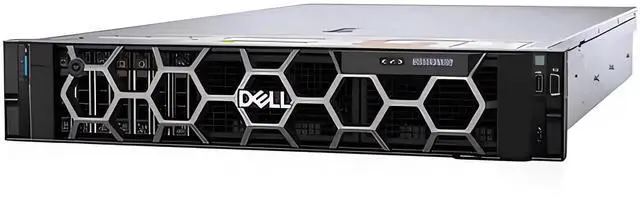
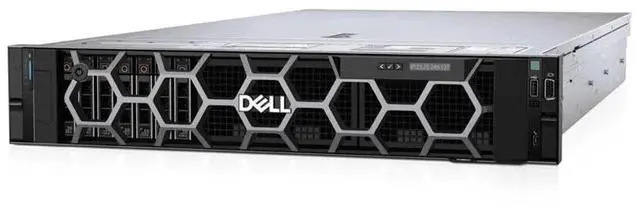
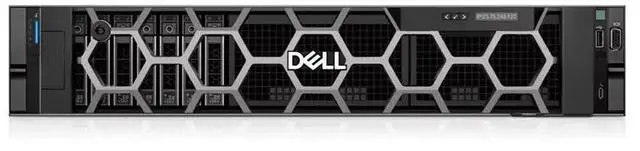
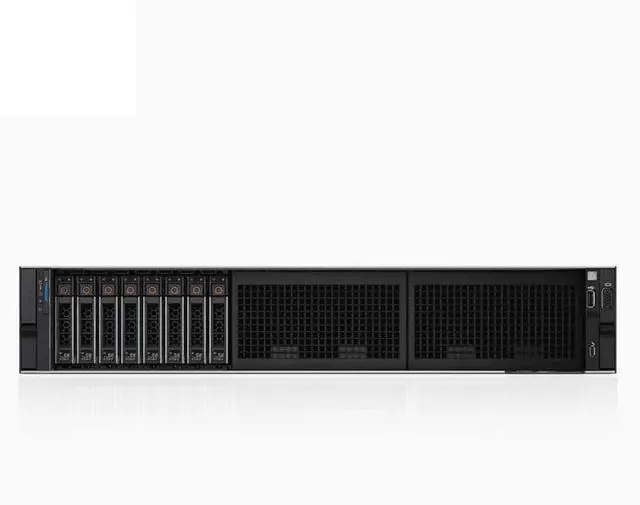
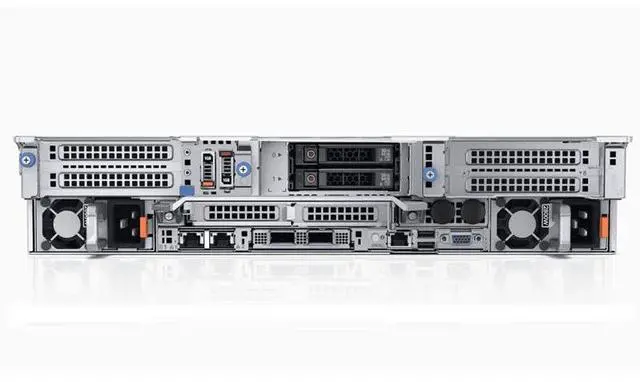
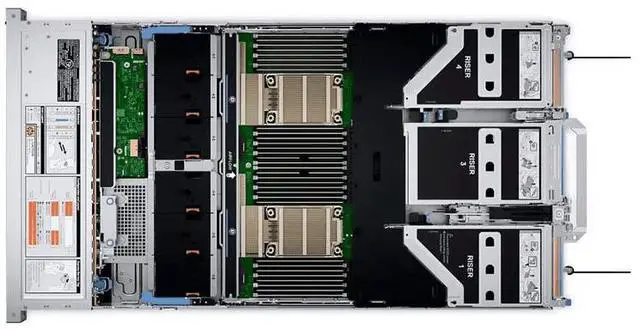



Any questions? Ask CelesteSM will help you find out quickly.
1. Tailored Customization:The absence of CPU, memory, disk, RAID card, and power supply in this Dell R860 server gives you the freedom to customize every aspect. Build a server optimized for your unique workload, whether it's large - scale data storage, high - performance computing, or virtualization tasks.
2. Abundant Storage Options:You can choose from a variety of SSDs for high - speed data access or HDDs for cost - effective, large - capacity storage.
3. High - Performance Foundation:Despite lacking pre - installed components, the 2U Dell R860 is engineered to support high - end CPUs, memory modules, and RAID cards. It has the potential to deliver top - notch performance once you've added the right components for your specific needs.
4. Brand - New & Readily Available:As a brand - new product that's in stock, you can start your server setup without delay. The newness ensures the latest in technology and reliable build quality.
5. Cost - Efficient Investment:Buying this server in its component - less state allows you to control costs. You can invest in components as your business grows, making it a cost - effective solution for startups and budget - conscious enterprises.
The Dell R860 is a new 2U barebones server chassis sold without CPU, memory, storage, RAID card, or power supply, making it suitable for IT teams, system integrators, and businesses that want to configure a server around specific virtualization, high-performance computing, or storage requirements.
| Attribute | Value |
|---|---|
| Best For | System integrators and IT teams who want a customizable 2U rack server chassis to populate with their own CPUs, memory, storage, RAID card, and power supplies; suitable for large-scale data storage, high-performance computing, and virtualization once populated |
| Model Identifiers | Dell R860 2U rack server chassis |
| Chassis And Configuration | 2U server sold without CPU, memory, disk drives, RAID card, or power supply to allow full component-level customization; new product available for immediate setup |
| Expandability And Storage | Engineered to accept high-end CPUs, multiple memory modules and RAID cards; supports choice of SSDs for higher performance or HDDs for larger capacity |
| Deployment And Cost | Component-less purchase lets buyers control costs by adding components over time—suitable for phased deployments or budget-conscious builds |
| Availability | Brand-new and in stock |
Q: Should I choose the Dell PowerEdge R860 or R760 for virtualization and database workloads?
A: Choose the PowerEdge R860 when your plan depends on higher VM density, larger memory footprints, or four-socket scaling. Dell positions the R860 for large in-memory databases, data analytics, AI and virtualization, and VDI, while the R760 is positioned as a mainstream 2U platform for mixed workloads, databases, analytics, and VDI. In practice, the R760 is the simpler fit for standard dual-socket deployments, while the R860 is the better match when memory capacity and CPU scaling matter more than keeping the platform narrower and less complex.
Q: Is the Dell PowerEdge R860 worth it over the PowerEdge R960?
A: Choose the R860 if you need a four-socket platform for business-critical workloads but do not need to step up to Dell's top-end positioning. Dell places the R860 in the high-density compute tier for core workloads, while the R960 is positioned above it for more extreme acceleration and scale. That makes the R860 the more balanced choice for organizations that need four-socket expansion and large memory capacity without automatically moving to the most aggressive enterprise tier.
Q: Should I buy this barebones R860 or a pre-configured server?
A: Choose this barebones R860 if you already know the CPU, memory, storage, and RAID layout you want, or if you need to match an existing standard in your rack. A barebones unit gives more control over component selection and upgrade timing. A pre-configured server is the better fit when you want validated compatibility, faster deployment, and one vendor-built configuration from day one. For experienced IT teams, the barebones route is usually better when workload requirements are already defined.
Q: Is the Dell PowerEdge R860 a better upgrade than an older 2-socket PowerEdge for memory-heavy workloads?
A: Yes, if your main limitation is memory capacity or consolidation per chassis. Dell's current rack server guide lists the R860 with up to 64 DDR5 DIMM slots and up to 16 TB of memory, which is a clear step above mainstream dual-socket models such as the R760 tier. That makes the R860 the stronger upgrade path when older two-socket systems are running into RAM limits, large in-memory database constraints, or higher-density virtualization targets.
Q: Who is this barebones Dell R860 suitable for?
A: This configuration is best for IT teams, system integrators, and experienced buyers who already know which CPU, memory, storage, RAID, and power components they want to install. It is not a ready-to-run server. Because it ships without core components, it makes the most sense for custom builds, staged deployments, or buyers reusing approved parts and standardizing around a specific server configuration.
Q: Is this a good choice if I want full control over the server build?
A: Yes. This listing is designed for buyers who want to choose every major component themselves. The main trade-off is convenience: you gain flexibility on CPU, RAM, drives, RAID, and power supply selection, but you must handle compatibility, sourcing, and assembly. It is a stronger fit for planned infrastructure builds than for buyers who need a turnkey server.
Q: Do I need to buy additional parts before this server can be used?
A: Yes. Based on the listing, this unit does not include a CPU, memory, disk, RAID card, or power supply, so it cannot be deployed as-is. Buyers should plan for a complete component checklist before purchase, including supported processors, matching memory, storage drives, power supplies, and any required drive carriers, rails, or operating system media if those are not included separately.
Q: Is a barebones server like this a cost-effective option?
A: It can be cost-effective for buyers who already have a parts plan or want to avoid paying for preinstalled components they would replace anyway. The value is highest when you need configuration control or phased spending. The trade-off is that final cost can rise quickly once CPUs, RAM, storage, RAID, and power supplies are added, so it is less suitable if you want predictable all-in pricing up front.
Q: Is this server a good fit for virtualization, storage, or high-performance workloads?
A: Potentially yes, but only after it is properly configured. The chassis is intended as a high-end server foundation, so suitability depends on the CPUs, memory capacity, storage layout, RAID choice, and power configuration you install. For buyers planning virtualization, storage-heavy deployments, or compute-intensive workloads, the barebones format is useful because it lets you tune the hardware to the workload instead of accepting a fixed preset.
Q: Who is this barebones Dell R860 actually suitable for?
A: This listing makes the most sense for IT teams, integrators, or experienced buyers who already plan to choose and source their own CPUs, DDR5 memory, storage, RAID or boot options, and power supplies. The R860 platform is positioned for high-density, business-critical workloads such as large in-memory databases, analytics, AI, virtualization, and VDI, but this specific unit is not ready to deploy until the missing core components are added.
Q: Is buying a barebones Dell server like this worth it?
A: It can be worth it if you already have a component plan and want control over the final build cost. Reddit discussions around bare Dell server purchases repeatedly focus on using minimum-config or bare systems to avoid high OEM pricing on drives, memory, and add-in parts. The trade-off is that total cost can rise quickly once CPUs, RAM, storage, RAID or BOSS, and power supplies are added, so it is usually a better fit for buyers who know their bill of materials in advance.
Q: What are the main trade-offs of this no-CPU, no-memory, no-disk configuration?
A: The main advantage is flexibility: you can choose the exact processor, memory footprint, storage layout, and RAID approach for your workload. The main downside is complexity and hidden completion cost. This unit also lacks power supplies, so it is further from a deployable system than a typical barebones server. For buyers comparing ready-to-run systems, that means more sourcing work, more compatibility checking, and a longer path to production.
Q: Is this a good choice if I want a simple, ready-to-use server?
A: No. This listing is better viewed as a chassis and platform foundation, not a turnkey server. Because it ships without CPU, memory, storage, RAID card, or power supply, it is not the right choice for buyers who want fast deployment with minimal setup decisions. A preconfigured server is usually the better option if simplicity, predictable compatibility, and shorter install time matter more than customization.


