




 here!
I’m your shopping assistant for PC builds, upgrades, and everything tech.
Got questions? Ask away!
Start a conversation
here!
I’m your shopping assistant for PC builds, upgrades, and everything tech.
Got questions? Ask away!
Start a conversationShipped by Hebei XG Technology Co., Ltd.






Any questions? Ask CelesteSM will help you find out quickly.
1. Tailored Customization:The absence of CPU, memory, disk, RAID card, and power supply in this Dell R860 server gives you the freedom to customize every aspect. Build a server optimized for your unique workload, whether it's large - scale data storage, high - performance computing, or virtualization tasks.
2. Abundant Storage Options:You can choose from a variety of SSDs for high - speed data access or HDDs for cost - effective, large - capacity storage.
3. High - Performance Foundation:Despite lacking pre - installed components, the 2U Dell R860 is engineered to support high - end CPUs, memory modules, and RAID cards. It has the potential to deliver top - notch performance once you've added the right components for your specific needs.
4. Brand - New & Readily Available:As a brand - new product that's in stock, you can start your server setup without delay. The newness ensures the latest in technology and reliable build quality.
5. Cost - Efficient Investment:Buying this server in its component - less state allows you to control costs. You can invest in components as your business grows, making it a cost - effective solution for startups and budget - conscious enterprises.
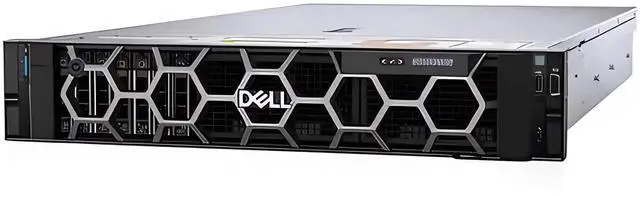
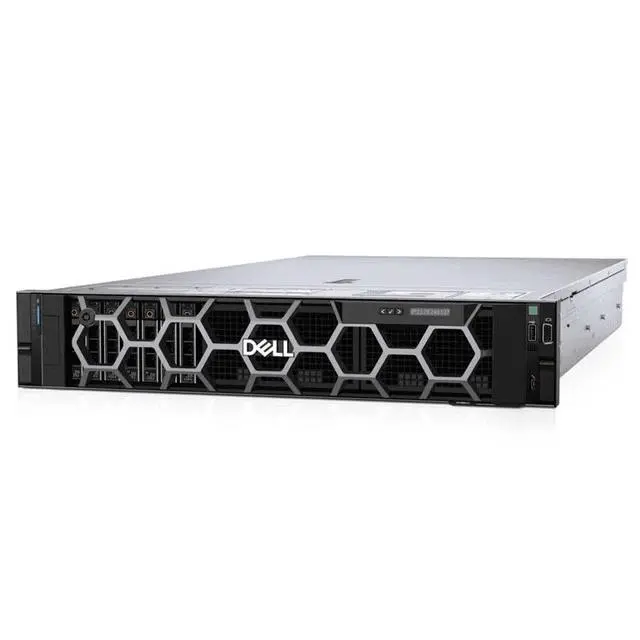
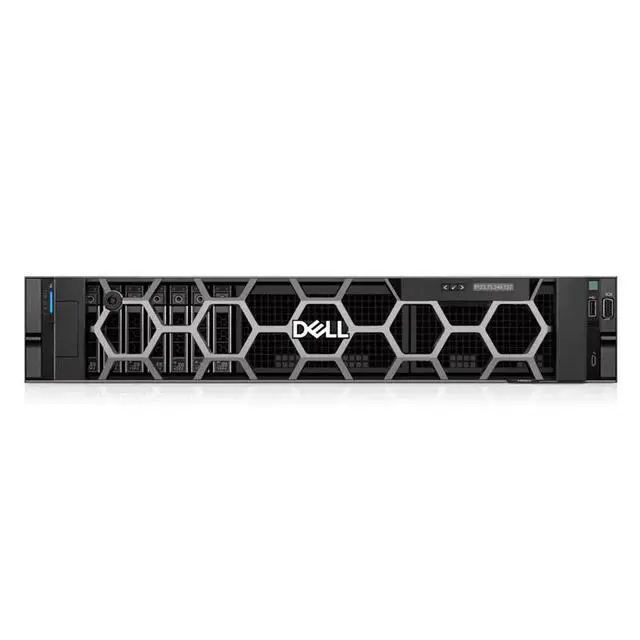
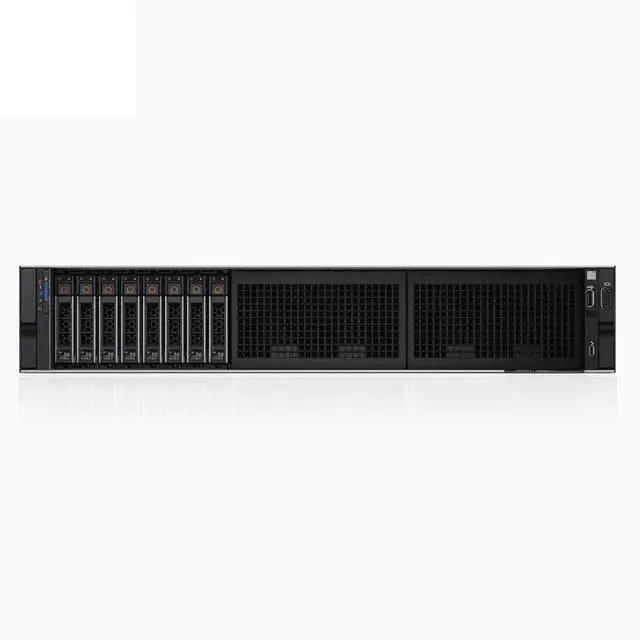
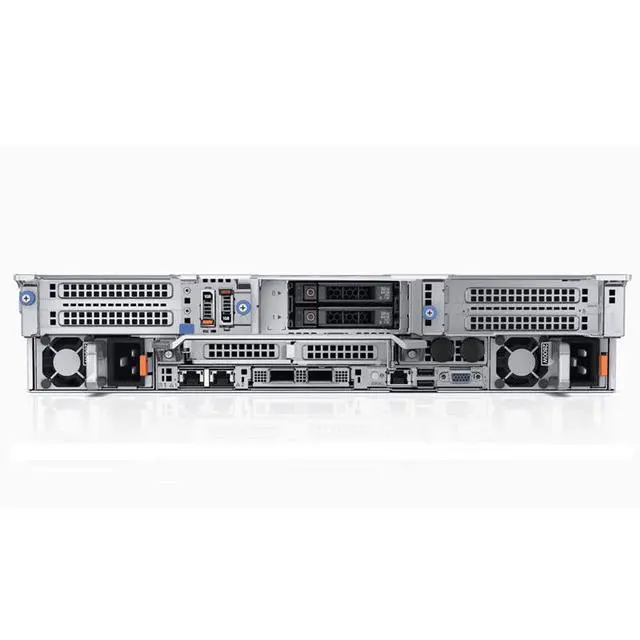
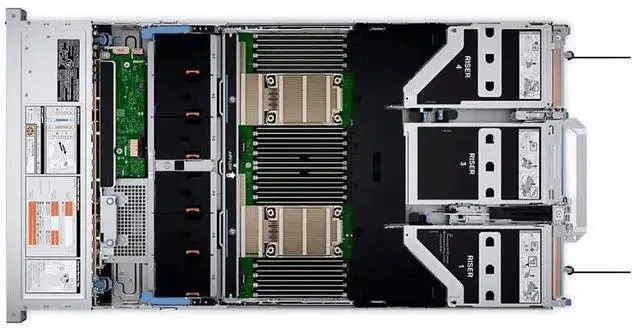
The Dell R860 is a new 2U rack server chassis with 16 x 2.5-inch bays, sold without CPU, memory, storage, RAID card, or power supply, making it well suited for IT teams, system integrators, and businesses that want to configure a server precisely for virtualization, storage, or compute workloads.
| Attribute | Value |
|---|---|
| Best For | System builders and IT teams who want a customizable 2U rack server chassis for dense 2.5" storage arrays or tailored compute/virtualization builds |
| Chassis And Drive Bays | 2U rack-mount chassis with sixteen 2.5-inch drive bays for high-density storage configurations |
| Component Configuration | Ships without CPU, memory, storage drives, RAID controller, or power supply to allow custom component selection and staged procurement |
| Designed Component Support | Intended to accept server-grade CPUs, memory modules, RAID cards, and user-selected power supplies so you can build for storage, high-performance compute, or virtualization workloads |
| Condition And Availability | New condition and listed as in stock |
| Model Identifiers | Dell R860 (2U server) |
Q: Should I choose the Dell PowerEdge R860 or R760 for virtualization?
A: Choose the R860 when your virtualization plan is constrained more by VM density, memory footprint, or socket count than by simple 2-socket efficiency. The R860 is a 4-socket 2U platform with up to 64 DDR5 DIMM slots and up to 16 TB of RAM, and Dell positions it for large in-memory databases, AI and virtualization, and VDI. Choose the R760 when you want a more standard 2-socket platform for mixed workloads and simpler cost control. In short: R860 fits scale-up virtualization and very large memory pools; R760 fits mainstream virtualization with lower platform complexity.
Q: Is the Dell R860 a better fit than the Dell R960?
A: Choose the R860 when you want 4-socket scale-up compute in a denser 2U form factor. Choose the R960 when you need the same general 4-socket class but want more chassis space for expansion and storage. External coverage and Dell product positioning consistently frame the R860 as the compact high-density 4-socket option, while the R960 is the larger platform for broader expansion. If rack density matters more, the R860 is the better fit; if maximum expansion headroom matters more, the R960 is the better fit.
Q: Should I buy this barebones R860 or a fully configured server?
A: Choose this barebones R860 when you already have a component plan or need to control CPU, memory, storage, RAID, and power supply choices yourself. That approach is especially useful for standardized enterprise builds, specific hypervisor compatibility targets, or phased deployment. Choose a fully configured server when faster deployment, single-vendor validation, and less integration work matter more than hardware flexibility. The main trade-off is customization versus deployment simplicity.
Q: Is the Dell R860 worth choosing over the previous-generation R750 or R840 class?
A: Choose the R860 when you want a newer platform with DDR5, PCIe Gen 5, newer Intel Xeon generation support, and much larger memory scaling in a 4-socket 2U design. Compared with the dual-socket R750, the R860 is aimed at a different tier of scale-up workloads. Compared with older 4-socket designs such as the R840, the R860 brings a newer memory and I/O platform and higher top-end memory capacity. Choose older generations mainly when acquisition cost is the priority and your workload does not need the newer platform features.
Q: Should I choose the R860 or a storage-focused model like the R760xd2?
A: Choose the R860 when compute density, memory capacity, and scale-up application performance are the priority. Choose the R760xd2 when the main goal is dense file or object storage, surveillance retention, or large-capacity drive deployment. Dell's own portfolio guidance separates these roles clearly: the R860 is positioned for business-critical scale-up workloads, while the R760xd2 is positioned for storage density and retrieval-focused use cases.
Q: Is this server a complete, ready-to-run system?
A: No. This listing is a bare server chassis, not a complete working server. Based on the product data, it ships without CPU, memory, disks, RAID card, or power supplies, so it is only suitable if you already plan to source and install the required components before deployment.
Q: Who is this Dell R860 most suitable for?
A: It is best suited for IT teams, system integrators, and buyers who need a configurable rack server and already understand server compatibility planning. It is less suitable for general business buyers who want a turnkey server, because major performance, storage, and boot decisions still need to be completed after purchase.
Q: Can I customize the storage configuration later?
A: Yes, but only within the chassis and backplane configuration the unit actually includes. Dell documents multiple R860 drive-backplane options, and the product title indicates a 2.5-inch 16-bay configuration, so buyers should confirm the exact backplane, carrier, and controller setup before assuming support for a specific mix of SAS, SATA, or NVMe drives.
Q: Is buying the chassis-only version a good choice if I want to control cost?
A: Yes, if you already have a component plan or want to phase spending over time. A chassis-only server can reduce upfront cost and avoid paying for unwanted parts, but total build cost can rise quickly once you add CPUs, registered ECC memory, storage, RAID or NVMe enablement, and redundant power supplies.
Q: What is the main trade-off of buying this incomplete server instead of a preconfigured one?
A: The main trade-off is flexibility versus deployment speed. This model gives you more control over CPU, memory, storage, and controller choices, but it also adds compatibility work, assembly time, and validation risk before the server can go into production.
Q: Who is this barebones Dell R860 best suited for?
A: This listing makes the most sense for IT teams, labs, or buyers who already plan to choose their own CPUs, memory, storage, RAID, and power supplies. It is better suited to custom virtualization, database, analytics, or high-memory builds than to buyers who want a ready-to-deploy server.
Q: Is this a good buy if I want maximum control over the configuration?
A: Yes, if your priority is full control over the build. Because it ships without CPU, memory, disks, RAID card, or power supply, you can avoid paying for unwanted parts and tailor the system to a specific workload. The trade-off is that deployment is slower and compatibility planning matters more than with a fully configured server.
Q: Is this Dell R860 a good fit for virtualization?
A: Yes, if you intend to build it with the right CPU, memory, and storage configuration. Community discussion around Dell servers frequently frames them as VM hosts, and the R860 platform is generally associated with dense, business-critical virtualization workloads. In this barebones form, its suitability depends heavily on the parts you add afterward.
Q: What are the main trade-offs of buying this R860 without parts installed?
A: The main advantage is cost and configuration flexibility. The main trade-offs are higher upfront planning effort, extra procurement work, and the need to verify compatibility across CPUs, DIMM population, storage, RAID, and power supplies. It is a stronger option for experienced server buyers than for first-time buyers who need simplicity.
Q: Is this a good replacement for a smaller or more general-purpose server?
A: Only if your workloads justify a large 2U, enterprise-class platform. The R860 is more appropriate when you need a high-end foundation for compute-heavy, memory-heavy, or consolidated workloads. For lighter office, file-serving, or simple small-business use, a smaller and more complete server may be easier to buy, deploy, and support.


