




 here!
I’m your shopping assistant for PC builds, upgrades, and everything tech.
Got questions? Ask away!
Start a conversation
here!
I’m your shopping assistant for PC builds, upgrades, and everything tech.
Got questions? Ask away!
Start a conversationShipped by Hebei XG Technology Co., Ltd.



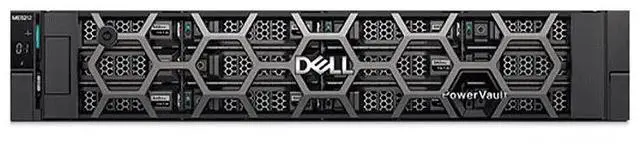
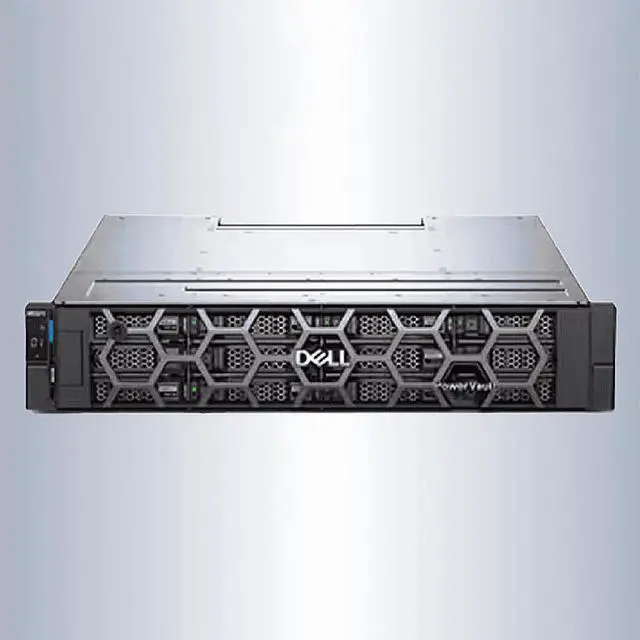



Any questions? Ask CelesteSM will help you find out quickly.
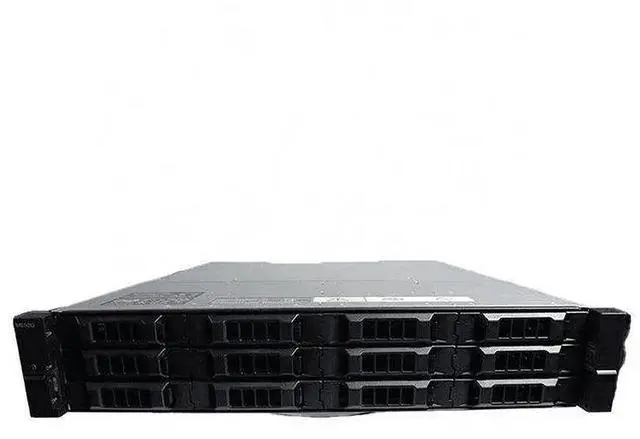
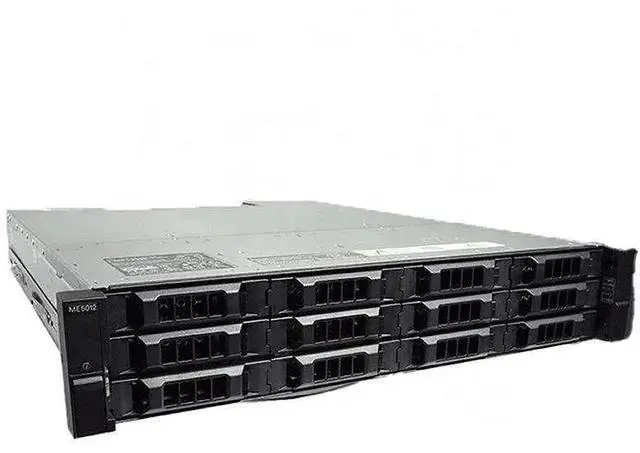
1. Flexible Storage: 12 x 3.5 - inch bays for custom drive setup.
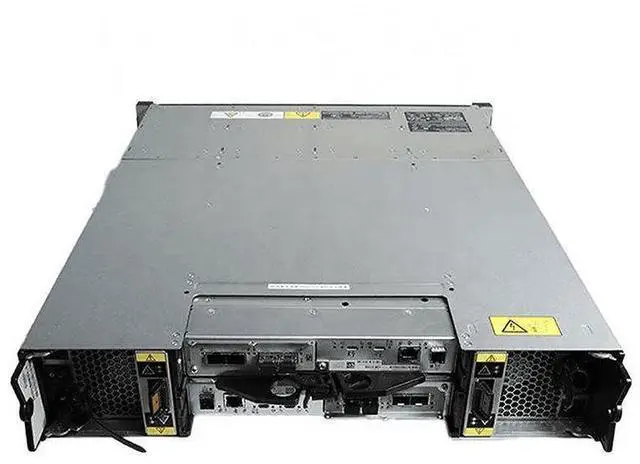
2. Power Redundancy: Dual power supplies ensure continuous operation.
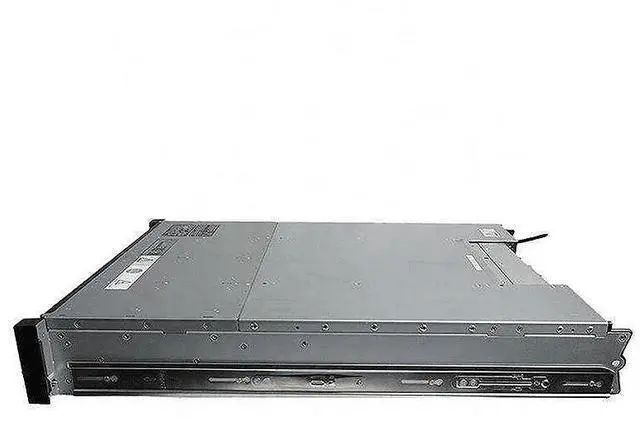
3. Easy Installation: Slide rails simplify rack installation and maintenance.
4. Reliable Build: New Dell product, built to last.
5. Long - term Warranty: 3 - year warranty for worry - free use.
The Dell ME5212 is a 2U diskless storage array with 12 large-form-factor 3.5-inch bays and 25Gb iSCSI connectivity, making it a strong fit for businesses and IT teams building scalable shared storage for virtualization, backup, or expanding rack-based infrastructure.
| Attribute | Value |
|---|---|
| Best For | Rack-mounted 2U storage deployments that need a diskless chassis with 12 x 3.5-inch drive bays and 25 Gigabit iSCSI connectivity |
| Drive Bays And Form Factor | 2U rack chassis, diskless, with 12 x 3.5-inch drive bays for custom drive configurations |
| Power And Redundancy | Dual power supplies providing power redundancy for continuous operation |
| Installation And Rails | Includes slide rails to simplify rack installation and maintenance |
| Networking | 25 Gigabit iSCSI connectivity |
| Warranty And Condition | 3-year warranty; new, in-stock unit |
| Model Identifiers | Dell ME5212 2U storage chassis (diskless) |
| Category | DELL — Server System |
Q: Dell PowerVault ME5212 vs ME5012: which one should I choose?
A: Choose the ME5212 when you want the same 12-bay 2U form factor as the ME5012 but need newer ME5-series positioning, higher host-side bandwidth options such as 25Gb iSCSI, and more headroom for modern SAN workloads. Choose the ME5012 when your priority is a lower-cost 12-bay entry array for lighter performance needs and you do not need the newer interface and platform updates.
Q: Dell PowerVault ME5212 vs ME5224: is 12-bay or 24-bay better?
A: Choose the ME5212 when you prefer larger 3.5-inch drives and want to maximize capacity per bay in a compact 2U chassis, especially for bulk storage, backup targets, or hybrid arrays with fewer drives. Choose the ME5224 when you want more drive slots in the same 2U space, finer performance scaling with more spindles or SSDs, and a configuration that is easier to tune for IOPS-focused workloads.
Q: Should I buy the ME5212 or move up to the ME5284?
A: Choose the ME5212 when you need a conventional 2U array that is easier to place in smaller racks and fits midrange capacity plans. Move up to the ME5284 when raw capacity density and future expansion matter more than rack simplicity. The ME5284 is the better fit for large-scale retention, archive, or backup environments where many more 3.5-inch bays in the base chassis reduce the need to add expansion shelves early.
Q: Is the ME5212 a better fit than a Dell PowerStore array?
A: Choose the ME5212 when you want simpler block storage for price-sensitive SAN or DAS deployments and your priority is practical capacity, standard replication and snapshot features, and straightforward administration. Choose PowerStore when you need a higher-tier platform with a broader feature set and are planning around more advanced data services or a larger long-term storage architecture.
Q: Does this Dell ME5212 come with drives, or do I need to add my own?
A: You need to add your own drives. This listing is diskless, so it provides the chassis, 12 front 3.5-inch bays, and the storage platform, but not installed hard drives. It is best for buyers who want to choose drive type, capacity, and RAID layout themselves rather than buying a pre-populated system.
Q: Who is the Dell ME5212 best suited for?
A: The ME5212 is best suited for business and IT environments that need shared block storage in a rack, especially for virtualization, database, backup, and general server storage. It is not aimed at home users or casual file storage buyers. The 2U rack format, dual power supplies, and 25Gb iSCSI connectivity make it a better fit for data center or server-room deployment.
Q: Is this a good choice if I want simple NAS-style file sharing for a small office?
A: Usually no. The ME5212 is a SAN-oriented array using iSCSI block storage, so it is better for attaching storage to servers than for acting as a simple plug-and-play NAS. If you want easy shared folders, app support, and lighter administration, a NAS platform is usually the easier option. If you already run servers or virtualization hosts and want centralized block storage, the ME5212 is the more appropriate type of product.
Q: What are the main trade-offs versus a NAS or lower-end diskless enclosure?
A: The ME5212 trades simplicity for enterprise features. Compared with a NAS or a basic diskless enclosure, it gives you rackmount deployment, redundant power, and higher-speed 25Gb iSCSI networking, which are useful in business environments. The trade-offs are higher setup complexity, the need for compatible networking and server infrastructure, and less appeal for buyers who only need direct-attached storage or simple shared folders.
Q: Is the 12-bay 3.5-inch design a better fit than a smaller or 2.5-inch storage system?
A: It is a better fit when you want higher raw capacity per drive and fewer drives to manage, which is common for backup, archival, and general-purpose business storage. A 2.5-inch system can be better when you prioritize density or all-flash-style configurations. The main trade-off is that 3.5-inch bays usually favor capacity-focused builds, while smaller-bay systems can offer different performance and expansion profiles.
Q: Who is the Dell ME5212 a good fit for?
A: The ME5212 is best suited to organizations that want a rack SAN with 12 large-form-factor drive bays, dual power supplies, and 25Gb iSCSI connectivity for shared storage. It fits straightforward virtualization, file-serving, and general business storage deployments better than software-defined or JBOD-first designs.
Q: Is the ME5212 a good choice if I want simple shared storage over Ethernet?
A: Yes, if your goal is conventional shared block storage over iSCSI. Reddit and YouTube discussion around the ME5 line consistently focuses on host attachment and SAN-style deployment rather than DIY storage layering. The trade-off is that it is purpose-built storage hardware, so it is less flexible than building around direct-attached disks.
Q: What are the main trade-offs of buying the ME5212 instead of a JBOD or software-defined storage setup?
A: The main trade-off is control versus simplicity. The ME5212 gives you an integrated storage platform with redundant power and SAN-style management, but discussion around the ME5 line shows it is not the natural choice for users who want raw-disk access for ZFS or similar software-defined storage stacks. If you specifically want disks exposed directly to the host, a JBOD-style enclosure is usually a better fit.
Q: Is the 25Gb iSCSI version worth considering over slower Ethernet storage options?
A: It can be worth it if your environment already uses faster networking and needs shared storage bandwidth beyond entry-level 10GbE setups. Community discussion around the ME5 line repeatedly highlights 25Gb iSCSI as one of the more meaningful upgrades in the platform. It makes less sense if the rest of your network or hosts cannot use that extra link speed.
Q: Is the ME5212 worth buying if I just need a basic, dependable SAN and not advanced data services?
A: Yes, if your priority is basic shared storage with standard enterprise hardware features rather than a feature-heavy platform. Discussion around the ME5 family often frames it as a practical, no-frills SAN option. The trade-off is that buyers comparing it with more advanced arrays may find fewer higher-end software features.


