




 here!
I’m your shopping assistant for PC builds, upgrades, and everything tech.
Got questions? Ask away!
Start a conversation
here!
I’m your shopping assistant for PC builds, upgrades, and everything tech.
Got questions? Ask away!
Start a conversationShipped by Hebei XG Technology Co., Ltd.






Any questions? Ask CelesteSM will help you find out quickly.
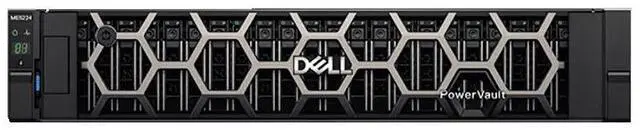
1. High - density Storage:24 x 2.5 - inch drive bays in a 2U chassis offer high - density storage, perfect for space - constrained rack environments.
2. Flexible Configuration:Diskless design allows you to freely choose different types and capacities of drives, like SAS, NL - SAS or SSD, and supports mixed configurations for a balance of performance and capacity.
3. High Availability:Dual power supplies provide redundancy, preventing storage interruptions due to power failures and ensuring business continuity. Hot - swappable components enable hardware maintenance and upgrades without system shutdown.
4. Powerful Performance:Equipped with Intel Xeon processors and dual - controller, each with 16GB of memory, delivering high throughput of 14GB/s read and 11GB/s write.
5. Rich Interfaces:Comes with various interfaces including 10Gb iSCSI BaseT 8 - port, 25Gb iSCSI SFP+ 8 - port, 12Gb SAS 8 - port, enabling flexible connections to different devices for multiple application scenarios.
6. Easy Installation & Maintenance:Slide rails facilitate easy installation and removal in the rack for convenient operation and maintenance. Features an intuitive Web - based (HTML5) management interface for hassle - free management.
7. Good Expandability:Supports disk expansion. The 2U basic array can be connected to up to 9 2U expansion enclosures or 3 5U expansion enclosures, allowing flexible storage capacity expansion.
8. Abundant Software Features:Comes with multiple software features such as ADAPT RAID, auto - tiering, snapshots, replication, etc., enabling data protection, performance optimization, and efficient management.
9. Worry - free Warranty:Brand - new product with a 3 - year warranty, ensuring professional after - sales service from Dell for a more reassuring user experience.
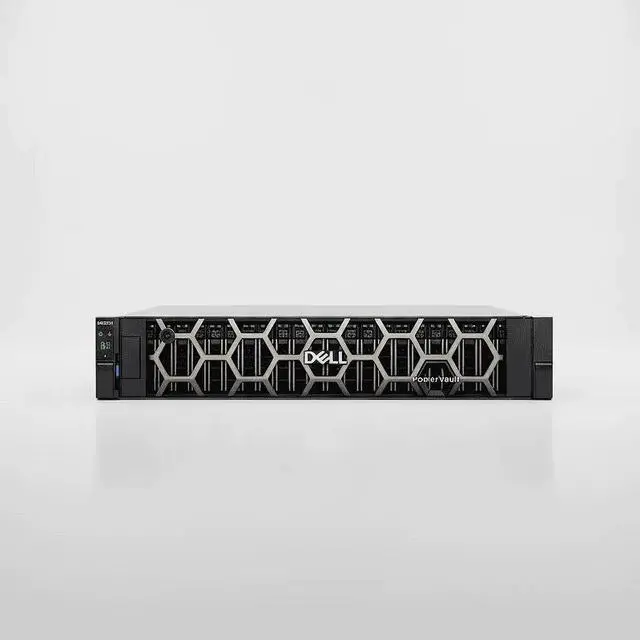
The Dell ME5224 is a 2U diskless storage array with 24 front 2.5-inch bays, dual controllers, and redundant power, making it well suited for businesses that need dense, expandable shared storage for virtualization, databases, and mixed-performance workloads.
| Attribute | Value |
|---|---|
| Best For | High-density 2U rack storage for space-constrained datacenter or shared-storage deployments; supports up to 24 x 2.5-inch drives (SAS, NL-SAS, SSD) and offers iSCSI and SAS connectivity for SAN and expansion use |
| Chassis And Drive Bays | 2U diskless rack chassis with 24 x 2.5-inch hot-swappable drive bays supporting SAS, NL-SAS, and SSD in mixed configurations; slide rails included for rack serviceability |
| Controllers And Memory | Dual-controller architecture with Intel Xeon processors and 16GB memory per controller |
| Performance | Measured throughput of 14 GB/s read and 11 GB/s write |
| Connectivity And Ports | Multiple host and expansion interfaces including 8×10Gb iSCSI BaseT ports, 8×25Gb iSCSI SFP+ ports, and 8×12Gb SAS ports for flexible connections to hosts and expansion enclosures |
| Power And Availability | Redundant dual hot-swappable power supplies and hot-swappable components to enable maintenance without system shutdown |
| Expansion And Scalability | Supports disk expansion via connection to up to 9 × 2U expansion enclosures or 3 × 5U expansion enclosures to scale capacity |
| Management And Software | HTML5 web-based management interface for administration; includes multiple software features for storage management |
| Physical And Mounting | 2U rack-mount form factor with included slide rails for installation and easy removal in racks |
| Warranty And Support | 3-year warranty |
| Model Identifiers | Dell ME5224 2U diskless storage array |
Q: Should I choose the Dell PowerVault ME5224 or ME5024?
A: Choose the ME5224 if you want Dell's newer 2U, 24-bay small-form-factor ME52xx platform with updated controller hardware and newer ME52xx expansion compatibility. Choose the ME5024 if you want the earlier ME5 24-bay model and it meets your performance and connectivity needs. In practical buying terms, the ME5224 is the better fit for new deployments that want the current 24-bay Dell PowerVault generation, while the ME5024 is the value-oriented choice when pricing on the older model is meaningfully lower.
Q: Is the ME5224 a better choice than the ME5212?
A: Choose the ME5224 when you need higher 2.5-inch drive density in the same 2U rack space, especially for SSD-heavy or mixed-performance deployments. Choose the ME5212 when you prefer a 12-bay 3.5-inch layout for larger-capacity drives and a lower starting footprint. The decision is mainly about media form factor and density: ME5224 favors compact, high-bay-count SFF configurations, while ME5212 favors LFF capacity per drive.
Q: Should I buy the ME5224 or move up to the ME5284?
A: Choose the ME5224 if you want a compact 2U array with 24 small-form-factor bays and plan to scale within a midrange footprint. Move up to the ME5284 if your priority is maximum base-chassis density and large-capacity growth from the start. Dell positions the 5U ME5284 as the dense model in the family, while the ME5224 is the 2U dense-SFF option. The trade-off is rack footprint versus starting capacity scale.
Q: Is the ME5224 worth choosing over an older ME4-series 24-bay array?
A: Yes, the ME5224 is the more current choice if you are comparing against an older 24-bay ME4-series system for a fresh deployment. Dell positions newer PowerVault generations around higher bandwidth, newer host connectivity options, and updated controller capabilities, and community discussion around the ME4-to-ME5 transition consistently points to newer 25Gb iSCSI and 32Gb Fibre Channel options plus controller improvements. An older ME4-series array still makes sense for budget-led refreshes or compatibility-driven expansions, but the ME5224 is the safer long-term choice for net-new builds.
Q: Should I choose the ME5224 or a higher-end platform like Dell PowerStore or HPE Alletra/Nimble?
A: Choose the ME5224 when you want straightforward block storage in the entry-to-midrange segment and your priority is a simpler, more budget-controlled SAN or DAS deployment. Move to a higher-end platform such as PowerStore or Alletra/Nimble when advanced data services, deeper analytics, and premium platform features matter more than entry-array cost discipline. Community comparisons regularly frame PowerVault ME systems as practical arrays for buyers who want core shared storage features without stepping into a more feature-rich enterprise tier.
Q: Who is the Dell ME5224 best suited for?
A: The Dell ME5224 is best suited for SMB, ROBO, and mid-size IT environments that need shared block storage in a compact 2U form factor. It fits buyers who want a rack-mounted SAN/DAS array with dual-controller availability, flexible host connectivity, and room to scale over time. It is less suitable for very small offices that only need simple NAS file sharing or for buyers without rack, power, and storage administration capability.
Q: Does the ME5224 come with drives, or do I need to buy storage separately?
A: This listing is diskless, so you need to buy drives separately before the array can be put into production. The advantage is flexibility: you can choose a capacity and media mix that fits your workload. The trade-off is that the total project cost, validated drive support, RAID planning, and usable capacity all depend on the drives you add, not just the chassis itself.
Q: Is the ME5224 a good choice if I need high availability for business workloads?
A: Yes, if your goal is entry-to-midrange shared storage with redundancy. The ME5224 platform supports dual controllers and hot-swappable components, and this listing includes dual power supplies, which makes it a better fit for virtualization, databases, and line-of-business workloads than single-controller or desktop-style storage. The main caveat is that high availability also depends on correct host multipathing, supported drives, and proper network or SAS design.
Q: Is the ME5224 better than a NAS for general office storage?
A: It depends on the job. The ME5224 is better when you need block storage for servers, virtualization hosts, or application workloads that benefit from SAN or direct-attached storage connectivity. A NAS is usually the simpler and cheaper choice for basic shared files, user folders, and light office collaboration. In short: choose the ME5224 for infrastructure storage, not as the easiest option for ordinary file sharing.
Q: What are the main trade-offs versus buying a larger 3.5-inch storage array instead?
A: The ME5224 prioritizes density and performance in 24 small-form-factor 2.5-inch bays within 2U, which is useful in space-constrained racks and for SSD or faster-tier workloads. A larger 3.5-inch array is usually the better value for bulk capacity and lower cost per terabyte. The trade-off is straightforward: the ME5224 is the stronger choice for compact, performance-oriented deployments, while 3.5-inch platforms are often better for archive, backup, or capacity-heavy storage growth.
Q: Who is the Dell ME5224 best suited for?
A: The ME5224 is best suited for small to mid-sized business or branch-office storage deployments that need shared block storage, redundancy, and room to expand. It fits buyers who want a 2U array with 24 small-form-factor bays, dual controllers, dual power supplies, and multiple host connectivity options, but do not need higher-end platform features typical of more premium SAN lines.
Q: Is the Dell ME5224 worth buying if I want a straightforward SAN without premium extras?
A: Yes, if your priority is a practical shared-storage array with solid density and flexible drive choices rather than advanced data services. Reddit discussion around the ME5 line commonly frames it as a more basic, budget-conscious SAN option. The trade-off is that it may offer fewer higher-end software features than more expensive storage platforms.
Q: What are the main trade-offs of choosing the ME5224?
A: The main trade-offs are feature depth and deployment fit. The ME5224 gives you dense 2U storage, mixed-drive flexibility, dual-controller availability, and expansion support, but buyer discussions around the ME5 family often compare it with more full-featured arrays that offer richer data reduction or software capabilities. It is a better fit for buyers prioritizing standard block storage and cost control than for those seeking top-tier enterprise features.
Q: Is the ME5224 a good choice if I expect to grow storage capacity later?
A: Yes, it is a reasonable choice for buyers who expect moderate future expansion. The base chassis already provides 24 x 2.5-inch bays, and the product information states that it supports connection to additional expansion enclosures. That makes it more suitable for organizations that want to start with a smaller deployment and scale capacity over time than for buyers who need all capacity installed on day one.
Q: Are there any reliability or management concerns I should weigh before buying?
A: Possibly. Community discussion on the ME5 family includes some reports of controller-management instability or reboot issues, while also indicating that these issues may not always affect the storage data path directly. That means the ME5224 may still be suitable for buyers comfortable with standard SAN administration and firmware management, but it is worth checking firmware status, support coverage, and operational requirements before purchase.


