




 here!
I’m your shopping assistant for PC builds, upgrades, and everything tech.
Got questions? Ask away!
Start a conversation
here!
I’m your shopping assistant for PC builds, upgrades, and everything tech.
Got questions? Ask away!
Start a conversation Top Rated Top Rated


Make informed decisions with expert advice. Learn More




Any questions? Ask CelesteSM will help you find out quickly.


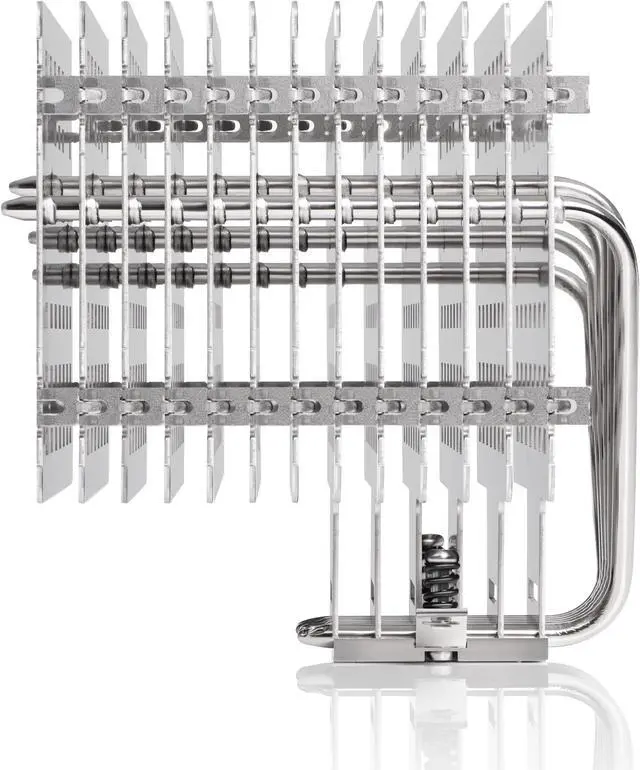
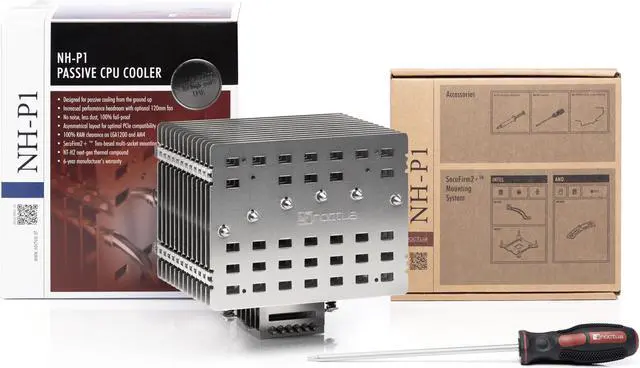
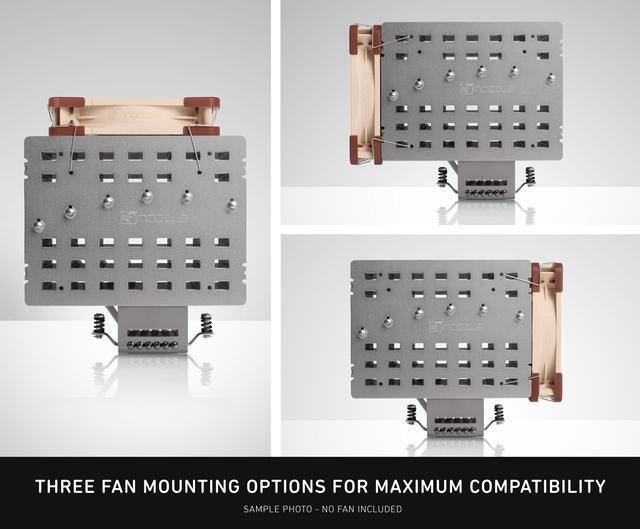
The NH-P1 is Noctua's first passive CPU cooler and has been custom-designed for fanless operation from the ground up: in enclosures with good natural convection, its six heatpipes and thick, widely spaced heatsink fins enable it to cool modern high-end CPUs with low to moderate heat dissipation completely passively (see setup guidelines and list of recommended cases). For further enhanced performance or semi-passive setups that only spin up their fans when necessary, the NH-P1 can be outfitted with a low-speed, ultra-quiet 120mm fan such as the NF-A12x25 LS-PWM. Topped off with the professional Torx-based SecuFirm2+ mounting system and Noctua's award-winning NT-H2 thermal compound, the NH-P1 is the ideal cornerstone for premium-grade fanless or semi-passive builds.

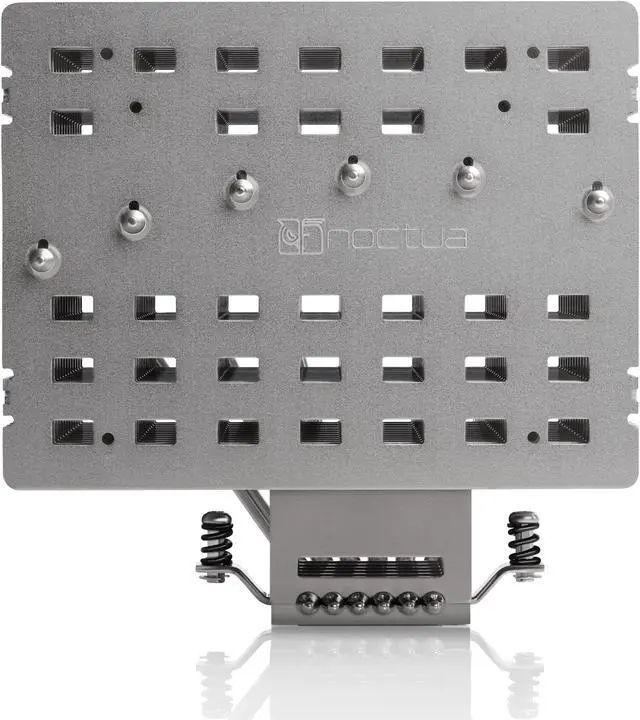
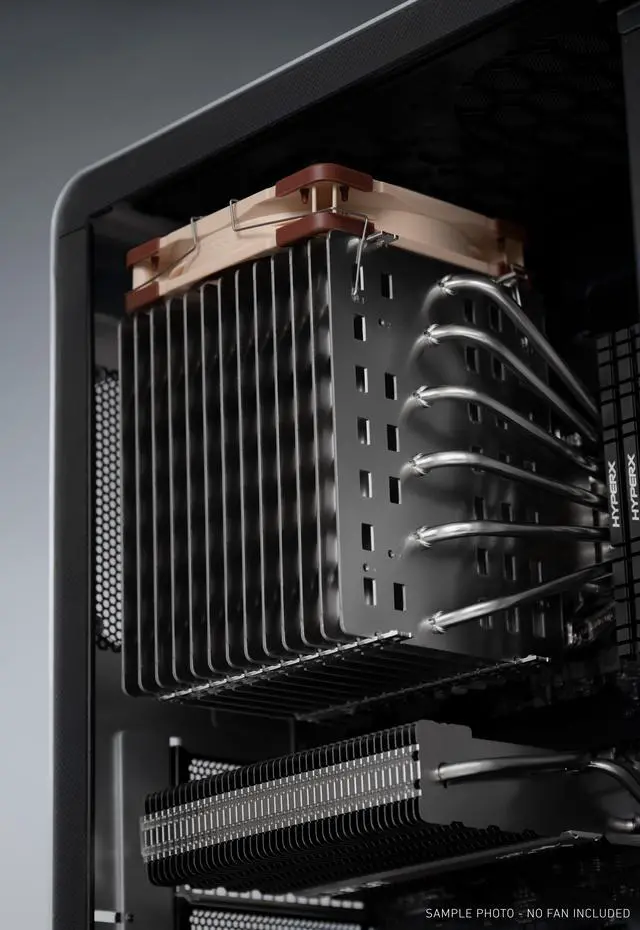
The NH-P1 isn't just a regular heatsink without a fan: it has been designed for fanless operation from the ground up, featuring much thicker, much more widely spaced fins in order to achieve both the mass and the minimal airflow resistance that are required in order to excel in natural convection cooling.

| Fanless cooling doesn't only have the advantage of being completely silent: if you're relying on natural convection only and don't have case fans pushing air through a case, less dust will accumulate in filters or inside the system. Last but not least, with no moving parts such as fans or pumps that could possibly fail, the NH-P1 is as fail-proof as it can be. |

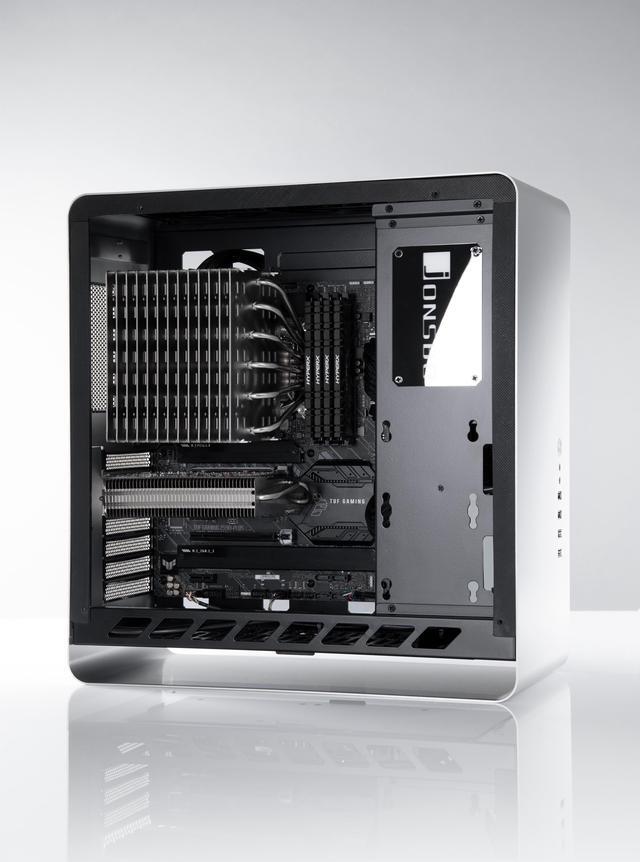
| Due to its asymmetric design, the NH-P1 does not overhang the RAM slots on Intel LGA1851/LGA1700/LGA1200/LGA115x and AMD AM4/AM5 based motherboards, which ensures easy access to the modules and 100% compatibility with DIMMs that feature tall heat-spreaders. |

| As many current motherboards have the top PCIe x16 slot sitting close to the socket, bigger heatsinks tend to block it. Due to its asymmetrical layout, the fin-stack of the NH-P1 is offset towards the upper edge of the motherboard when installed in standard orientation. This allows it to clear the top PCIe x16 slot on most current µATX and ATX motherboards (see motherboard compatibility list). |

| Noctuas SecuFirm2 mounting systems have become synonymous with quality, safety and easy installation. Torx-based, the professional SecuFirm2+ version with its included screwdriver provides even better handling and durability. Socket support includes Intel LGA1851, LGA1700 (since 2021), LGA1200 and LGA115x (LGA1150, LGA1151, LGA1155, LGA1156), as well as AMD AM4 and AM5. |


| Caution | While the NH-P1 provides first-rate performance for a passive cooler, it is not suitable for overclo |
|---|---|
| Max. TDP | Please note that the TDP (Thermal Design Power) rating or amount of heat dissipation that the cooler |
| Setup guidelines | The NH-P1 strictly requires either a fanless PC case with good natural convection, an open benchtabl |
|---|---|
| Socket compatibility | Intel LGA1851, LGA1700, LGA1200, LGA1156, LGA1155, LGA1151, LGA1150 & AMD AM5, AM4 |
The Noctua NH-P1 is a fanless CPU heatsink designed for silent cooling by natural convection, making it suitable for quiet PC builds with a compatible low-to-moderate-heat CPU and a case that supports passive airflow.


