Your Browsing History
Meet Your Seller
Visit EmpressTech Store
FOLLOW
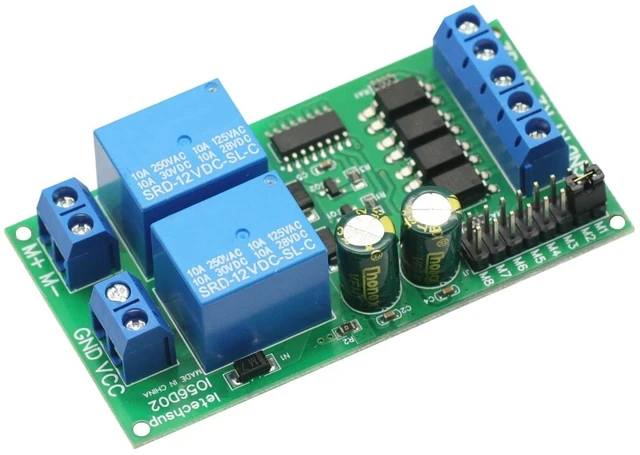
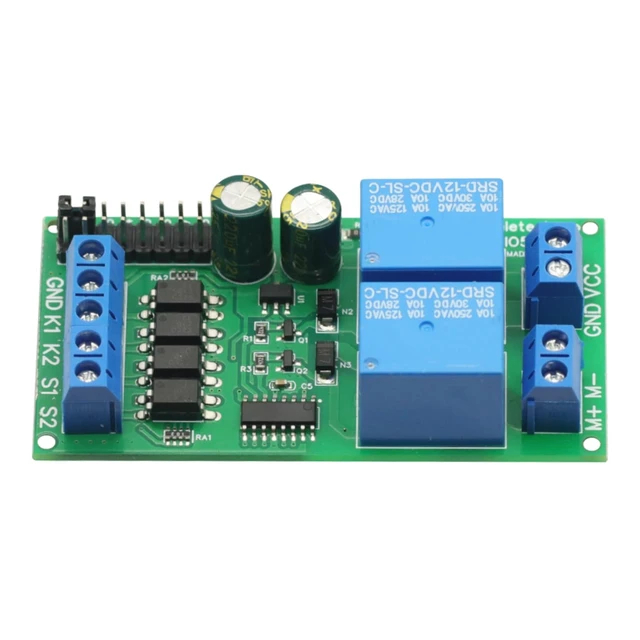
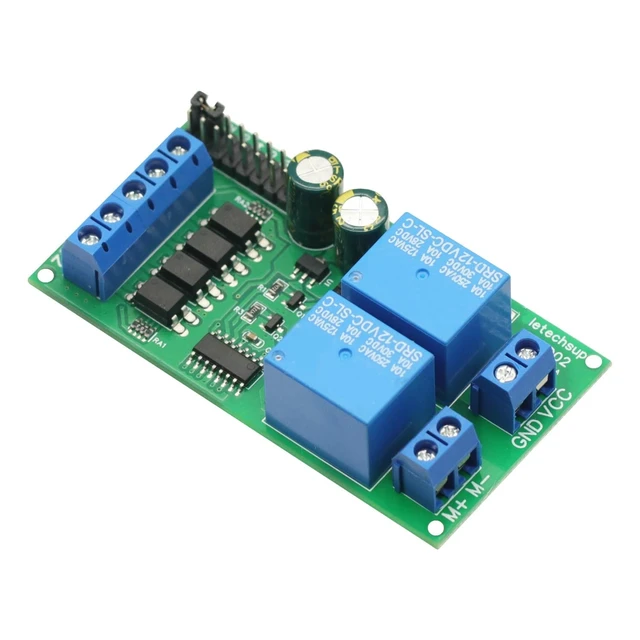
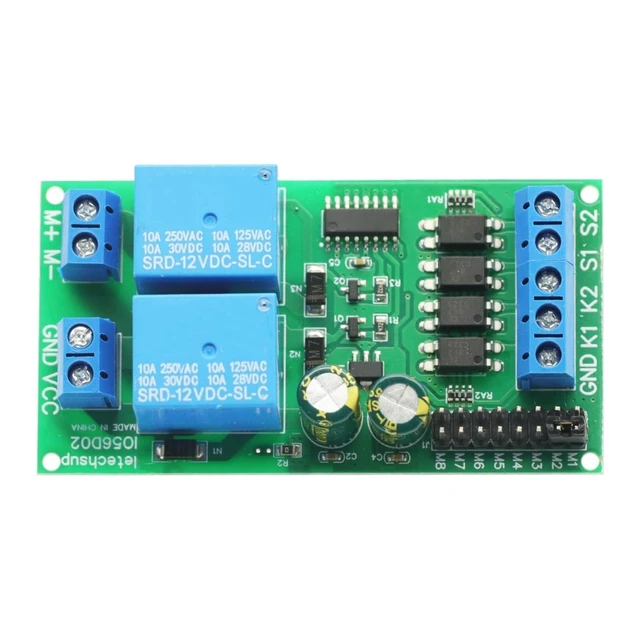
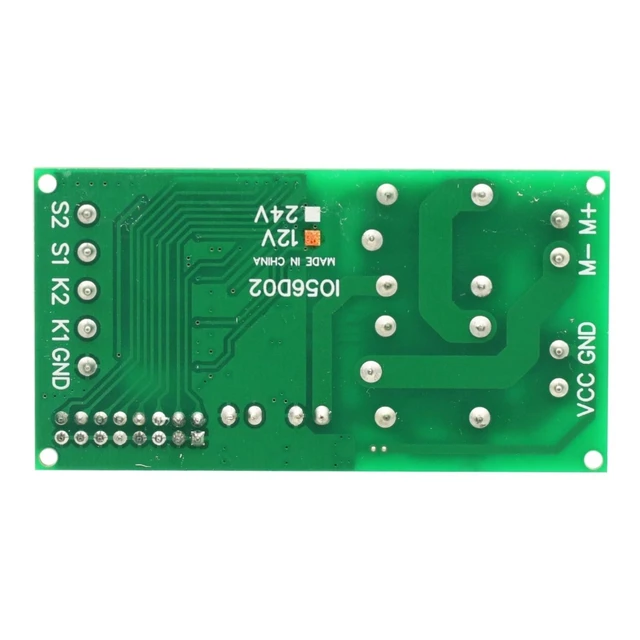
12V 24V DC Motor Controller Relay Board Forward Reverse Control Limit Start Stop Switch Pusher for Electric Curtain Automatic Door
- Working mode 1: Self-locking mode, the signal only needs to be triggered once, and the module self-locking keeps running.; Working mode 2: The automatic start version of mode 0 adds the power-on automatic start function on the basis of mode 0, that is, each time the module is powered on, it will automatically start forward rotation. This version is more suitable as a motion module between two points, and it will work automatically when the module is powered on.; Working mode 3: Momentary mode. When there is a forward rotation signal, the motor rotates forward; when there is a reverse rotation signal, the motor reverses; when there is no forward rotation signal and no reverse rotation signal, the motor stops; when forward rotation, if there is a forward rotation limit, it will stop forward rotation; During rotation, if there is a reverse rotation limit signal, the reverse rotation will be stopped. Removing the two limit signals will not restore the rotation, and it is necessary to re-input the rotation signal to start the forward and reverse rotation.; Working mode 4: The level-driven mode, similar in function to the H-bridge, operates according to the following logic: When there is a forward rotation signal and there is no signal at the forward limit, it will rotate forward; when there is a reverse signal and there is no signal at the reverse limit, it will reverse; this version is pure logic type, suitable for single-chip signal input. Pay attention to the forward rotation
+
+
Overview
Specs
Reviews
Any questions? Ask CelesteSM will help you find out quickly.
Try me now
Product description This module has 4 signal input terminals, namely ''K1'', ''K2'', ''S1'', ''S2'', K1 is the forward rotation signal input terminal, K2 is the reverse rotation signal input terminal, and S2 is the forward rotation limit signal Input terminal, S2 is the reverse limit signal input terminal. The signal input source can be selected from micro switch, induction, infrared, metal, remote control and other modules, and can also be controlled by a single-chip microcomputer.
Working mode: Mode
0 (default): Self-locking mode, the signal only needs to be triggered once, and the module self-locking keeps running. - When encountering a reverse signal during forward rotation, immediately stop for 0.3 seconds and then enter reverse rotation; - The limit signal has priority, and the forward limit signal will be stopped immediately when the forward rotation is encountered; - The forward rotation cannot be started when there is a forward rotation limit signal, and the same is true for reverse rotation; - The forward rotation signal and the reverse rotation signal are valid when the low level, that is, a short-term 0V level (negative power supply), will start; - The limit signal is normally open; (For example, when the SW1 switch is closed or connected to a low level, the forward rotation cannot be started. ) -Only one limit signal is valid at a time, for
example: inputting two limit signals at the same time during reverse rotation cannot stop the motor rotation.
Mode 1: The automatic start version of mode 0 adds the power-on automatic start function on the basis of mode 0, that is, each time the module is powered on, it will automatically start forward rotation. This version is more suitable as a motion module between two points, and it will work automatically when the module is powered on.
Mode 2: Momentary mode. When there is a forward rotation signal, the motor rotates forward; when there is a reverse rotation signal, the motor reverses; when there is no forward rotation signal and no reverse rotation signal, the motor stops; when forward rotation, if there is a forward rotation limit, it will stop forward rotation; During rotation, if there is a reverse rotation limit signal, the reverse rotation will be stopped. Removing the two limit signals will not restore the rotation, and it is necessary to re-input the rotation signal to start the forward and reverse rotation.
Mode 3: The level-driven mode, similar in function to the H-bridge, operates according to the following logic: When there is a forward rotation signal and there is no signal at the forward limit, it will rotate forward; when there is a reverse signal and there is no signal at the reverse limit, it will reverse; this version is pure logic type, suitable for single-chip signal input. Pay attention to the forward rotation priority, that is, forward rotation is when both the forward and reverse input meet the conditions. Pay attention to the real-time nature of the level. For example, when there are signals at the forward and reverse input terminals at the same time, it is forward rotation. At this time, if the forward rotation signal is removed and the reverse signal is retained, it will reverse. The limit input is invalid when the motor is rotating, and the motor cannot be stopped.
Mode 4: Start/Stop mode, the function is the same as mode 0, only the following function details are different: If the forward rotation has been started, input the forward rotation signal again, it will stop immediately; if the reverse rotation has been started, input the reverse rotation signal again, it will stop immediately.
For example: there is a forward signal >>> forward rotation immediately; at this time, input the forward rotation signal >>> immediately stop forward rotation. Reverse the same.
Mode 5: The function is the same as mode 0, only the limit signal difference is as follows: The limit signal is only valid for the current time (the leading edge is valid). For example,
Working mode: Mode
0 (default): Self-locking mode, the signal only needs to be triggered once, and the module self-locking keeps running. - When encountering a reverse signal during forward rotation, immediately stop for 0.3 seconds and then enter reverse rotation; - The limit signal has priority, and the forward limit signal will be stopped immediately when the forward rotation is encountered; - The forward rotation cannot be started when there is a forward rotation limit signal, and the same is true for reverse rotation; - The forward rotation signal and the reverse rotation signal are valid when the low level, that is, a short-term 0V level (negative power supply), will start; - The limit signal is normally open; (For example, when the SW1 switch is closed or connected to a low level, the forward rotation cannot be started. ) -Only one limit signal is valid at a time, for
example: inputting two limit signals at the same time during reverse rotation cannot stop the motor rotation.
Mode 1: The automatic start version of mode 0 adds the power-on automatic start function on the basis of mode 0, that is, each time the module is powered on, it will automatically start forward rotation. This version is more suitable as a motion module between two points, and it will work automatically when the module is powered on.
Mode 2: Momentary mode. When there is a forward rotation signal, the motor rotates forward; when there is a reverse rotation signal, the motor reverses; when there is no forward rotation signal and no reverse rotation signal, the motor stops; when forward rotation, if there is a forward rotation limit, it will stop forward rotation; During rotation, if there is a reverse rotation limit signal, the reverse rotation will be stopped. Removing the two limit signals will not restore the rotation, and it is necessary to re-input the rotation signal to start the forward and reverse rotation.
Mode 3: The level-driven mode, similar in function to the H-bridge, operates according to the following logic: When there is a forward rotation signal and there is no signal at the forward limit, it will rotate forward; when there is a reverse signal and there is no signal at the reverse limit, it will reverse; this version is pure logic type, suitable for single-chip signal input. Pay attention to the forward rotation priority, that is, forward rotation is when both the forward and reverse input meet the conditions. Pay attention to the real-time nature of the level. For example, when there are signals at the forward and reverse input terminals at the same time, it is forward rotation. At this time, if the forward rotation signal is removed and the reverse signal is retained, it will reverse. The limit input is invalid when the motor is rotating, and the motor cannot be stopped.
Mode 4: Start/Stop mode, the function is the same as mode 0, only the following function details are different: If the forward rotation has been started, input the forward rotation signal again, it will stop immediately; if the reverse rotation has been started, input the reverse rotation signal again, it will stop immediately.
For example: there is a forward signal >>> forward rotation immediately; at this time, input the forward rotation signal >>> immediately stop forward rotation. Reverse the same.
Mode 5: The function is the same as mode 0, only the limit signal difference is as follows: The limit signal is only valid for the current time (the leading edge is valid). For example,
Warranty & Returns
Warranty, Returns, And Additional Information
Warranty
- Please contact the Seller directly for warranty information. Warranty information may also be found on the Manufacturer's website.
- CONTACT
Return Policies
- Return for refund within: 30 days
- Return for replacement within: 30 days
- This item is covered by EmpressTech Return Policy
Manufacturer Contact Info
- For a directory of all our manufacturers, please click below.
- Manufacturers Directory
LOADING...