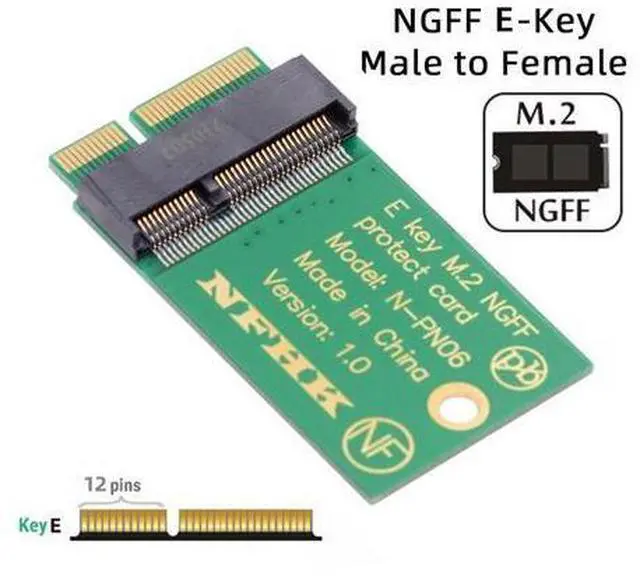
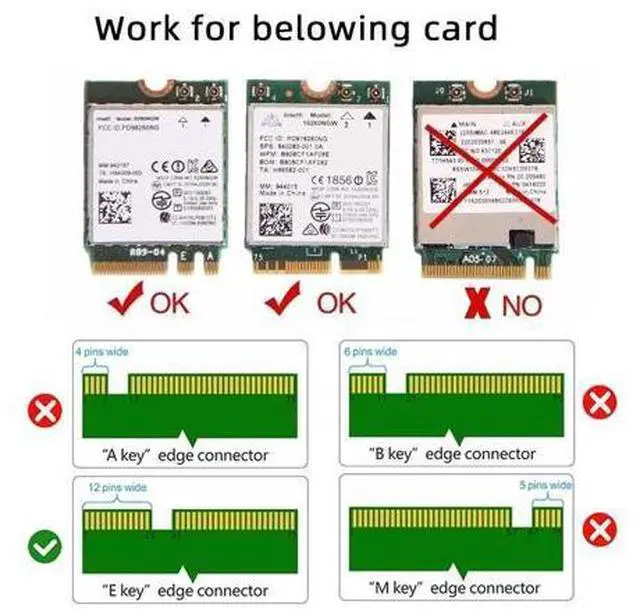
Key E (Pins 24-31 Notched), Primary Interfaces PCIe x1 (or x2), USB 2.0. Also supports I2C, SDIO, UART, PCM;
Common Applications: Wi-Fi, Bluetooth, WiGig. Similar to Key A; Often found in an A+E keyed slot for Wi-Fi cards.; Key A (Pins 8-15 Notched);
Primary Interfaces: PCIe x1 (or x2 with some configurations), USB 2.0. Also supports I2C, DisplayPort x4 (optional);
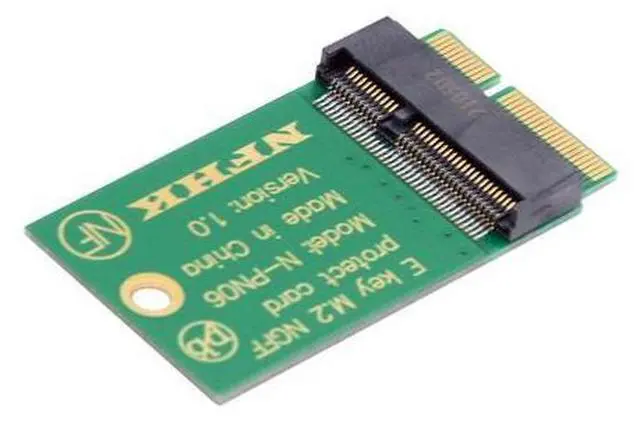
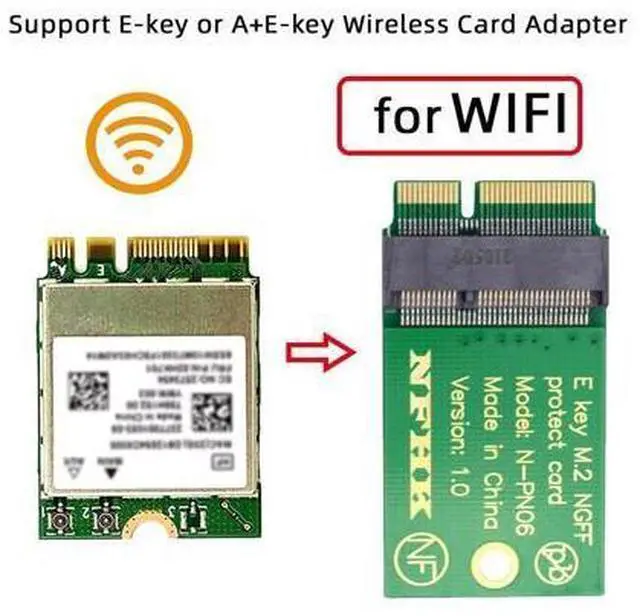
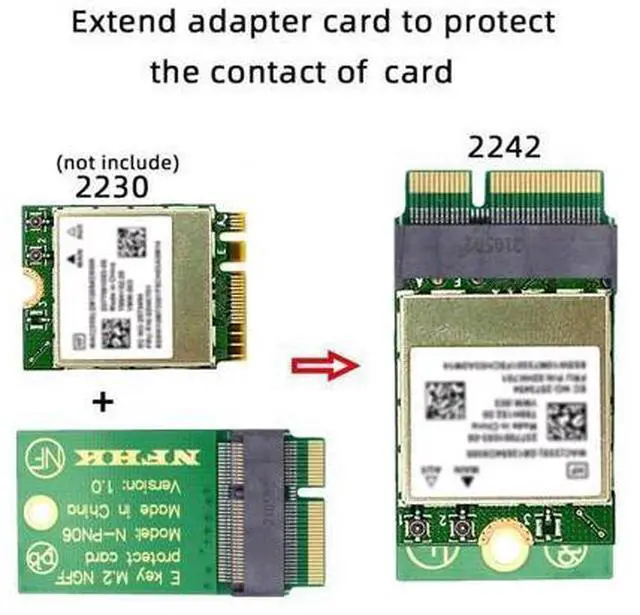
Common Applications: Wi-Fi, Bluetooth, WiGig (Wireless Gigabit), NFC (Near Field Communication); Often combined with Key E (see Key A+E).; Support 2230 E-Key or A+E-Key to 2242 extension, Support WIFI6 WIFI7 Wireless Card; It is E-key pinout, Not work for B-key M-key or A-key, not work for mini-pcie.; The extend adapter card to protect the contact of the wireless card; PCB Card only. (not include Wireless Card); The M. 2 connector has 75 positions, with pins on both the top and bottom edges. Pin numbering is from 1 to 75. Not all pins are used by all modules; the specific pins used depend on the module's keying and the interfaces it implements.