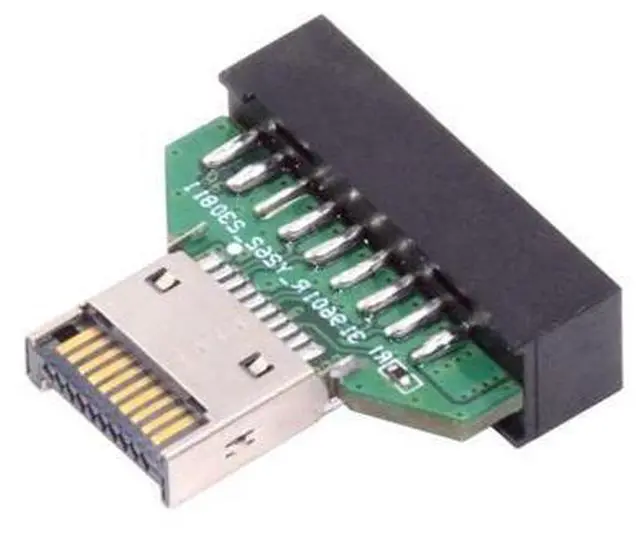
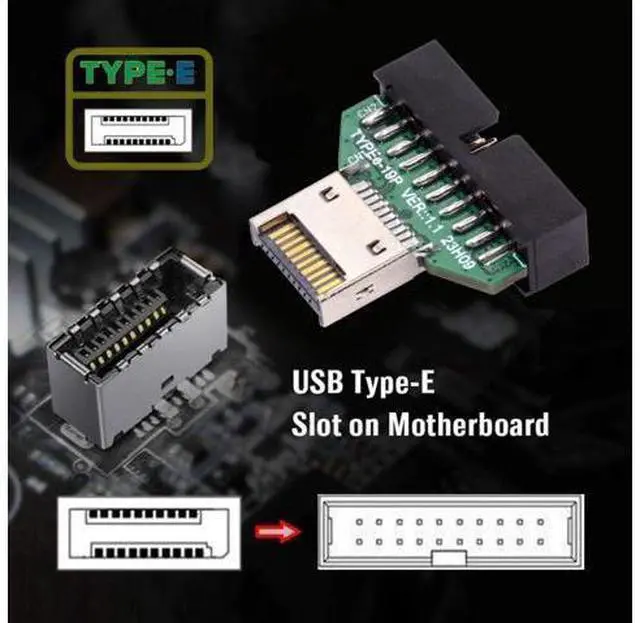
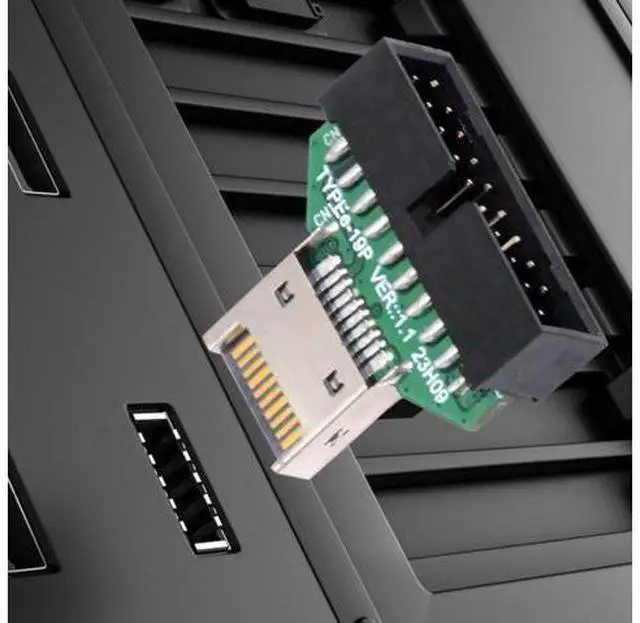
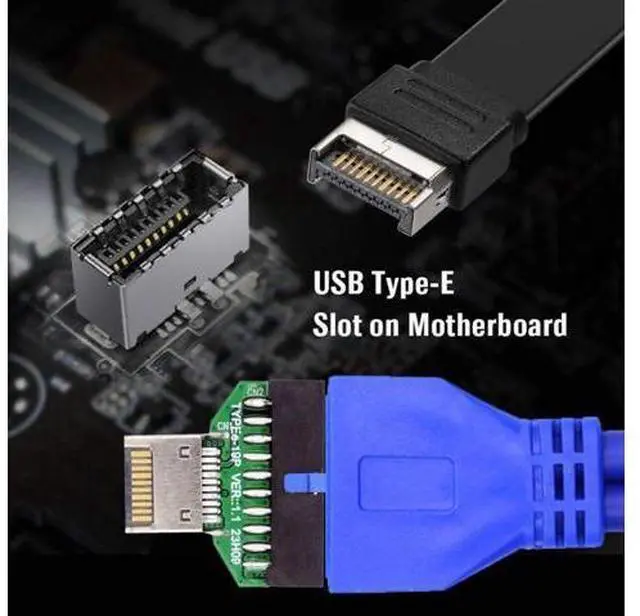
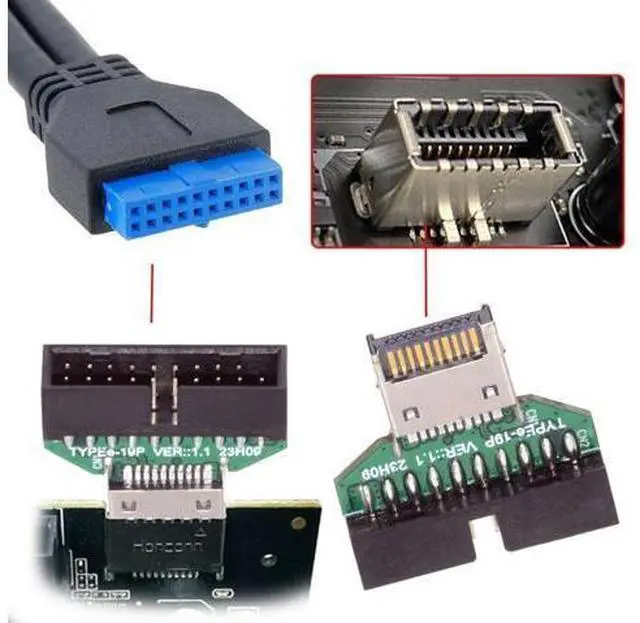
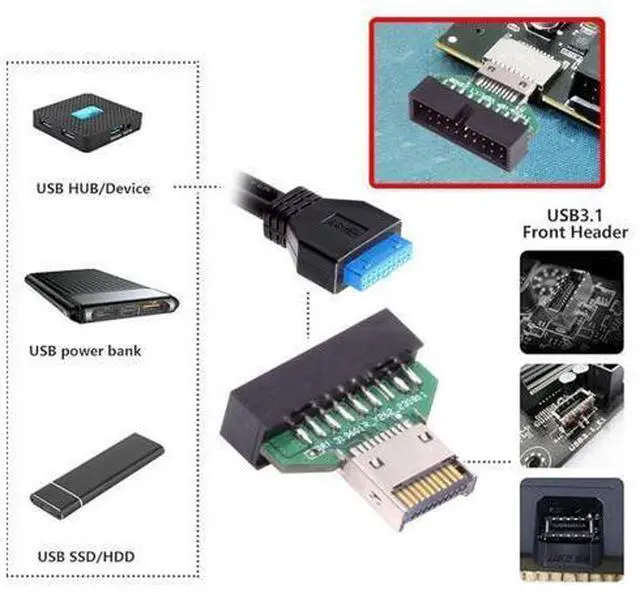
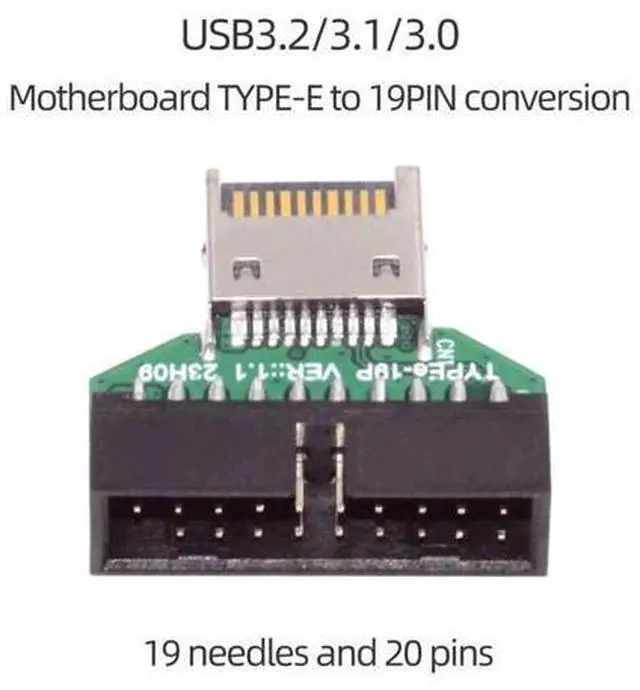
1) Due to interface limitations, the Type-E interface is usually designed for single-channel output, which means it can only provide the output capability of a USB 3.0 interface. Therefore, it is not possible to directly convert two independent USB 3.0 interfaces through a Type-E interface.; 2) The Type-E port supports 20Gbps USB Data from SSD/HDD. Doesn't support any audio, video and docking output, Not work for any PD power, DP alt mode. (The transmission speed depends on the motherboard Type-E port speed, the adapter does not change the speed); 3) When using a 19-pin to Type-C data cable, the Type-C interface can support USB 3.0 or USB 2.0 on the front, and only USB 2.0 on the reverse.
; 4) When using a 19-pin to 2 Type-A port data cable, one A port only has USB 3.0 function, and the other A port only has USB 2.0 function.