




 here!
I’m your shopping assistant for PC builds, upgrades, and everything tech.
Got questions? Ask away!
Start a conversation
here!
I’m your shopping assistant for PC builds, upgrades, and everything tech.
Got questions? Ask away!
Start a conversationShipped by Hebei XG Technology Co., Ltd.





Any questions? Ask CelesteSM will help you find out quickly.
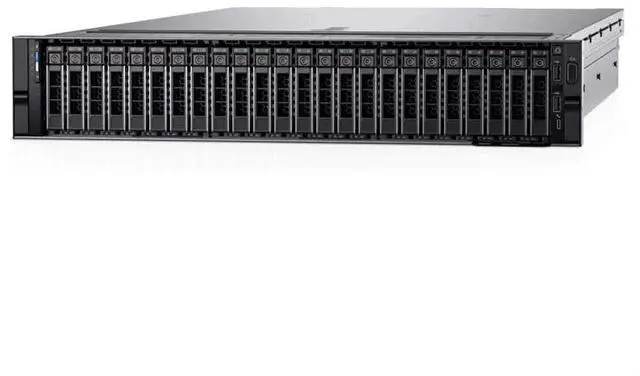
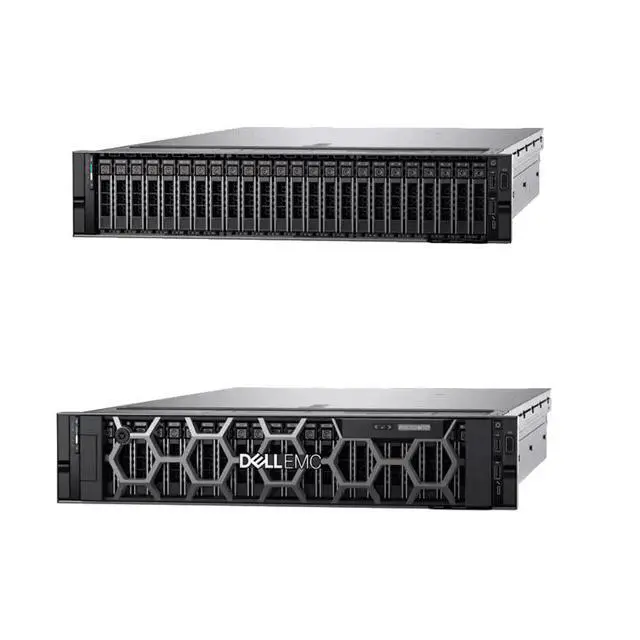
1. 2U Form - factor:The 2U size provides space - efficient rack - mounting in data centers, ideal for maximizing server density.
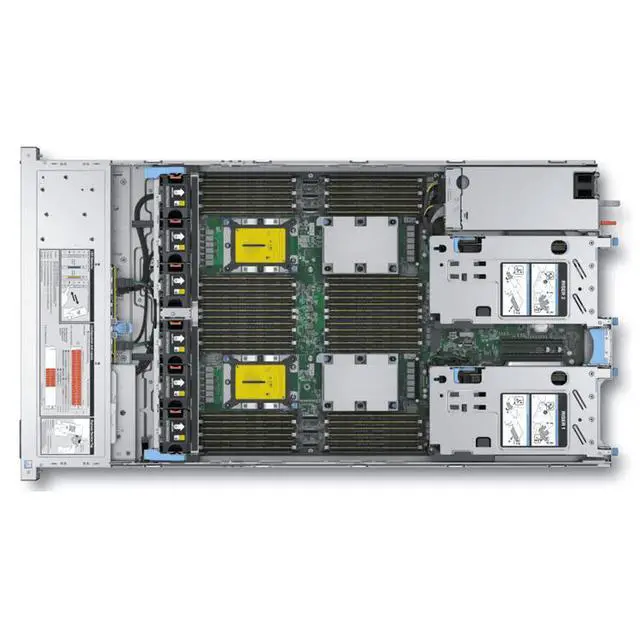
2. Dual Heat Sinks:Comes with 2 heat sinks, ensuring effective heat dissipation and reliable operation even under heavy workloads.
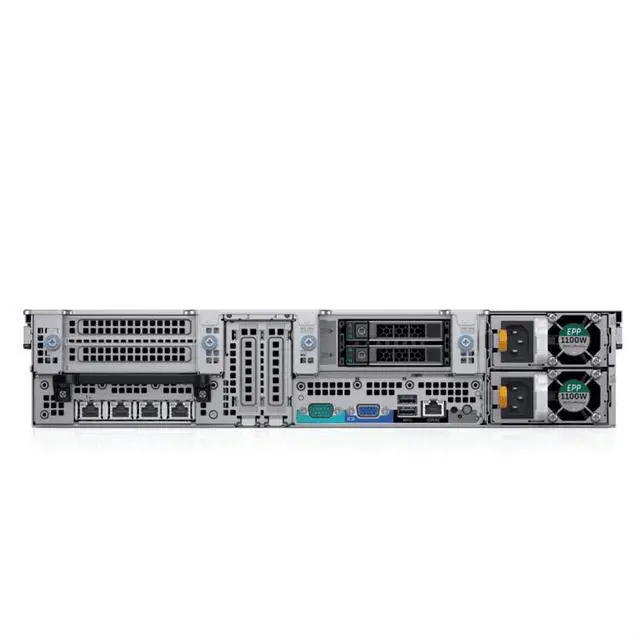
3. Bare - bones Configuration:Absence of internal components, disks, cards, and power supply offers users the freedom to customize according to specific requirements.
4. Brand - new and In - stock:Being brand - new ensures high - quality components, and its in - stock availability means fast delivery for immediate use.
5. Versatile Server Platform:Based on the Dell R840, it serves as a versatile platform adaptable to various computing, storage, and networking applications once configured.
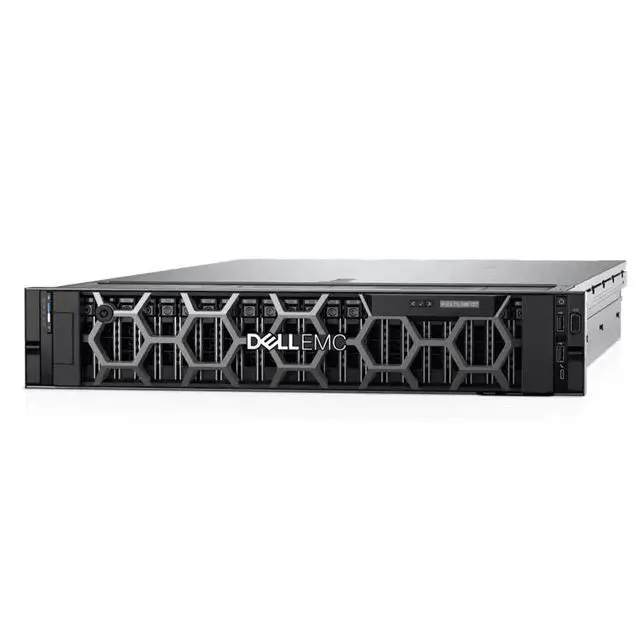
The Dell R840 Server barebones chassis is a new 2U rack server platform with two heat sinks and no internal components, designed for IT teams, system integrators, and data center buyers who want to build a custom Dell-based server for specific compute, storage, or networking needs.
| Attribute | Value |
|---|---|
| Best For | System builders and datacenter operators who need a 2U Dell R840 barebones rack platform to populate with their own disks, expansion cards, and power supply |
| Chassis And Configuration | 2U rackmount Dell R840 chassis sold as a barebones unit—ships without internal components, disks, expansion cards, or power supply; includes two heat sinks |
| Condition And Availability | New unit listed as in-stock for immediate availability |
| Model Identifiers | Dell R840 barebones server chassis (2U) |
Q: Should I choose a Dell PowerEdge R840 barebones chassis or a PowerEdge R740 for virtualization?
A: Choose the R840 barebones chassis when you specifically need a 4-socket platform for higher VM density, larger memory footprints, or workloads that scale beyond a typical 2-socket server. Dell positions the R840 as a dense 2U system for data-intensive workloads and dense virtualization, while the R740 is positioned more broadly for general application performance and VDI or cloud workloads. In practice, the R740 is the more typical fit for mainstream virtualization, but the R840 makes more sense when consolidation and memory capacity matter more than keeping the build simpler.
Q: Is the Dell R840 a better fit than the Dell R940 if I want 4-socket performance in less rack space?
A: Choose the R840 when rack density is the priority and you want 4-socket capability in a 2U chassis. Choose the R940 when expansion headroom is more important than density. Dell's platform guides show the R840 delivering 4-socket compute in 2U, while the R940 uses a larger chassis and supports more memory and more PCIe expansion. The trade-off is straightforward: the R840 is the denser 4-socket option, and the R940 is the roomier 4-socket option for organizations planning heavier memory or I/O expansion.
Q: Should I buy this Dell R840 barebones unit or a more complete configured server?
A: Choose this R840 barebones listing if you already know your target CPU, memory, storage, RAID, and power configuration and want to control the build around a 4-socket chassis. A barebones R840 is mainly a platform purchase, not a ready-to-deploy server. It is a better choice for experienced buyers, replacement projects, or custom rebuilds. A pre-configured server is the better fit if you want faster deployment, validated parts selection, and less integration work.
Q: Is the Dell R840 a meaningful upgrade over the older PowerEdge R830?
A: Yes, the R840 is the more modern 4-socket platform if you are deciding between those two generations. Dell's R840 spec sheet explicitly positions it as an advance over the R830, with a dense 2U design and newer platform capabilities around processor generation, memory capacity, and storage options. The R830 still fits continuity or like-for-like replacement scenarios, but the R840 is the stronger choice for a fresh build where you want the newer PowerEdge generation.
Q: Should I choose the R840 over a storage-focused PowerEdge R740xd?
A: Choose the R840 when your priority is compute density, larger memory scaling, or 4-socket consolidation. Choose the R740xd when storage flexibility is the main requirement. Dell's server guides position the R840 around data-intensive workloads and dense virtualization, while the R740xd is positioned for scalable storage performance, software-defined storage, and big data server roles. In short, the R840 is the better fit for performance-first consolidation, and the R740xd is the better fit for storage-heavy deployments.
Q: What exactly is included with this server barebones unit?
A: This is a chassis-level barebones server, not a ready-to-run system. Based on the product data, it includes the Dell R840 2U server chassis and 2 heat sinks, but does not include internal compute or power components such as CPUs, memory, storage drives, add-in cards, or power supplies. Buyers should plan for a full server build-out before deployment.
Q: Is this a good choice if I want a ready-to-deploy server?
A: No. This listing is better suited to IT buyers, system integrators, or organizations that already have compatible server parts and deployment expertise. It is not ideal for buyers who need a complete, powered, preconfigured server that can be installed and used immediately.
Q: Who is this barebones Dell R840 most suitable for?
A: It is most suitable for experienced server buyers who want a 2U Dell platform they can customize around specific workload, storage, networking, and power requirements. It makes the most sense for rebuilds, lab environments, spare chassis use, or standardized enterprise deployments where CPUs, memory, storage, and power supplies will be sourced separately.
Q: What are the main trade-offs of buying this barebones server instead of a complete system?
A: The main advantage is flexibility: you can choose your own processors, memory, storage, expansion cards, and power configuration. The trade-off is higher setup complexity, added compatibility planning, and additional cost before the server becomes usable. This kind of listing fits buyers who value customization more than immediate deployment.
Q: Should I assume accessories like rack hardware or power components are included?
A: No. Buyers should not assume extra deployment items are included unless they are explicitly listed. Since this product description specifically says there is no power supply and no internal components, it is safest to verify the exact contents before purchase, including any rack-mount hardware, rails, cabling, and power parts needed for installation.
Q: Is this Dell R840 barebones chassis a good buy if I want to customize the server myself?
A: Yes, if you already know the exact CPUs, memory, storage, cards, and power supplies you want to install. A barebones R840 can make sense for experienced IT buyers because it avoids paying for unwanted factory parts, but the trade-off is that it is not usable as shipped and compatibility planning matters.
Q: Who is this R840 barebones server suitable for?
A: It is best suited to buyers who need an enterprise 2U rack server platform and already have a deployment plan, parts inventory, or upgrade path. It is less suitable for beginners, small offices needing a ready-to-run server, or anyone who wants a complete system out of the box.
Q: What are the main trade-offs of buying this barebones R840 instead of a complete server?
A: The main advantage is control over the final configuration. The main trade-offs are added setup work, extra parts cost, and the risk of delays or incompatibilities if you do not already have the missing components. Because this listing has no internal components, disks, cards, or power supply, the total build cost will be much higher than the listing price alone.
Q: Is this a practical choice for a homelab or learning setup?
A: Usually only for advanced homelab users who specifically want an enterprise rack platform and are comfortable sourcing all required parts. For most learning setups, a complete used server or a smaller system is usually simpler and more practical than a new barebones R840 chassis.


