




 here!
I’m your shopping assistant for PC builds, upgrades, and everything tech.
Got questions? Ask away!
Start a conversation
here!
I’m your shopping assistant for PC builds, upgrades, and everything tech.
Got questions? Ask away!
Start a conversationShipped by Hebei XG Technology Co., Ltd.


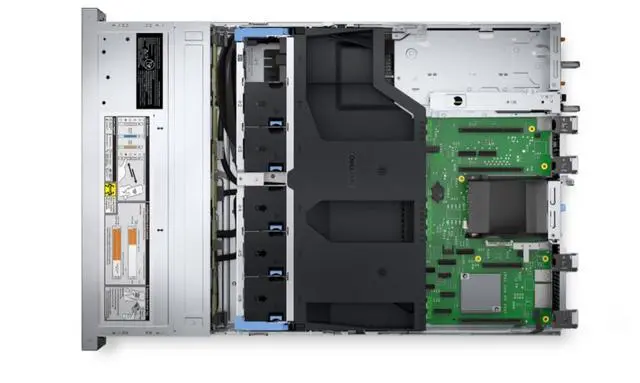
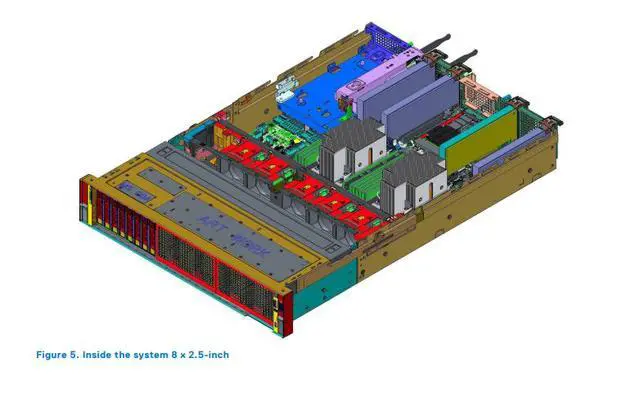
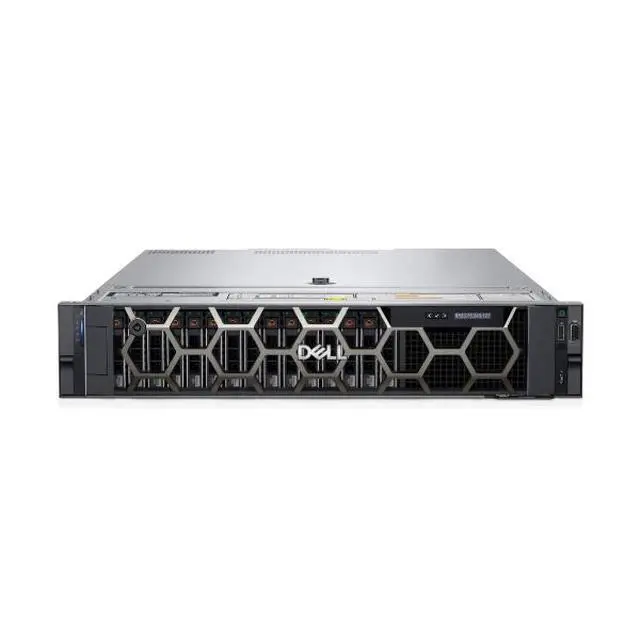



Any questions? Ask CelesteSM will help you find out quickly.
1. Customization Flexibility:Lack of pre - installed components like CPU, heatsink, disk, RAID card and power supply allows for a highly tailored server setup to fit diverse workloads, from light - duty office applications to heavy - duty data analytics.
2. 2U Form - factor Advantage:The 2U size offers more internal space for future upgrades compared to smaller form - factors, enabling easy addition of high - performance components.
3. Cost - Effective Starting Point:Purchasing without these components can be cost - effective, as users only invest in the parts they truly need, avoiding unnecessary expenses.
4. Versatile Compatibility:It provides the freedom to choose from a wide range of compatible CPUs, disks, RAID cards and power supplies, ensuring seamless integration with existing infrastructure.
5. Fresh and Untouched:Being a Dell R550 server in this unconfigured state means it's brand - new, promising optimal performance right from the start of customization.
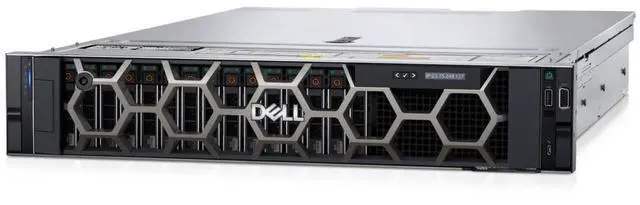
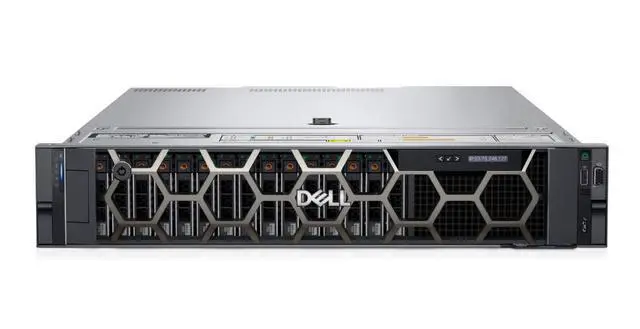
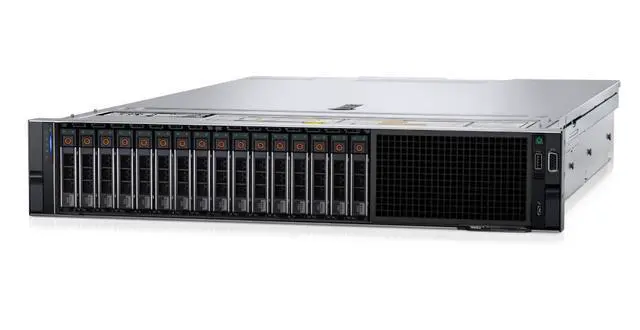
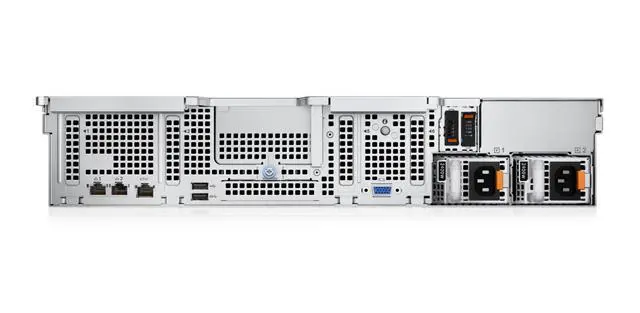
The Dell PowerEdge R550 barebones server is a 2U chassis sold without CPU, heatsink, storage, RAID card, or power supply, making it best for IT teams, system integrators, and businesses that want to build a custom rack server around specific workload, storage, and power requirements.
| Attribute | Value |
|---|---|
| Best For | Custom server builders and system integrators who need a Dell R550 2U barebones chassis that can be populated with their choice of CPU(s), cooling, storage, RAID card, and power supply for tailored deployments and easy future upgrades |
| Chassis And Form Factor | Dell R550 2U rack-mount barebones chassis that offers additional internal space compared with smaller form factors to accommodate expansion and higher-performance components |
| Included / Excluded Components | Sold as a barebones system — does not include CPU, heatsink, disk, RAID card, or power supply and requires user-supplied components for operation |
| Customization And Compatibility | Unconfigured design allows selection of compatible CPUs, storage drives, RAID cards, heatsinks, and power supplies to integrate with existing infrastructure |
| Cost And Procurement | Barebones configuration reduces initial cost by excluding components customers may not need, enabling purchase of only required parts |
| Model Identifiers | Dell R550 (2U) — barebones server chassis as specified in the product title |
| Listing And Availability | First listed on Newegg June 11, 2026; product page available at https://www.newegg.com/p/9SIC3YKKYJ7482?Item=9SIC3YKKYJ7482 |
Q: Should I choose the Dell PowerEdge R550 barebones or a PowerEdge R450 for a small business server?
A: Choose the PowerEdge R550 barebones when you want more storage flexibility and more room for future expansion in a 2U chassis. Dell positions the R550 as a versatile, value-optimized, virtualization-ready server, while the R450 is positioned as a value and density-focused 1U option for general-purpose IT. In practice, the R550 supports more front-drive configurations, adds an extra PCIe slot versus the R450, and is a better fit when you expect to add storage, RAID, or multiple expansion cards over time. Choose the R450 instead when rack density matters more than expansion and your workload is lighter or space-constrained.
Q: Is the Dell PowerEdge R550 barebones a better buy than a PowerEdge R650?
A: Choose the R550 barebones when your priority is a cost-conscious build for general business applications, light virtualization, and storage-heavy use cases. Choose the R650 when you need a higher-end platform for mixed enterprise workloads, larger memory footprints, more NVMe support, and stronger CPU scaling. Dell positions the R650 for high scalability and optimized workload performance, while the R550 is positioned lower in the stack for general-purpose IT. The trade-off is straightforward: the R550 is the more practical starting point for tailored SMB or branch deployments, while the R650 makes more sense when performance density and workload headroom are the main goals.
Q: Is a barebones Dell PowerEdge R550 better than buying a preconfigured R550?
A: Choose the barebones R550 when you already know the CPU, storage, RAID, and power profile you want, or when you need the server to match existing infrastructure standards. A barebones unit is the better fit for custom builds because it lets you control component selection from the start. Choose a preconfigured R550 when faster deployment, validated parts selection, and simpler procurement matter more than customization. The core platform is the same, so the decision mainly depends on whether your priority is configuration control or deployment simplicity.
Q: Is the PowerEdge R550 a worthwhile upgrade from an older PowerEdge R540?
A: Yes, the R550 is a practical upgrade if you are replacing an R540 and want better performance per system while staying in the same general class of 2U mainstream server. Third-party testing found the R550 delivered up to 2.21x higher HammerDB TPROC-C results and supported about 1.5x more virtual machines than the earlier R540 in the tested configurations. The upgrade is most compelling when you want a newer virtualization-ready platform without jumping to a more expensive performance tier such as the R650.
Q: Should I pick a 1U server for rack density or the 2U Dell PowerEdge R550 for performance and upgrade room?
A: Pick a 1U alternative such as the R450 when conserving rack space is the first priority. Pick the 2U R550 when you want more internal room for storage, PCIe expansion, and easier long-term component upgrades. This is the more common trade-off than portability in the server category: 1U favors density, while 2U favors flexibility. The R550 is the better choice when your deployment may grow in storage or add-in hardware over time, especially in branches, SMB virtualization hosts, or storage-focused roles.
Q: Who is this barebones Dell R550 best suited for?
A: This model is best for IT teams, system integrators, and buyers who already know which server components they want to install. It is a barebones 2U chassis sold without a CPU, heatsink, disks, RAID card, or power supply, so it is not a ready-to-run server. It fits buyers who want to control the final configuration for virtualization, storage, or general infrastructure use.
Q: Can I use this server right away out of the box?
A: No. This listing is for a barebones server chassis, not a complete working system. You must add at minimum a compatible processor, matching heatsink, power supply, memory, and storage before it can be deployed. Depending on your build, you may also need a supported boot and storage controller plan.
Q: Is this a good choice if I want full control over the server build?
A: Yes, if customization is the main goal. Because key parts are not preinstalled, this R550 gives you more freedom to choose the CPU, storage, power, and controller setup that matches your environment. The trade-off is a more complex buying process, since compatibility, thermal requirements, and total power planning become your responsibility.
Q: What are the main setup trade-offs of buying this R550 without core components?
A: The main trade-off is flexibility versus simplicity. You avoid paying for parts you may not want, but setup takes more planning and sourcing. On the R550 specifically, heatsink choice depends on processor power, supported power supplies must be selected correctly, and Dell notes that a processor blank is required in one-processor configurations. This is a better fit for planned infrastructure builds than for buyers who want a fast, turnkey deployment.
Q: Is this R550 a good fit for GPU-heavy or all-in-one server builds?
A: No for GPU-heavy use, and only conditionally for all-in-one builds. Dell's R550 technical specifications state that GPU is not supported in any configuration. Since this listing also omits the CPU, heatsink, storage, RAID card, and power supply, it is best treated as a configurable server base for standard rack workloads rather than a prebuilt accelerator platform.
Q: Who is a barebones Dell PowerEdge R550 best suited for?
A: A barebones R550 is best for IT teams, homelab users, or refurbishers who already know the Dell server parts they need and want to choose their own CPU, memory, storage, RAID/HBA, and power supplies. It is not a good fit for buyers who want a ready-to-run server, because this listing is missing essential components needed for power-on and deployment.
Q: Is this Dell R550 worth buying if I need a working server quickly?
A: Usually no. This listing is better viewed as a chassis starting point, not a complete server. Because it has no CPU, heatsink, disks, RAID card, or power supply, the total cost, sourcing time, and compatibility work can be much higher than the item price suggests. It is more worthwhile when you already have compatible Dell parts or a very specific build plan.
Q: What are the main trade-offs of buying the R550 in this incomplete configuration?
A: The main advantage is flexibility: you can build around your own storage, controller, and CPU choices. The main trade-offs are added setup complexity, part-compatibility risk, and a higher chance of delays while sourcing missing components. For many buyers, the decision comes down to whether customization matters more than convenience and predictable total cost.
Q: Is this a good choice for a homelab or virtualization build?
A: It can be, but mostly for experienced users. The 2U platform gives more room for upgrades, and community discussion around Dell rack servers often treats them as viable Proxmox, storage, or lab platforms. However, this specific unit is barebones, so it makes sense only if you are comfortable selecting and installing the missing server parts yourself.
Q: Is this a good replacement for buying a complete used server?
A: Only in specific cases. If you already own compatible Dell components or need a custom configuration, this barebones R550 can be a practical base. If you simply need server capacity at the lowest effort, a complete used server is usually the easier decision because it reduces uncertainty around missing parts, firmware behavior, and total build cost.


