




 here!
I’m your shopping assistant for PC builds, upgrades, and everything tech.
Got questions? Ask away!
Start a conversation
here!
I’m your shopping assistant for PC builds, upgrades, and everything tech.
Got questions? Ask away!
Start a conversation



Any questions? Ask CelesteSM will help you find out quickly.


About this item
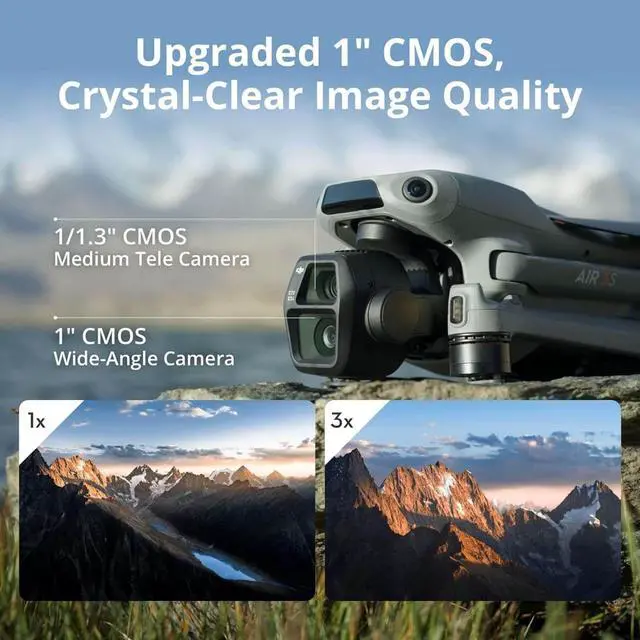
Enhanced Camera for Travel Shots - Air 3S's 1" CMOS primary camera delivers breathtaking shots with enriched detail in low-light scenarios like sunsets and nightscapes.
Capture Footage with Vibrant Detail - Record cinematic 4K/60fps HDR video with up to 14 stops of dynamic range [4] to see intricate cloud textures and other details during sunrise and sunset.
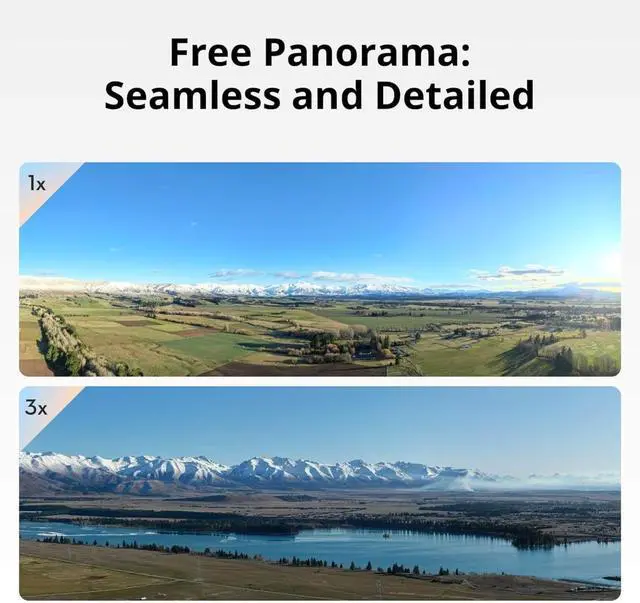
Free Panorama Mode - Create seamless panoramic shots by stitching together images. Wide-angle panos offer a wider scope for selection, medium tele panos provide high detail and less distortion.
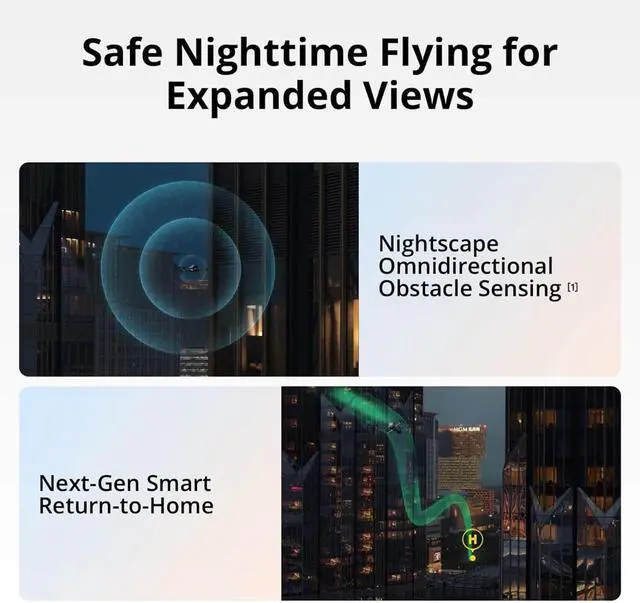
Safer Nighttime Flying - Forward-facing LiDAR and additional sensors enable nightscape omnidirectional obstacle sensing, allowing your drone to circumvent buildings while flying. [1]
Next-Gen Smart Return-To-Home - Powerful upgraded algorithms allow the Air 3S to intelligently select the optimal RTH route and quickly fly back to the Home Point, even in weak GPS signal areas. [6]
Extended Flight & Video Transmission - Enjoy greater creative freedom with a 45-min max flight time [2] and 20km of video transmission, [3] giving you time to scout locations, nail your shot, and return to home.
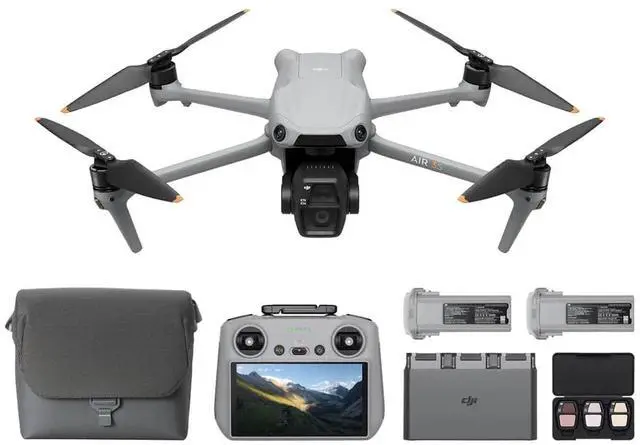
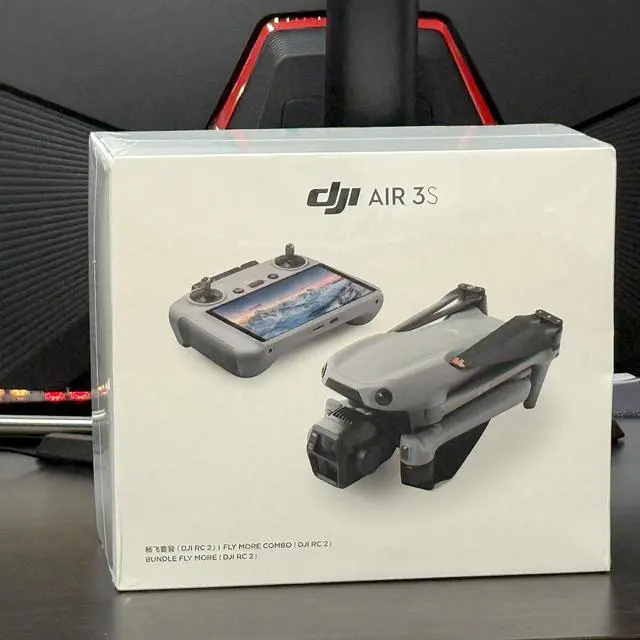
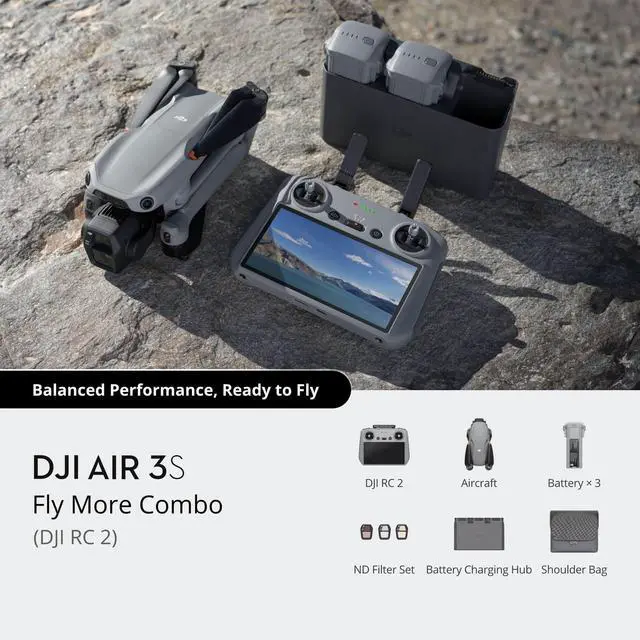
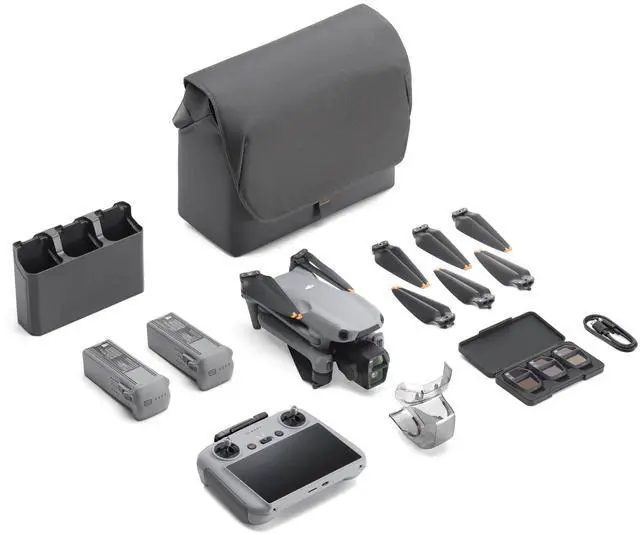
Includes Air 3S, three intelligent flight batteries, one battery charging hub, an ND filter set, and a DJI RC 2 remote controller with a large and bright screen for an enhanced flight experience.
* Battery charger sold separately. It is recommended to purchase the DJI 65W Portable Charger.
Please be advised this is the Chinese domestic version. Subject to international service constraints, DJIs free manufacturer warranty is honored exclusively in mainland China. No complimentary warranty coverage can be provided for the United States.
The DJI Air 3S Long Flight Kit is a dual-camera 4K/60fps drone with a 1-inch CMOS wide-angle camera, a medium-tele camera, omnidirectional sensing, and three batteries, making it a strong fit for travelers, aerial creators, and enthusiasts who want longer shooting sessions with versatile framing.
| Attribute | Value |
|---|---|
| Best For | Extended aerial photography and long-range flights that require dual 1‑inch cameras (wide-angle + medium tele), long endurance, and omnidirectional obstacle sensing |
| Cameras | Dual 1‑inch CMOS wide-angle and medium-tele cameras capturing 4K/60fps HDR video with 14 stops of dynamic range; supports free, seamless panoramas |
| Flight Performance | Long‑flight kit capable of up to 45 minutes flight time and includes three batteries to extend continuous operation |
| Sensing And Safety | Omnidirectional obstacle sensing (Nightscape) plus next‑generation Smart Return‑to‑Home with enhanced precision |
| Transmission | Up to 20 km video transmission range for long‑distance control and live feed |
| Remote Controller | DualScreen remote controller included for onboard monitoring and control |
| Kit Contents | Long Flight Kit configuration includes the drone with dual 1‑inch cameras, a DualScreen remote, and three batteries for extended sessions |
Q: Should I buy DJI Air 3S or DJI Mini 4 Pro?
A: Choose the DJI Air 3S if you want stronger camera hardware, a second 70mm medium-tele camera, and better fit for landscape, travel, and low-light shooting. Choose the DJI Mini 4 Pro if portability, lower takeoff weight, and easier everyday carry matter more. Across DJI’s own positioning, review coverage, and community discussion, the common trade-off is simple: Air 3S is the more camera-focused step up, while Mini 4 Pro is the easier drone to pack and travel with.
Q: Is DJI Air 3S worth it over DJI Air 3?
A: DJI Air 3S is the better choice if you specifically want the upgraded 1-inch wide camera, improved low-light performance, nightscape obstacle sensing with forward LiDAR, and newer return-to-home features. DJI Air 3 remains the better value if your priority is getting the dual-camera Air-series experience at a lower cost and you do not need the newer safety and imaging upgrades. In most comparisons, Air 3S is treated as a targeted upgrade rather than a complete replacement of Air 3’s value proposition.
Q: Should I get DJI Air 3S or DJI Mavic 3 Pro?
A: Choose DJI Air 3S if you want a lighter, less expensive drone with a dual-camera setup that still covers wide and medium-tele shooting well. Choose DJI Mavic 3 Pro if your priority is higher-end imaging flexibility, including its 4/3 main camera and triple-camera system. The usual buying decision is that Air 3S makes more sense for enthusiasts who want strong image quality and a tele option without moving into the larger, more expensive Mavic tier.
Q: Is DJI Air 3S better for travel than larger camera drones?
A: Yes, if you want a travel drone that keeps stronger camera capability than a sub-250g model without stepping up to the size and cost of a Mavic-class drone. DJI positions Air 3S specifically for travel photography, and its common appeal is balancing portability with a 1-inch wide camera, dual focal lengths, and 45-minute rated flight time. A larger drone is the better fit only if maximum image flexibility matters more than packability.
Q: Is this a good travel drone for people who want better image quality without moving up to a larger pro model?
A: Yes. The Air 3S is a strong fit for travel users who want better photo and video quality than lighter entry-level drones, but still want a compact folding drone. Its main advantages are the 1-inch primary camera, a second medium-tele camera for framing flexibility, omnidirectional obstacle sensing, and long rated flight time. The trade-off is that it is a larger, heavier, and more expensive travel option than DJI Mini-class drones, so it is better for travelers who prioritize camera results over minimum size.
Q: Is the 3-battery kit worth it, or is one battery enough for most buyers?
A: For most buyers, the 3-battery kit is the better choice. Retail Q&A around comparable Air 3 bundles repeatedly focuses on what is included and how many batteries come in the box, which is a strong signal that battery count affects purchase decisions. A single battery can be enough for short practice sessions, but a 3-battery bundle is more suitable for day trips, travel shooting, and learning because it reduces downtime and makes the rated long flight time more practical in real use.
Q: Is the built-in-screen remote better than using a phone-connected controller?
A: Usually yes, if convenience matters to you. The built-in-screen remote is the better option for buyers who want faster setup, fewer cables, and a more self-contained flying experience. It is especially useful for travel and outdoor use because you do not need to attach a phone each time. The main trade-off is price: phone-linked controllers are cheaper and can be sufficient if you already prefer flying with your smartphone.
Q: Is this a good choice for beginners, or is it better suited to experienced drone users?
A: It can work for beginners, but it is better suited to buyers who are serious about aerial photography and willing to learn. Comparable retail Q&A and review summaries for the Air 3 often mention ease of use and beginner friendliness, but this class of drone is still a premium model with more cost and capability than a typical starter drone. It makes sense for a beginner who wants room to grow, obstacle sensing, and better cameras; it is less ideal for someone who mainly wants the smallest or cheapest first drone.
Q: Is the Air 3S better than a Mini-series alternative for most buyers?
A: It is better if your priority is camera performance, dual-camera flexibility, and extra flight confidence. It is not automatically better for every buyer. A Mini-series alternative is usually the better fit when low weight, easier packing, and lower cost matter most. The Air 3S is the stronger choice for users who care more about image quality, telephoto-style framing, obstacle sensing, and longer sessions with multiple batteries.
Q: Is the DJI Air 3S worth buying if I want a step up from a Mini-series drone?
A: Usually yes if you want better image flexibility, longer flight sessions, and a more stable platform. The main trade-off is size and cost: the Air 3S is less travel-friendly than a Mini and better suited to buyers who will actually use its dual-camera setup, longer flight time, and larger 1-inch wide camera.
Q: Who is the DJI Air 3S best suited for?
A: It is best suited for hobbyists and creators who want better camera range than an entry drone without moving up to a larger, more expensive flagship model. Its dual-camera design, 4K/60fps HDR recording, omnidirectional sensing, and rated 45-minute flight time make it a strong fit for travel footage, landscape work, and general aerial video rather than ultra-light, pocketable use.
Q: Is the DJI Air 3S a good first drone for beginners?
A: It can be, especially for beginners who want room to grow and value safety features like omnidirectional obstacle sensing and Smart RTH. The downside is that it is a more expensive starting point than a Mini-series drone, so it makes more sense for new pilots who already know they want higher-end camera features and longer battery life.
Q: Is the DJI Air 3S a good travel drone, or is a Mini-series model more practical?
A: The Air 3S is good for travel if image quality, two focal lengths, and longer flights matter more than packing light. A Mini-series model is usually more practical if your priority is portability, easier packing, and lower carry burden. The Air 3S is the better choice for travel creators who will use its camera advantages; a Mini is the better choice for convenience-first travel.
Q: What are the main trade-offs of choosing the DJI Air 3S over other DJI drones?
A: The main advantages are its dual-camera setup, 1-inch wide camera, 4K/60fps HDR video, obstacle sensing, and long rated flight time. The main trade-offs discussed by buyers are higher cost than Mini models, a larger body for travel, and some hesitation from shoppers comparing it with newer or more premium DJI options when low-light behavior, firmware support, or feature differences matter to them.


