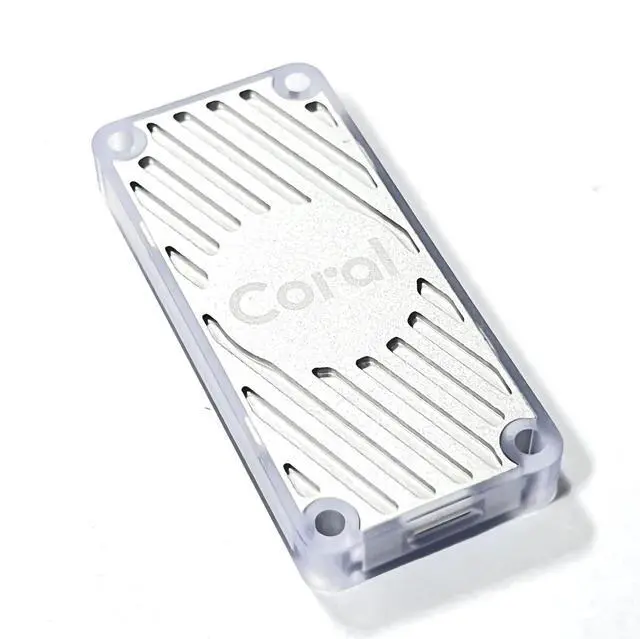
Important Note: The AIY Maker Kit includes a USB Accelerator, a Raspberry Pi 4 (8 GB), and other useful accessories. We also offer the Dev Board Mini and the Dev Board 4GB. For particularly high performance, we recommend using the Dev Board 4GB, while the Dev Board Mini is especially suitable for low-cost solutions. The USB Accelerator brings real-time inference (Deep Learning / Machine Learning) to your Raspberry Pi 4 and many other computers! AI for
Everyone: A powerful specialized chip (TPU, Tensor Processing Unit) is connected to a USB 3 interface with the USB Accelerator, enabling fast and energy-efficient inference for TensorFlow Lite models. A key advantage of this solution: your data stays local, which helps with latency and, of course, data protection! (In compliance with relevant laws, such as the General Data Protection Regulation (GDPR). )The company behind this technology increasingly uses artificial intelligence (AI) and machine learning (ML) to realize its services. For this, it developed specialized processors called TPUs ("Tensor Processing Units") for its data centers that can execute algorithms faster and more efficiently with the TensorFlow framework. For example, a service similar to Maps improves by analyzing street signs captured by a service similar to Street View using a TensorFlow-based neural network.
The bonus: TensorFlow can easily be programmed in Python. AI for Home Use? Yes! This company is an interesting entitythey don't keep this technology to themselves but share it with the world. Early last year, a USB 3 stick with a high-performance TPU was launched, which supports the TensorFlow Lite framework. The TPU can perform up to 4 trillion operations per second with only 2 watts of power consumption. TensorFlow Lite is a modified version of TensorFlow specifically tailored to meet the needs of mobile devices and embedded systems. Many TensorFlow applications can also be realized in TensorFlow Lite. Perfect in Combination with the Raspberry Pi 4! With the high-performance TPU, inference with the MobileNet v2 model can be performed up to 20 times faster than on "bare" Pi
4. Real-time recognition in video streams with over 50 fps becomes possiblesomething that would not be achievable with the Pi 4 without the accelerator. Thanks to Python and numerous online examples around TensorFlow, getting started in artificial intelligence and machine learning with the USB Accelerator is easy and stylish. Here you can find the official "Get Started" guide for the USB Accelerator! Technical
Specifications
of the USB AcceleratorHigh-performance TPU ML accelerator coprocessorUSB 3.0 (USB 3.1 Gen 1) Type C socketSupports Linux, Mac, and Windows on the host systemPower consumption up to 900 mA Peak @ 5
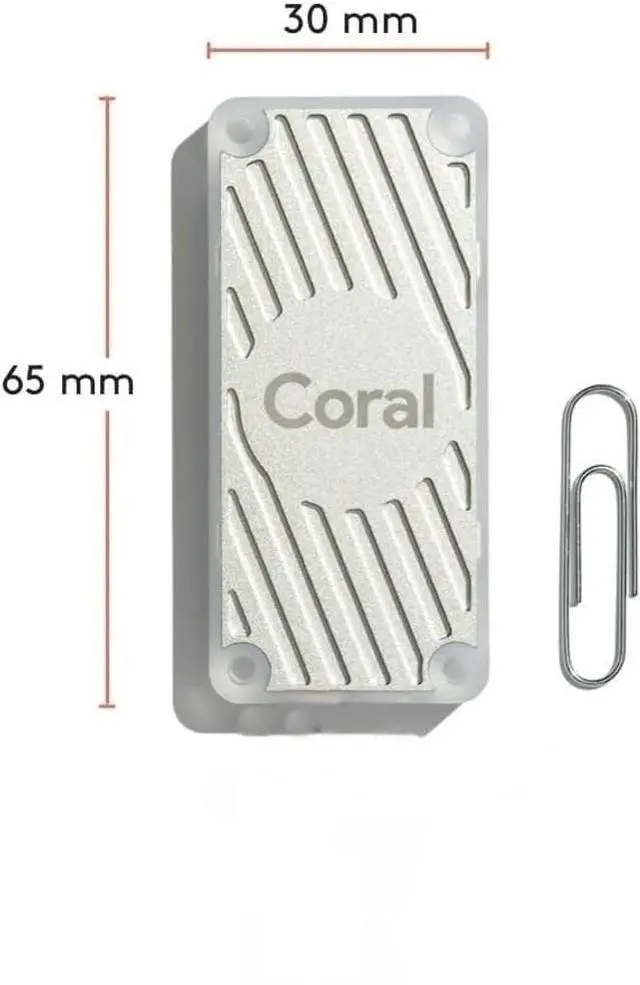
VDimensions: USB
Stick: 65 mm x 30 mm x 8 mmThese benchmarks provide insight into the performance capabilities of the USB Accelerator. Host System RequirementsLinux Debian 6.0 or higher, or a derivative (e. g., Ubuntu 10.0 +, Raspbian)System
architecture: x86-64, ARMv7 (32-bit), or ARMv8 (64-bit)macOS 10.15 with either MacPorts or Homebrew installedWindows 10A free USB port (USB 3 recommended for best performance) Python 3.5, 3.6, or 3.7O perating
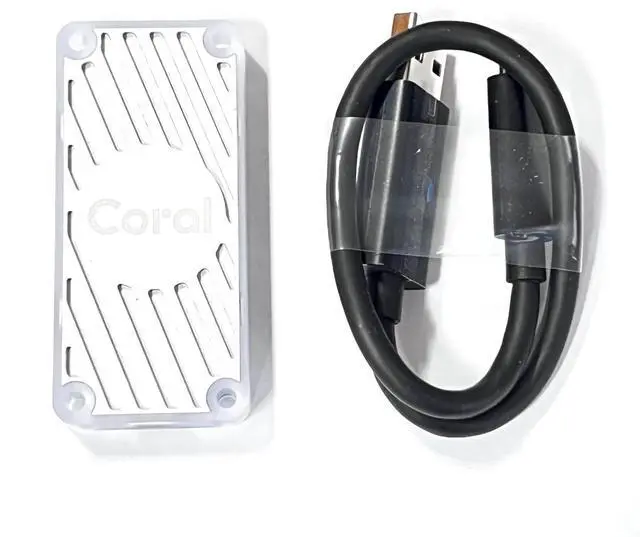
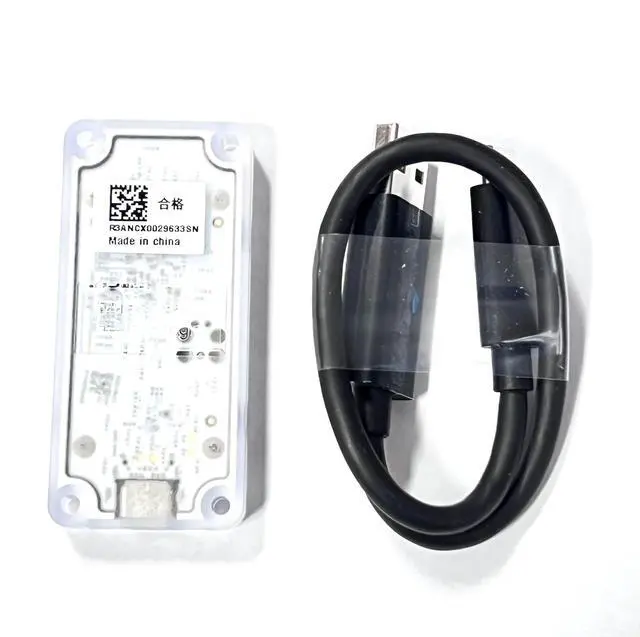
TemperatureRecommended operating temperature: 35C - reduced clock frequency25C - maximum clock frequency (for optimal performance) Included in the USB Accelerator PackageUSB AcceleratorUSB 3 cableFor optimal use with the Pi 4, we have assembled a development kit that we recommend to all users: Included in the USB Accelerator Development KitUSB AcceleratorUSB 3 cableRaspberry Pi 4 (8 GB) FLIRC case (for optimal passive cooling of the Pi 4 / 8 GB)USB C 3A power supply (EU, white - US/AUS/UK available on request)32 GB microSD card with NOOBS / Raspbian Buster2 x microHDMI to HDMI cable (1 m, Raspberry Pi Foundation)2 m CAT 6 LAN cable (optimal for
Gigabit) Note: Additional software is required to operate the USB Accelerator, which must be installed separatelyit is not included on the SD card. The co





 here!
here!