




 here!
I’m your shopping assistant for PC builds, upgrades, and everything tech.
Got questions? Ask away!
Start a conversation
here!
I’m your shopping assistant for PC builds, upgrades, and everything tech.
Got questions? Ask away!
Start a conversation





Any questions? Ask CelesteSM will help you find out quickly.
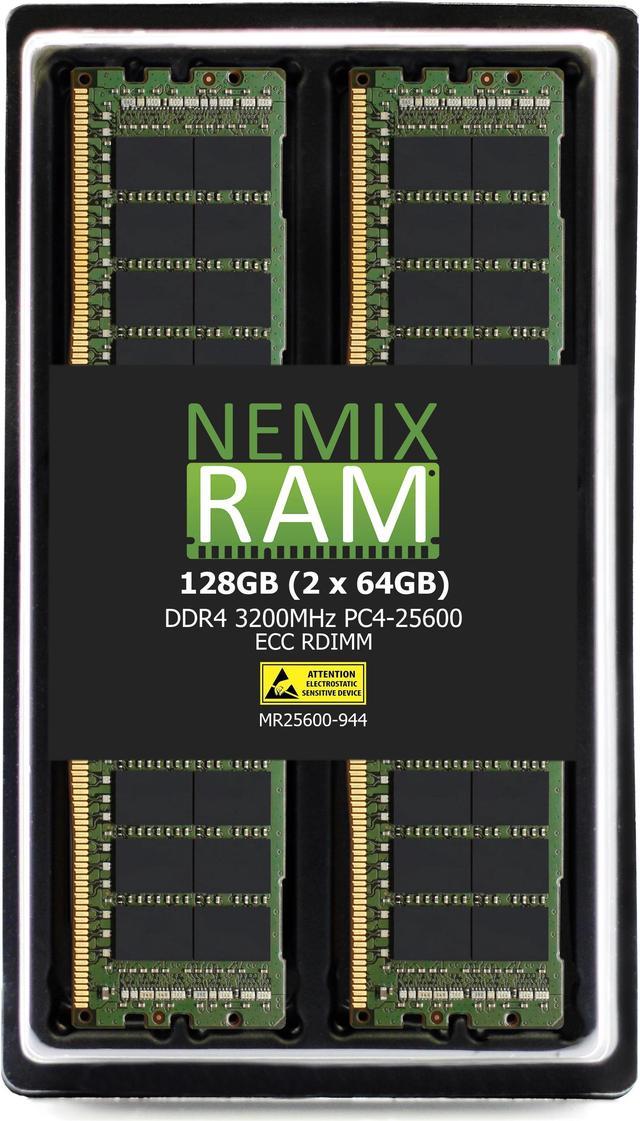
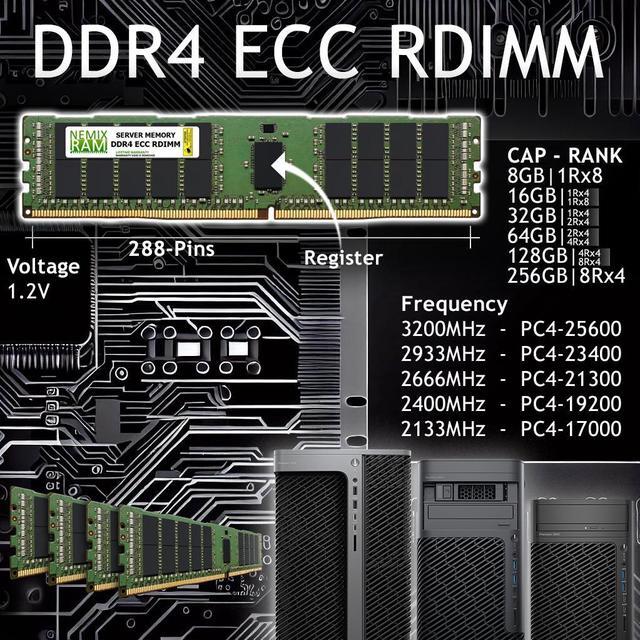
The NEMIX RAM 128GB (2 x 64GB) DDR4-3200 ECC Registered DIMM kit is a server memory upgrade for systems that support 288-pin 4Rx4 RDIMMs at 1.2V; it is not intended for standard PC computers.
| Attribute | Value |
|---|---|
| Best For | Servers that support 128GB of DDR4-3200 ECC registered memory |
| Memory Capacity And Configuration | 128GB total, configured as 2 × 64GB modules; 4Rx4 rank |
| Memory Type And Error Correction | DDR4 ECC registered memory |
| Speed And Latency | 3200 MT/s (PC4-25600) with CAS latency 22 |
| Voltage | 1.2V |
| Memory Chip Manufacturers | Major OEM chips from Samsung, Micron, or Hynix |
| Model Identifiers | NEMIX RAM; model/part number MR25600-944K2-SM-SYS-620C-TN12R |
Q: NEMIX 128GB (2×64GB) vs. 64GB (2×32GB) DDR4-3200 RDIMM: which should I choose?
A: Choose the 128GB kit when your server workload benefits from more installed memory. Choose a compatible 64GB configuration when that capacity meets your needs. Both options are DDR4-3200 ECC Registered memory; confirm the system supports the selected module configuration.
Q: Should I choose this 128GB kit or a NEMIX 256GB DDR4-3200 RDIMM configuration?
A: Choose the 128GB kit for a 128GB memory target. Consider the 256GB configuration when your workload calls for more installed capacity and your server supports the selected RDIMM modules and layout.
Q: For 128GB of NEMIX DDR4-3200 RDIMM, should I use 2×64GB or 1×128GB?
A: Both configurations provide 128GB of total memory. Choose 2×64GB to install two modules, or 1×128GB to install one module and use one DIMM slot. Check your server’s memory-channel population guidance to select a layout suited to its configuration.
Q: How can I tell if this memory is compatible with my server?
A: Use this kit only if your server supports DDR4 ECC Registered DIMMs (RDIMMs) and can handle 64GB 4Rx4 modules. Check the server or motherboard memory list and CPU specifications before buying; matching DDR4 speed alone does not guarantee compatibility.
Q: Will this RAM work in a regular desktop PC?
A: No. This kit is registered ECC server memory, and the product listing says it is not for PC computers. Do not buy it for a desktop that requires unbuffered UDIMM memory.
Q: Will this kit always run at 3200MHz?
A: Not necessarily. The kit is rated for DDR4-3200, but the server’s processor, motherboard, memory configuration, or other installed memory may limit the operating speed. Confirm the platform’s supported speed before buying.
Q: Who is this 128GB memory kit suitable for?
A: It is intended for a compatible DDR4 server that needs a 128GB memory upgrade using two 64GB ECC Registered RDIMMs. It is not a general-purpose desktop or laptop memory kit.
Q: Will this kit work in my DDR4 server?
A: Only if the server supports ECC registered RDIMMs and accepts 64GB 4Rx4 modules. Check the server and CPU memory specifications, supported speeds, and DIMM population rules before buying; DDR4 support alone does not guarantee compatibility.
Q: Can I use this RAM in a regular desktop PC?
A: Generally, no. This kit is registered ECC RDIMM server memory, not standard desktop UDIMM memory. Use it only in a system whose specifications explicitly support DDR4 RDIMMs.
Q: Can I add this kit alongside my existing server memory?
A: Possibly, but check the server’s memory population rules and existing modules first. Do not mix RDIMMs with LRDIMMs; mixing different capacities, ranks, or speeds may also affect compatibility or operating speed. A matched set is the safer choice.


