




 here!
I’m your shopping assistant for PC builds, upgrades, and everything tech.
Got questions? Ask away!
Start a conversation
here!
I’m your shopping assistant for PC builds, upgrades, and everything tech.
Got questions? Ask away!
Start a conversation





Any questions? Ask CelesteSM will help you find out quickly.
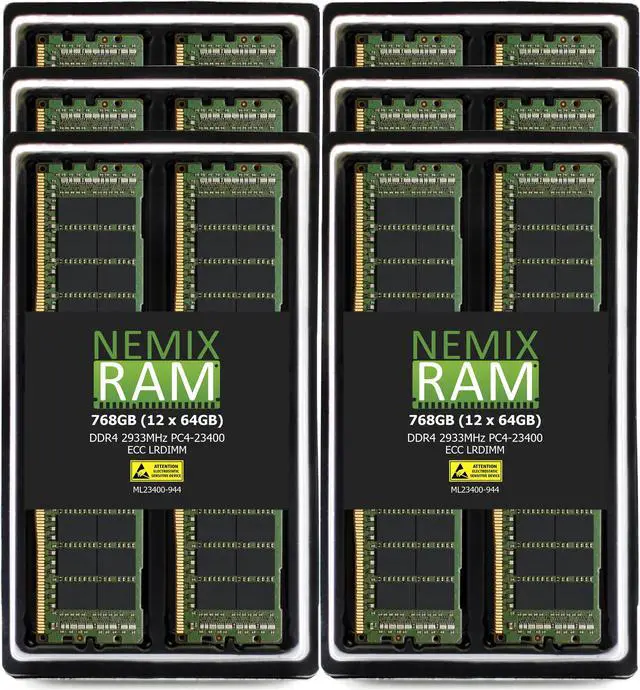
The NEMIX RAM 768GB kit is a 12-module DDR4-2933 ECC LRDIMM server memory upgrade for servers that support 64GB 4Rx4 load-reduced DIMMs at this speed; it is intended for servers, not standard PCs.
| Attribute | Value |
|---|---|
| Best For | Server memory upgrades for systems that support 768GB of DDR4-2933 ECC load-reduced memory |
| Capacity And Configuration | 768GB total across 12 × 64GB modules |
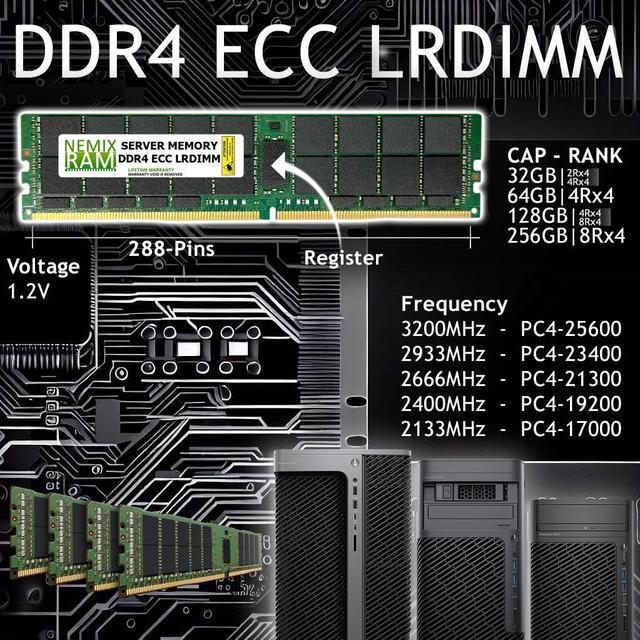
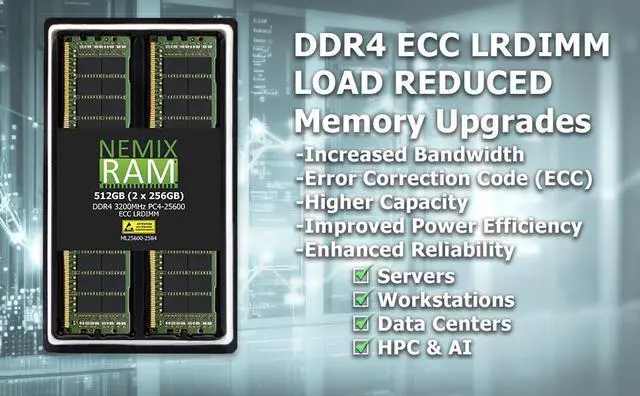
| Memory Technology And Error Correction | DDR4 ECC load-reduced (LRDIMM) server memory |
| Speed And Timing | 2933MHz (PC4-23400) with CAS latency 21 |
| Electrical And Rank | 1.2V, 4Rx4 rank configuration |
| Memory Component Manufacturers | Major OEM chips from Samsung, Micron, or Hynix |
| Model Identifiers | NEMIX RAM; model and part number ML23400-944K12-SM-SYS-6019U-TN4RT |
Q: Should I choose NEMIX 768GB (12×64GB) or 384GB (6×64GB)?
A: Choose the 768GB kit when the server workload needs more memory capacity; it provides twice the total RAM using the same 64GB DDR4-2933 ECC LRDIMM modules. Choose 384GB when that capacity meets your needs and you prefer a six-module configuration. Confirm your server supports the kit’s LRDIMM type and DIMM population.
Q: NEMIX 512GB (8×64GB) or 768GB (12×64GB): which capacity should I get?
A: Choose 768GB when your applications need the additional 256GB of memory capacity. Choose 512GB when it meets your workload’s memory needs and an eight-module configuration better matches your planned DIMM population. Both options use 64GB DDR4-2933 ECC LRDIMMs; check the server’s supported DIMM count and population rules.
Q: NEMIX 768GB (12×64GB) or 768GB (6×128GB): which layout is preferable?
A: Both configurations provide 768GB at DDR4-2933. The 12×64GB kit uses twelve DIMM slots, while the 6×128GB option uses six, leaving more slots open for a potential memory expansion. Choose based on your server’s support for 64GB or 128GB LRDIMMs and its recommended memory-population layout.
Q: Is NEMIX 768GB (12×64GB) worth choosing over 256GB (4×64GB)?
A: Choose the 768GB kit when the workload benefits from substantially more memory capacity: it provides three times the RAM while retaining the same 64GB-per-module DDR4-2933 ECC LRDIMM format. Choose 256GB when that lower capacity fits the workload and four modules match the server’s intended configuration.
Q: How can I check whether this memory is compatible with my server?
A: Check the server and processor documentation before buying. The system must support 64GB DDR4-2933 ECC LRDIMMs with a 4Rx4 rank, and its capacity limits, available slots, and memory-population rules must support all 12 modules. Matching the speed alone does not guarantee compatibility.
Q: Can I use this memory in a regular desktop PC?
A: No. This is ECC load-reduced DIMM (LRDIMM) server memory, and the product is specified for compatible servers—not standard PC computers. Confirm that your system specifically supports DDR4 LRDIMMs before buying.
Q: Can I mix this LRDIMM kit with the memory already in my server?
A: Do not assume it can be mixed with existing memory. LRDIMM, RDIMM, and unbuffered DIMMs are different types, and supported combinations depend on the server. Check its memory rules, module specifications, and slot-population guidance before combining them.
Q: Will this kit run at 2933MHz in my server?
A: The kit is rated for DDR4-2933, but the installed speed depends on the server’s processor, motherboard, and memory configuration. Check the system documentation; it may run below its rated speed.
Q: Who is this 768GB memory kit suitable for?
A: It is for server users whose compatible system supports twelve 64GB DDR4-2933 ECC LRDIMMs and who need a total of 768GB of memory. That capacity may suit memory-intensive workloads such as virtualization or databases; extra RAM does not by itself guarantee faster performance.
Q: Will this 768GB kit work in my server?
A: Only if the server and its CPUs support 64GB 4Rx4 DDR4-2933 ECC LRDIMMs and the 12-module configuration. Check the server’s memory compatibility list before buying; Reddit users report that LRDIMMs can fail to boot even when the system appears to support them.
Q: Can I mix this kit with existing RDIMM memory?
A: No. This is load-reduced LRDIMM memory, and Reddit discussions note that LRDIMMs and RDIMMs should not be mixed in the same system. Plan to use one memory type throughout, subject to the server’s supported configurations.
Q: Is this suitable for a desktop or workstation?
A: It is not intended for ordinary PC computers. Consider it only for a server or workstation that explicitly supports ECC LRDIMMs with these capacity, rank, and speed specifications; Reddit reports show that some workstations may reject LRDIMMs.


