




 here!
I’m your shopping assistant for PC builds, upgrades, and everything tech.
Got questions? Ask away!
Start a conversation
here!
I’m your shopping assistant for PC builds, upgrades, and everything tech.
Got questions? Ask away!
Start a conversation



Any questions? Ask CelesteSM will help you find out quickly.


2026 New Release
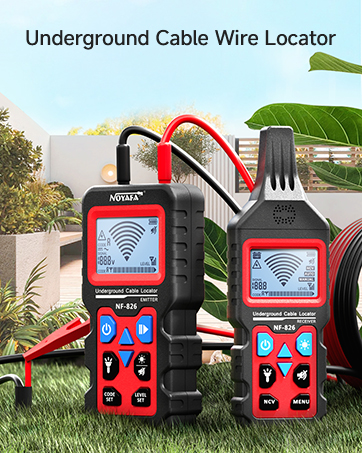
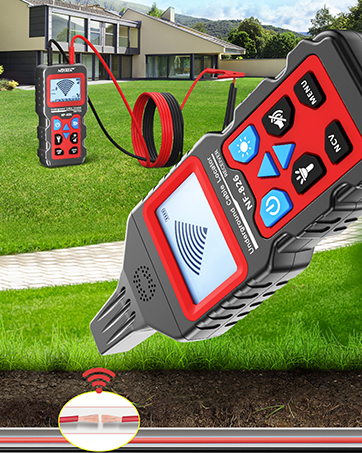
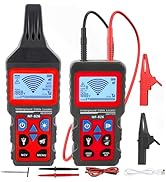
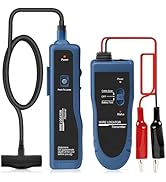

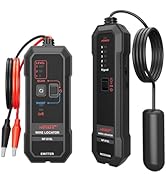
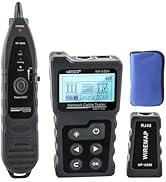
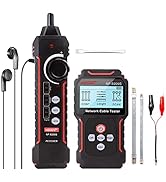
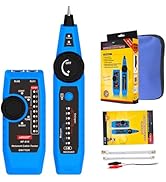
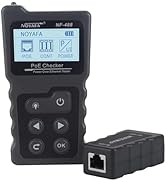


Can it detect cables in concrete slabs ?
Yes, NF-826 can detect cables buried in walls and underground, and it works well for locating wires under concrete.
How accurate is its cable detection?
The NF-826 underground cable finder is highly accurate in finding the location of buried wires and short circuit breaks in walls and underground.
How long does the battery work ?
NF-826 built-in 1400 mAh lithium battery, it is fully charged can be used continuously for 6-8 hours, and with a long period of time without operation automatic shutdown function, to avoid power consumption
How long and how deep can it test?
Noyafa NF-826 wire tracer range-up to 3-4 feet deepand 3000 feet in length
2026 New Release
Noyafa nf-826 undergrounde cable locator with 1400mAH battery ,NOYAFA Factory NF-826 wire tracer can detect electrical circuits, water and gas pipes, and cables buried in walls and underground with precision. Open and short circuit faults in electrical circuits can be easily discovered, and safety circuits, covered sockets and junction boxes located. Broken and short-circuit faults in electric heating lines under the floor can also be found.
| Has Multiple Battery Powered Components | false |
| Measurement Type | Voltmeter |
| Included Components | NF-826 |
| Item Weight | 1 pounds |
| Item Package Quantity | 1 |
| Specification Met | CE |
| Item Dimensions | 4.5 L x 3.3 W x 12 H centimeters |
| Brand Name | NOYAFA |
| Lower Temperature Rating | 0 degrees_celsius |
| Number of Items | 1 |
| Item Package Dimensions | 6.7056 L x 18.1102 W x 29.1084 H centimeters |
| Style Name | portable |
| Number of Lithium-ion Cells | 1 |
| Measurement Accuracy | GOOD |
| Color / 0 | Black |
| Color / 1 | Red |
| Package Weight | 0.962 kilograms |
| Battery Cell Composition | lithium |
| Battery Weight | 29 grams |
| Manufacturer | noyafa |
| Number of Lithium Metal Cells | 1 |
| Minimum Operating Voltage | 12 |
| Lithium Battery Energy Content | 3.7 watt_hours |
| Lithium Battery Weight | 0.85 grams |
| Lithium Battery Packaging | batteries_contained_in_equipment |
| Model | NF-826 |
| Contains Battery or Cell | battery |
| Number of Batteries | 1 |
| Battery Type | lithium_metal |
| Number of Batteries / 1 / Number of Batteries | 1 |
| Number of Batteries / 1 / Battery Type | aaa |
| Number of Batteries / 2 / Number of Batteries | 2 |
| Number of Batteries / 2 / Battery Type | 9v |
| Are batteries required? | true |
| Power Source | Battery Powered |
| Upper Temperature Rating | 40 degrees_celsius |
| Are batteries included? | true |
The NOYAFA NF-826 is a digital underground cable locator and wire tracker for finding buried cables, wall wiring, dog-fence lines, irrigation systems, metal pipes, and wire faults up to 3–4 feet deep or 2,000 feet in length. It suits electricians, landscapers, HVAC technicians, network installers, and DIY users; short-circuit testing requires identifying the shorted core first.
| Attribute | Value |
|---|---|
| Best For | Tracing underground and in-wall cables, wires, and metal pipes, locating wire breaks or short circuits, and checking low-voltage electrical systems with a portable digital tester |
| Product Identification | Meterk NF-826 digital cable locator and voltmeter, supplied as a one-piece pack |
| Measurement And Electrical Testing | Digital voltmeter with a 12V minimum operating voltage and good stated measurement accuracy |
| Included Components | Includes one NF-826 unit |
| Power And Battery | Battery-powered operation using an AAA battery; batteries are included |
| Physical Specifications | Black and red portable unit measuring 4.5 × 3.3 × 12 centimeters and weighing 0.5 kilograms |
| Operating Environment | Rated for operation from 0 to 40 degrees Celsius |
| Standards And Compliance | Listed with FDA Class VI Seats and CE specification compliance |
Q: Should I get the NOYAFA NF-826 or Klein ET450 for tracing underground wires?
A: Choose the NOYAFA NF-826 when buried-wire, dog-fence, irrigation, pipe, and fault-location work is the priority. It supports underground and wall tracing, open- and short-circuit detection, automatic or manual sensitivity, and a rechargeable 1,400mAh battery. Choose the Klein ET450 when electrical circuit tracing and safety-rated work are more important; it supports energized and non-energized breakers, fuses, and wires, includes a hard case and multiple leads, and carries CAT III 600V ratings. The NF-826 is the more underground-focused option, while the ET450 is the more electrical-panel-focused option.
Q: Is the NOYAFA NF-826 suitable for professional utility locating, or should I use a Radiodetection RD8200?
A: The NF-826 is more suitable for homeowners, electricians, landscapers, and general contractors who need to trace buried wires, locate fence or irrigation faults, and check voltage. Choose the Radiodetection RD8200 for professional utility-locating work involving congested networks, precise depth and current readings, interference rejection, target-line identification, GPS logging, and repeated field use. The RD8200 provides a substantially more specialized utility-locating platform, while the NF-826 covers common wire-tracing tasks with a simpler, more portable design.
Q: Should I buy the NF-826 or a basic dog-fence wire-break finder?
A: Choose a basic dog-fence wire-break finder when the only job is locating an occasional break in a single pet-fence loop and you want the simplest tool. Choose the NF-826 when you also need to trace irrigation wires, communication cables, wall wiring, metal pipes, or multiple lines, or when voltage measurement and open- or short-circuit testing are useful. The NF-826 offers broader diagnostic capability, while a basic fence finder is appropriate for a narrow, single-purpose task.
Q: Is the NF-826 better than using an AM radio to find a broken underground dog-fence wire?
A: Choose the NF-826 when you want a purpose-built transmitter-and-receiver system with adjustable sensitivity, signal-strength feedback, and open- or short-circuit troubleshooting. An AM-radio workaround may be sufficient for an occasional low-cost fence check when the wire can be connected to a suitable signal source, but it is less versatile for wall wiring, irrigation cables, pipes, and voltage testing. The NF-826 is the more repeatable option for users who expect to locate or diagnose buried wiring more than once.
Q: Who is the NOYAFA NF-826 suitable for?
A: The NF-826 is suitable for electricians, landscapers, HVAC technicians, network installers, and DIY users who need to trace buried or wall-embedded cables, dog-fence wires, irrigation wiring, telephone lines, or similar circuits. It is most useful when avoiding destructive digging or wall opening is important.
Q: How deep and how far can the NF-826 trace a cable?
A: The product is specified to detect cables up to approximately 3 to 4 feet deep and trace up to 2,000 feet in length. Actual performance can vary with cable type, soil or wall material, signal strength, branching, shielding, and surrounding electrical interference, so the stated maximums should not be treated as guaranteed results in every installation.
Q: Can the NF-826 find a broken or shorted underground wire?
A: Yes. The NF-826 is designed to trace wire routes and help pinpoint breaks or short circuits in buried, wall-embedded, irrigation, dog-fence, and similar wiring. Short-circuit testing requires that the shorted core be known beforehand, and results depend on correct transmitter connections and signal conditions.
Q: Can the NF-826 trace live electrical cables?
A: The product includes a separate 12–400V AC/DC voltage-testing function, but the supplied specifications do not confirm that cable tracing is intended for energized mains circuits. Users should verify the operating instructions, use the voltage tester for measurement, and follow electrical safety procedures before connecting the transmitter.
Q: Is the NF-826 practical for repeated field work?
A: It is practical for portable field use because it has a built-in 1,400mAh rechargeable battery, approximately 6–10 hours of runtime, USB charging, adjustable sensitivity, a backlit LCD, flashlight, mute mode, and automatic shutoff after 10 minutes of inactivity. It is better suited to intermittent locating and maintenance work than to continuous operation without access to charging.
Q: Is the NOYAFA NF-826 worth buying for dog-fence or boundary-wire breaks?
A: It can be worthwhile for recurring boundary-wire troubleshooting because users report that its signal-strength display helps narrow down breaks and that it can detect buried loop cables. However, reports are mixed: some users describe inaccurate or difficult break-finding, so results depend on setup, signal interference, and operator experience.
Q: Can the NF-826 trace wires through walls and under concrete?
A: It is intended for tracing cables in walls and underground, and Reddit users report using it behind drywall, through plaster, inside flexible conduit, and under small amounts of concrete. It is better suited to these jobs than simple low-power toners, but nearby cables and signal coupling can produce misleading readings.
Q: Is the NF-826 suitable for irrigation-wire and valve-box locating?
A: It is suitable for tracing irrigation wires and locating buried valve or cable paths when the transmitter can be connected to the circuit. Users report finding multiple irrigation valves and underground wires, but correct connections and following the operating procedure are important for reliable results.
Q: Can the NF-826 reliably pinpoint a cable break?
A: It can help narrow the location of a break by tracking signal strength, but it should not be treated as a guaranteed one-pass locator. Community reports range from pinpointing breaks within a small area to needing repeated searches from both ends, and some users report inconsistent performance or hardware failures.
Q: Is the NF-826 a better choice than a basic wire toner?
A: Choose the NF-826 when you need stronger tracing through walls, underground areas, or concrete and want features such as adjustable sensitivity, signal-strength feedback, and voltage measurement. A basic toner may be more economical for short, exposed, or lightly concealed wires, while professional underground locators are better suited to complex sites and deeper or closely grouped utilities.


