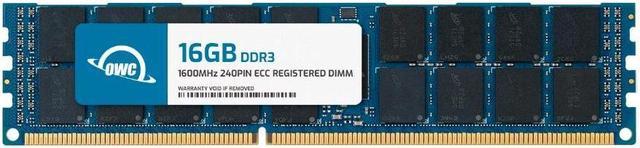
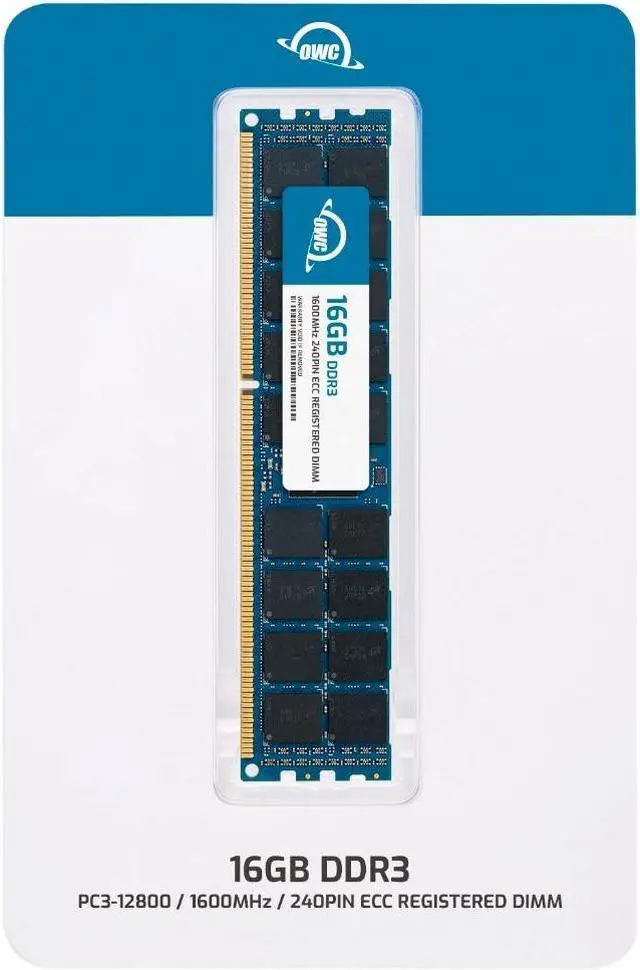
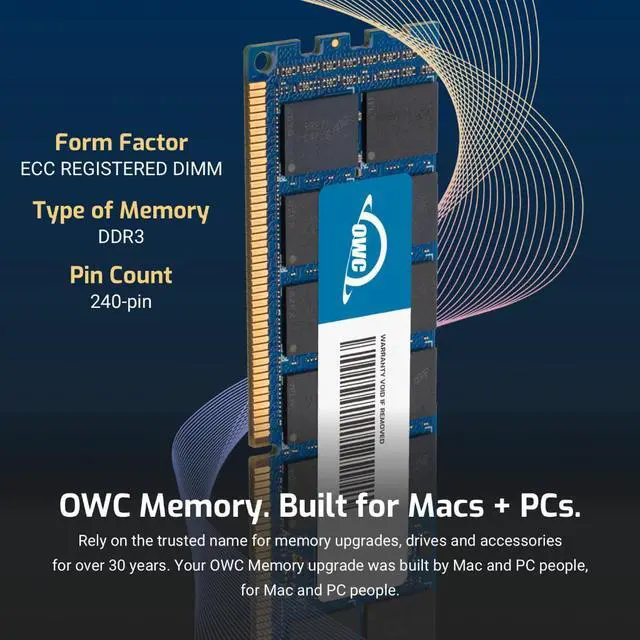
The OWC 1R6T32R416GB is a 16GB DDR3L-1600 ECC registered RDIMM for servers and workstations that support 240-pin, 2Rx4 memory at 1.35V; it matches the listed specifications of Supermicro part MEMDR316LSL06ER16.
Recommended For
- Owners of a compatible DDR3-era server who need a 16GB ECC registered DIMM to expand memory for file sharing, network services, or other always-on workloads.
- Homelab operators keeping a compatible older server in service and adding memory for virtual machines, containers, or multiple self-hosted services.
- IT teams or refurbishers replacing a DIMM in a supported legacy server or workstation, after checking that the system accepts DDR3L 1600 ECC RDIMMs with the required rank and capacity.
- NAS operators with a compatible DDR3 server platform who need additional memory for file services and background workloads, rather than a plug-in upgrade for an ordinary desktop NAS.
Real-World Use Scenarios
- When a compatible Supermicro server needs a replacement DIMM, this module can restore memory capacity without replacing the whole system; confirm the server or motherboard’s validated memory list and population rules before installing it.
- For a home lab built around an older Xeon server, adding compatible memory can give a virtualization host more room to run several virtual machines and containers at once; the actual capacity depends on the system’s total memory configuration.
- When keeping an older server in service for a NAS or self-hosted services, this module can support a compatible memory upgrade or replacement, helping the owner continue using existing server hardware rather than replacing it solely for memory.
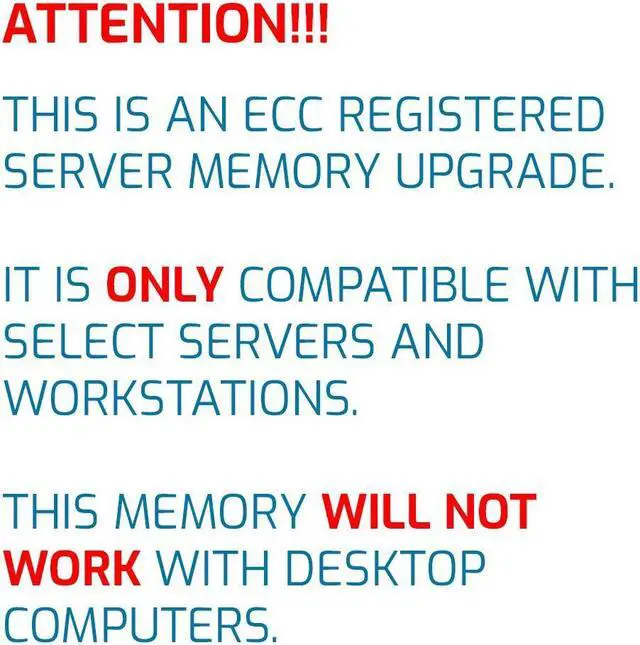
- For a small home lab running services such as storage, network tools, or test environments, upgrading a supported legacy server can provide more memory headroom for those workloads; it does not make an incompatible desktop motherboard accept registered server memory.
- When expanding a server that already has memory installed, adding this module may increase available capacity if the platform supports its type and size; follow the system’s DIMM-slot order and memory-matching guidance to avoid compatibility or speed issues.




 here!