

Your Browsing History


Martin C.
Joined on 03/01/04
0
0
product reviews
- 7
Impressive for the price
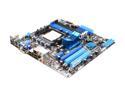
ASUS M4A785-M AM3/AM2+/AM2 AMD 785G HDMI Micro ATX AMD Motherboard
Pros: This board is pretty much ideal for a cheap virtualization platform or other uses that require some "professional" features. ECC functionality on this board works flawlessly, and even with some ECC unreg RAM that I have that other boards didn't like. Took 4x 2 GB with no problems. If you want an Intel i5 or u7 ECC unreg solution they will overcharge you badly these days (you need a Xeon CPU and a more expensive board). There is a real serial port, just not on the I/O shield. (you need this to run with a serial console for kernel debugging, Unix bootloaders and the like, you can't go through USB with that) Board powered up with no problems on the first try. PXE boot works without trouble. Has the fan control you want, which is you can set a temperature threshold at which the fans spin up. SATA and P-ATA ports detected by various Linux versions. Didn't use them, though (diskless).
Cons: The Ethernet chip on there has flaky support under Linux. It doesn't seem to have a driver in the mainline kernel at all and the source package you can download from realtek doesn't compile under 2.6.31.6 (header symbols moved around and source hasn't been updated). The Debian-2.6.18 kernel seems to have a backported version of the 8169 driver but it does not work with the particular chip on this board. I use a PCI Ethernet card for now. This board comes with pretty much no accessories at all except two SATA and one P-ATA cable. The power consumption of the whole system is a little disappointing. With the 3.1 GHz dual-core Phenom II it takes 95 watts idle. I was hoping for less, my 775 Intel platform can be brought down to about 75 watts.
Overall Review: The FreeBSD diskless (PXE) bootloader I tried has some problem here, hangs before bringing up Beastie. I have an old loader version and didn't have time to try a newer one before writing the review, and it is possible that this problem has to do with the finneky Ethernet chip, too. Might work with the PCI Ethernet card. Did not try the soundchip under Linux or FreeBSD. PCI ID is "01:05.1 Audio device: ATI Technologies Inc Device 970f" Overall I am highly satisfied to have gotten a 8 GB ECC platform with serial port for $180 (this board and a 3.1 GHz dual-core CPU).
11/28/2009See more detail
Not enough power
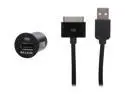
Belkin Micro Auto Charger w/ Charge/Sync Cable for iPhone 4 / iPhone 3G/3GS (F8Z446ttP)
Pros: Nice and small. The LED is practical because it allows you to easily see whether it is correct seated or not.
Cons: Not enough power. A cellphone with display and GPS on will continue to *lose* overall battery capacity when connected to this unit. If the phone is just sleeping it will charge, but much slower than with a normal charger. You will not get a full battery anytime soon.
Overall Review: Not only does this product lack the power required by a modern cellphone, the product page omits any mention of what the mA output is. Bad experience all around.
1/25/2012See more detail
Bad board, sorry
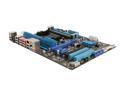
ASUS M5A97 EVO AM3+ AMD 970 USB 3.0 ATX AMD Motherboard with UEFI BIOS
Pros: Useful set of slots. Does (unreg, unbuffered) ECC. Good chipset and onboard devices compatibility, everything shows up in all OSes. Working AHCI. No chipset fan.
Cons: Always detects my 16 GB as far as in-BIOS display goes, but OSes and memtest86+ end up with 8, 10 (yes, 10), or other values. Updated to newest BIOS which made it do the same thing but more predictable. But the new BIOS (0705) breaks PXE boot from the built-in GbE for FreeBSD and for some Linux kernels. Putting in a PCI card with a working PXE prom makes it work in all these OSes, so it's not my installation. Often fails to POST after reset, powercyle works. Stupid new graphical BIOS. Also, the BIOS updates available from Asus fail their built-in ROM image integrity check, both in the in-BIOS updater and with the downloadable updater program. I just wasted a Friday evening making USB boot sticks to discover that the trick is that you must rename the *.ROM file to something fitting 8+3 old DOS names, then the integrity check works. Come on Asus. Also, I really don't like these new RAM slots that have a lifter only on one side. What is the lifetime expectancy of this?
Overall Review: Very disappointing. I was so happy with my Asus M4A785-M and now this.
9/30/2011See more detail
Worked, but did not trust this unit
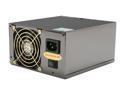
Athena Power AP-P4ATX85FE SLI Ready Active PFC Supports Intel Core i7 & Skulltrail Platform Systems Server Power Supply
Pros: Did power everything I have and overclocks were as stable as with my OCZ 520 W, at first.
Cons: Way too loud. The 35 dB (A) rating is a straight lie. I don't believe that this is a high-quality source of 850 Watts. Very small and light, see below.
Overall Review: I returned this unit. I bought it to power a Supermicro H8QC8 and before putting in into that machine I tested it with socket 939 boards. I have seen severe instability and components out of order. While I cannot rule out that it was not the PSU's fault, in combination with the overall cheap "feel" I decided not to risk the H8QC8 by using this PSU and returned the PSU. Plus I don't like the lie about "silent".
3/29/2006See more detail
Very happy
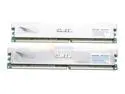
GeIL ONE Series 512MB (2 x 256MB) DDR 400 (PC 3200) Dual Channel Kit System Memory Model GOS5123200DC
Comments: This is awesome. Didn't even start to reach the max and I did 300 MHz 3-4-4-8 ay 2.8 Volts. Works in both my A8V-E SE and DFI NF4. For $xx that is a steal. I also like that the heatspreader is not very high so you can insert it under CF-7700-CU fans.
10/9/2005See more detail
To clarify...
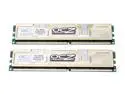
OCZ Gold Series 1GB (2 x 512MB) DDR 500 (PC 4000) Dual Channel Kit System Memory Model OCZ5001024ELDCGEVX-K
Comments: To clarify on the voltage requirements: This is OCZ's "VX" series which is mean to perform very well at high volate, at a moderate price compared to other memory which reaches the same speed at normal voltage but costs (even) more. Normal mainboards cannot provide these high voltages. You need a recent DFI board, or you need OCZ's adapters.
8/11/2005See more detail