

Your Browsing History


James W.
Joined on 11/25/05
0
0
product reviews
- 7
So far, so good
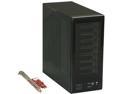
Rosewill RSV-S8 - 8-Bay 2.5" & 3.5" Hot-Swappable RAID Storage Enclosure System Bundled with PCIe Controller Card - 120mm Cooling Fan, Port Multiplier, Tray Design, RAID 0 / 1 / 5 / 10 / 5 + Spare / S
Pros: Cheap! Lowest cost-per-GB ratio I've seen yet for a quality RAID enclosure. Comes with everything you need, minus the drives of course. Max sustained read is about 108MB/sec to my 10K Velociraptor drive (running in RAID-0, RAID-10, and RAID-5 configurations). Hot-swappability appears to be flawless and Windows seems to have no problem recognizing new drives on the fly, drive removals, and even powering off and on the device itself. The included management software allows you to suspend and resume RAID builds in case you need to shut down the enclosure in the middle of an operation, which is convenient as large volumes can take many hours to build (see "task manager" within the software for currently running tasks).
Cons: Write performance in RAID-10 is about 55MB/sec and RAID-5 is about 25MB/sec (slightly slower than USB 2.0). Since read rates are considerably high as stated above, I assume this is a software RAID limitation (write is slower than read because building new parity information is software-controlled?), but that's what you get for only $350. It's not a major issue for me since I'm using the device primarily for the reliability of RAID and not as a performance monster. I would have given it 5 eggs if it weren't for this one small drawback. The GUI of the included SiI management software could use some work (it's pretty clumsy and written in Java of all things), but it does work adequately.
Overall Review: I filled mine with 8x 1TB WD Green Power drives in two RAID-5 arrays with two 1.5TiB volumes/groups per array (6TiB usable). Took about 7 hours to create each volume, which seems reasonable. I should mention the "pass-through" feature, as my included PDF manual said it was "not supported on this device" even though it is. It appears to me that when a drive is in "pass-through" mode, the controller bypasses any RAID functionality for that disk and allows Windows to see and control the drive as if it were any other internal HD. This allows you to use disk management to manage that drive instead of the SiI utility. I initially had some drives be detected as "pass-through" and some not. When I created a RAID group on these drives the controller thought one of the drives had failed upon restarting my PC. If you have this problem, try deleting any RAID groups, creating one encompassing all of your drives (something quick like RAID-0), and then deleting it to wipe the slate clean.
1/4/2009See more detail
Seagate's quality has plummeted
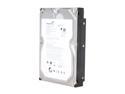
Seagate BarraCuda LP ST32000542AS 2TB 5900 RPM 32MB Cache SATA 3.0Gb/s 3.5" Hard Drive Bare Drive
Pros: Few enough that there is no way they can outweigh the cons.
Cons: I purchased two of these drives from Newegg during their Cyber Monday sale last year, both of which had to be returned because they were physically damaged. The SATA and power connectors were completely broken as if the drives had been dropped. Newegg was as helpful as ever and promptly sent me two brand new drives after receiving the others. Amazingly, one of these was DOA and also had to be returned. Now, only two months after receiving those replacements, one has already failed. Seagate's quality control clearly isn't what it used to be.
Overall Review: In the past few years I've purchased about 30 new hard drives, most of them Western Digital. None of the WD drives has yet to fail, but at least half of the 6-8 that were Seagate's have died. I was a loyal Seagate fan for years but I'll never buy another one of their drives as long as I live.
3/5/2011See more detail
Beats competition hands-down
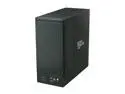
Sans Digital 8-Bay SAS/SATA JBOD Compact Tower Enclosure w/ Mini-SAS (SFF-8088) x 2 TR8X+B (Black)
Pros: I'd like to retract my previous review of the Rosewill RSV-S8. I own two of them and an RSV-S5, all purchased from Newegg, and always gave them a nod of approval not knowing any better. The Sans Digital version beats them all hands-down. The TR8X enclosure is nearly identical to Rosewill's except for slightly different backplane boards and black instead of chrome covers on the drive trays. The big difference is the controller. Both include a rather cheap-looking eSATA port multiplier software RAID 0/1/5/10/JBOD controller, but there is no comparison. The HighPoint RocketRAID-622SD included with the Sans Digital annihilates the Sil-3132-R5 that comes with the Rosewill. First of all, write performance in RAID-5 alone is at least 3-4 times that of the Sil controller, and that alone seals the deal for me. Secondly, while the Sil controller likes to spend days building arrays and checking for redundancy on almost every reboot, the HighPoint will build a 21TiB R5 in about 4 seconds. It takes longer for Windows to do a quick format on the volume than it takes the controller to create it. Third, the controller allows one array to span all 8 drives, whereas the Sil requires one array for each backplane/eSATA connection, or one for every 4 drives (or 5 in the case of the RSV-S5). Last, the Java-based management software that Sil provides is a far cry from the web-based management console of the RocketRAID. It provides email alerts, maintenance tasks, firmware upgrades, and a lot more, and lets you do so from any browser. The controller even has an audible buzzer that's not on the Sil board. If you want the best direct-attached RAID solution for this price range, look no further.
Cons: As with all eSATA devices, the connectors fall out easily, but one can hardly blame Sans Digital for that.
Overall Review: I purchased one of these used for $125 and it's the best money I've ever spent on a storage appliance. I plan to buy several more of the included HighPoint controllers to replace the Sil-3132's on my Rosewill enclosures. These are confirmed to work, and I've also tested the controller with the Mediasonic ProBox. Any eSATA port multiplier device should work.
5/1/2013See more detail
WD Caviar Green drive for less
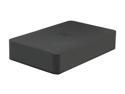
WD Elements 3TB Desktop External Hard Drive
Pros: As others have said, this is simply an OEM 3TB Green internal drive stuffed inside a cheap USB 2.0 enclosure. SATA 6Gbps, 64MB cache, the works. It seems silly to waste another $10-30 for the same drive without an enclosure. I imagine the drive is only covered under warranty while inside the enclosure, but it's easy enough to open with a putty knife without breaking any "void if removed" seals (there aren't any), and it's a snap to put back together. Inside you'll find the drive nested in rubber grommets and attached to a small PCB that provides power and USB connectivity. I've tested it both with and without the enclosure and it performs as expected.
Cons: I would have given it 5 eggs if the enclosure was usable but the quality is just too poor. No ventilation, held together by plastic clips, only USB 2.0 with a mini-USB connector at that. It's easy enough to get into for a case that wasn't designed to be opened, but there's no quick and convenient way of swapping drives even if you wanted to.
Overall Review: Despite the rather sad enclosure, it's still a terrific deal, especially at $109.99 with a promo code.
4/15/2013See more detail
Respectable product for the price
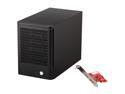
Rosewill RSV-S5 - 5-Bay 2.5" & 3.5" Hot-Swap Storage Encl. System - RAID 0 / 1 / 5 / 10 / 5 + Spare / Spanning / JBOD - 120mm Fan, Port Multiplier, Tray Design - Controller Card Bundle
Pros: Price to storage density ratio is excellent, speeds in RAID-0/1/10/JBOD are as expected for the interface and drives, around 80-110MBytes/sec sustained. Recovers gracefully from drive failures when configured for redundancy and hotswaps seamlessly without complaining. Seems faster than the RSV-S8, albeit with slightly newer drives.
Cons: The old Java management software is very poor, as are the drivers. The management system service has to regularly be restarted for the management software to detect any controllers. Half of one RSV-S8 randomly drops out and has to be either unplugged or the system restarted for it to be recognized by Windows again. In its defense, this is in a system with three PCIe cards, two RSV-S8's, and one RSV-S5, all full of drives in RAID-5. I'll point the finger at Silicon Image for these issues anyway, not Rosewill As with the RSV-S8 and other products using port multipliers, initial RAID-5 array builds are very slow to write parity data, as are rebuilds when a drive is lost or errors are detected. Redundancy restore operations also seem to begin without obvious cause and at random, slowing down performance for sometimes days at a time. Write operations to RAID-5 volumes are also predictably slow, with speeds peaking at 20-25MBytes/sec when the array is otherwise idle. This is to be expected, though, with what is essentially software RAID through a tiny port multiplier card. RAID-5 read operations are tolerable. Besides software and performance, the only thing that doesn't make this a 4-5 egg product for me is the lack of 6.0Gbps SATA support.
Overall Review: All around it's a pretty solid product that could probably stand some polishing, but well worth the money for anyone looking for lots of cheap local storage.
2/20/2013See more detail
WD10EACS
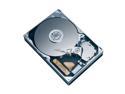
Western Digital Caviar Green WD10EACS 1TB 16MB Cache SATA 3.0Gb/s 3.5" Hard Drive Bare Drive
Pros: I have 7 of these in my RAID array and I'm about to purchase an 8th (from Newegg, naturally). I haven't had a single problem with one yet. I've used them as standalone disks and in RAID 0, 1, and 5 without a hitch. Sustained read from RAID 0 is about 105MB/sec.
Cons: Slightly slower than my 32MB cache Seagate 7200.11 1TB drives, but certainly not worth the extra $100 for the Seagates (at the time).
Overall Review: I gather that the Green Power drives are WD's "value" line, but I see nothing cheap about their construction or performance. Business users may want to consider something with a higher MTBF for enterprise environments, but I trust them 100% for personal use.
1/3/2009See more detail