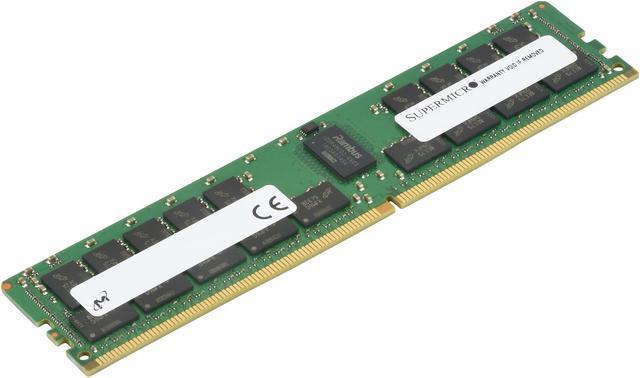
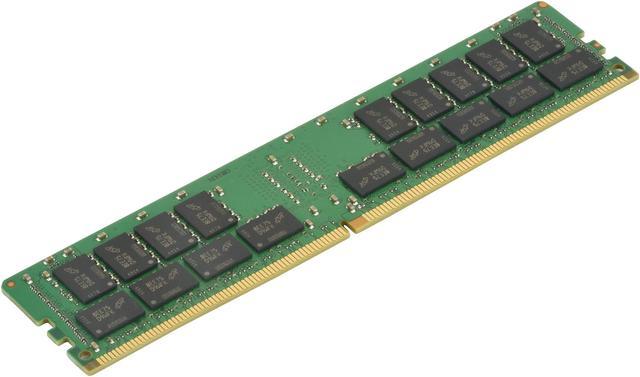
The Supermicro MEM-DR432L-CL01-ER29 is a 32GB DDR4-2933 ECC registered server memory module, suited to compatible Supermicro server or workstation systems that require 288-pin RDIMM memory.
Recommended For
- IT administrators expanding a compatible Supermicro X11 Xeon server for virtualization or other multi-VM workloads that benefit from ECC registered memory.
- Homelab operators building or upgrading a compatible Supermicro server for several VMs, containers, or network services, provided the board and CPU support DDR4 ECC RDIMMs.
- Server technicians replacing or matching a 32GB 2Rx4 DDR4-2933 registered ECC DIMM in a compatible system, where matching the existing memory type and configuration matters.
- Owners of compatible ECC-RDIMM servers who want error-correcting memory for data-sensitive services and workloads, rather than standard desktop memory.
Real-World Use Scenarios
- Expanding a compatible server for virtualization: add this 32GB DIMM to increase the memory available for virtual machines, so more guests or larger guest allocations may fit without relying as heavily on memory overcommit. The result depends on the server’s total memory configuration and workload.
- Growing a homelab or test server: install the DIMM in a compatible system to add memory headroom for running several lab services, containers, or test environments together; the extra capacity helps only when the existing memory is a constraint.
- Adding capacity to a database or business server: use the module in a compatible system to provide more room for database processes and other services to stay in memory, which can reduce memory pressure when the workload was previously running short of RAM.
- Expanding a multi-drive storage or backup server: add memory to a compatible server that also handles storage services, so it has more capacity for its operating system, file services, and any configured caching; this DIMM does not add drive capacity or guarantee faster storage transfers.
- Replacing or matching memory in a supported Supermicro build: use the module as a compatible ECC registered-memory replacement or addition, helping the system retain memory error detection and correction when its platform supports it; confirm the board, processor, and DIMM population rules before installation.




 here!