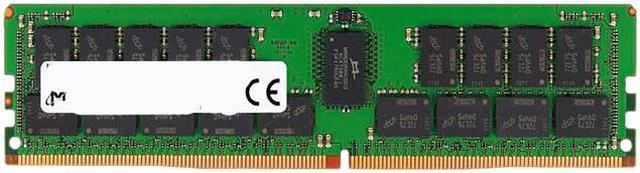
The Supermicro MEM-DR432L-CL03-ER26 is a 32GB DDR4-2666 ECC Registered DIMM for compatible servers that require 288-pin, 1.2V RDIMM memory, with a dual-rank 2Rx4 design and CL19 latency.
Recommended For
- Operators expanding a DDR4 server that explicitly supports 32GB, 2Rx4 ECC registered RDIMMs at 2666 MT/s; verify the server’s memory list and population rules before buying.
- Homelab builders running a compatible Xeon- or EPYC-class server who want ECC registered memory for virtualization, containers, or multiple self-hosted services.
- Home-server or NAS owners with an RDIMM-compatible platform who specifically want ECC memory for file-serving or storage workloads; ECC is a memory feature, not a requirement imposed by ZFS.
- IT technicians maintaining an existing DDR4 server fleet who need a 32GB ECC RDIMM replacement or capacity addition and can match the platform’s supported speed, rank, and module type.
Real-World Use Scenarios
- Expanding a compatible virtualization host: adding this DIMM increases memory available to virtual machines, which can ease memory pressure when several VMs share one server; the benefit depends on the host’s total RAM and supported memory configuration.
- Adding memory to a database or application server: the extra capacity can give memory-hungry services more room for working data or caching, but it will not guarantee faster queries unless limited RAM is the bottleneck.
- Upgrading a home-lab server: in a compatible RDIMM-based system, this module can add capacity for a hypervisor and more guest systems; check the motherboard and CPU support before installing, since registered memory is not interchangeable with ordinary desktop RAM.
- Replacing or matching a DIMM in a server: using a 32GB ECC Registered module with matching supported specifications can help restore or expand server memory, but the exact system’s qualified-memory list and population rules should be checked first.
- Running a server where memory integrity matters: ECC support can help detect and correct certain memory errors when the system supports and enables ECC, reducing the risk of memory errors affecting data; it does not guarantee uninterrupted operation.




 here!