

Your Browsing History







Featured Brands










SHOP BY GPU
Quick View
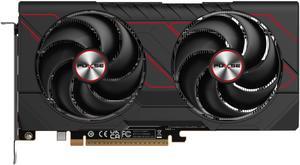
#1 Best Seller
- Model #: 11350-03-20G
- $499.99 –
- More options from $499.99 - $859.99
- Free Shipping
Quick View
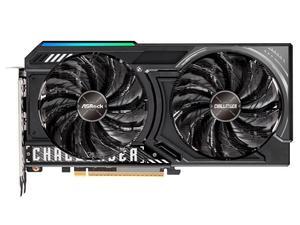
ASRock Challenger Radeon RX 9060 XT 16GB GDDR6 PCI Express 5.0 x16 Graphics Card RX9060XT CL 16GO RX 9060XT

- Model #: RX9060XT CL 16GO
- $498.49
- $469.99 –
- Save: 5%
- More options from $469.99 - $591.84
- Free Shipping
Quick View
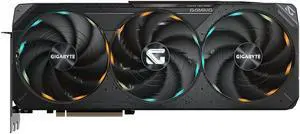
GIGABYTE Gaming GeForce RTX 5070 Ti 16GB GDDR7 PCI Express 5.0 ATX Graphics Card GV-N507TGAMING OC-16GD
Get CONTROL Resonant with selected purchase, limited offer
- Model #: GV-N507TGAMING OC-16GD
- $1,249.99 –
- More options from $1,249.99 - $2,199.99
- Free Shipping
Quick View
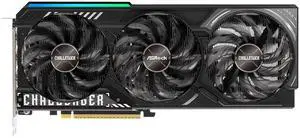
ASRock Challenger Radeon RX 9070 XT 16GB GDDR6 PCI Express 5.0 x16 Graphics Card RX9070XT CL 16G
Get ONIMUSHA with selected purchase, limited offer
- Model #: RX9070XT CL 16G
- $739.99 –
- More options from $739.99 - $1,029.60
- Free Shipping
Quick View
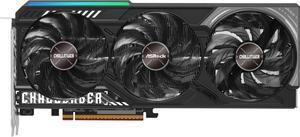
ASRock Challenger Radeon RX 9070 16GB GDDR6 PCI Express 5.0 x16 ATX Graphics Card RX9070 CL 16G
- Model #: RX9070 CL 16G
- $650.00
- $649.99 –
- More options from $648.00 - $1,095.00
- Free Shipping
Quick View
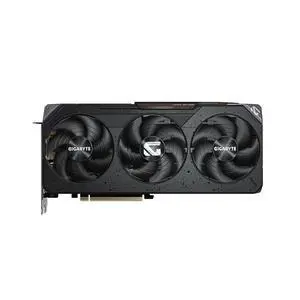
GIGABYTE Gaming Radeon RX 9070 GRE 12GB GDDR6 PCI Express 5.0 ATX Graphics Card GV-R907GREGAMING OC-12GD
Get ONIMUSHA with selected purchase, limited offer
- Model #: GV-R907GREGAMING OC-12GD
- $569.99 –
- More options from $569.99 - $899.99
- Free Shipping

Quick View
MSI FRIEREN EDITION GeForce RTX 5070 Ti 16GB GDDR7 PCI Express 5.0 ATX Video Card RTX 5070 Ti 16G FRIEREN EDITION OC
Free gift w/ purchase, limited offer
- Model #: RTX 5070 Ti 16G FRIEREN EDITION OC
- $1,149.99 –
- Free Shipping
Quick View
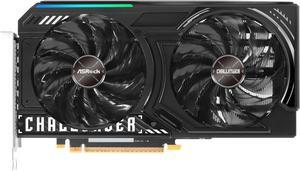
ASRock Challenger Arc B580 12GB GDDR6 PCI Express 4.0 x8 ATX Graphics Card B580 CL 12GO
Get Intel Gamer Days Bundle 2026 with selected purchase, limited offer
- Model #: B580 CL 12GO
- $332.91
- $309.99 –
- Save: 6%
- Free Shipping
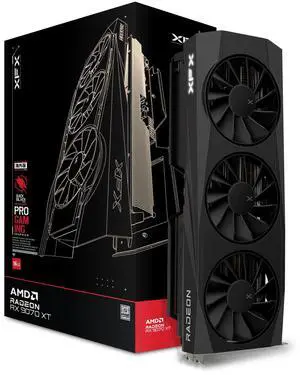
Quick View
XFX Quicksilver AMD Radeon RX 9070 XT Gaming Edition with 16GB GDDR6 HDMI 3xDP, AMD RDNA 4 RX-97TQICKBA
Get ONIMUSHA with selected purchase, limited offer
- Model #: RX-97TQICKBA
- $794.99
- $749.99 –
- Save: 5%
- More options from $749.99 - $829.99
- Free Shipping
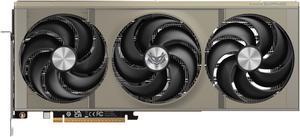
Quick View
SAPPHIRE NITRO+ Radeon RX 9070 XT 16GB GDDR6 PCI Express 5.0 x16 ATX Graphics Card 11348-01-20G
Get ONIMUSHA with selected purchase, limited offer
- Model #: 11348-01-20G
- $949.99
- $849.99 –
- Save: 10%
- More options from $849.99 - $1,499.99
- Free Shipping
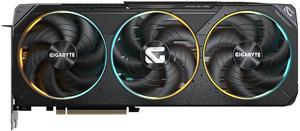
Quick View
GIGABYTE Gaming GeForce RTX 5070 12GB GDDR7 PCI Express 5.0 ATX Graphics Card GV-N5070GAMING OC-12GD
Get CONTROL Resonant with selected purchase, limited offer
- Model #: GV-N5070GAMING OC-12GD
- $839.99 –
- More options from $839.99 - $1,499.99
- Free Shipping
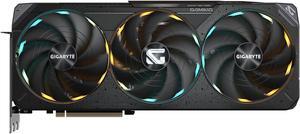
Quick View
GIGABYTE Gaming GeForce RTX 5080 16GB GDDR7 PCI Express 5.0 Graphics Card GV-N5080GAMING OC-16GD
Get CONTROL Resonant with selected purchase, limited offer
- Model #: GV-N5080GAMING OC-16GD
- $1,699.99
- $1,599.99 –
- Save: 5%
- More options from $1,599.99 - $2,899.00
- Free Shipping
Quick View
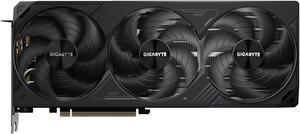
GIGABYTE WindForce GeForce RTX 5070 Ti 16GB GDDR7 PCI Express 5.0 ATX Graphics Card GV-N507TWF3OC-16GD
Get 80+ gold 850W PSU & CONTROL Resonant with selected purchase, limited offer
- Model #: GV-N507TWF3OC-16GD
- $1,169.99 –
- More options from $1,140.00 - $2,199.99
- Free Shipping
Quick View
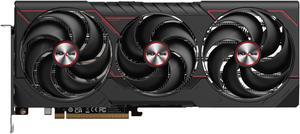
SAPPHIRE PULSE Radeon RX 9070 XT 16GB GDDR6 PCI Express 5.0 x16 ATX Graphics Card 11348-03-20G
Get ONIMUSHA with selected purchase, limited offer
- Model #: 11348-03-20G
- $849.99 –
- More options from $845.00 - $1,459.99
- Free Shipping
Quick View
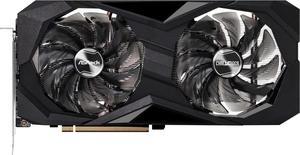
ASRock Challenger Radeon RX 7600 8GB GDDR6 PCI Express 4.0 x8 ATX Graphics Card RX7600 CL 8GO
- Model #: RX7600 CL 8GO
- $329.99
- $319.99 –
- More options from $309.99 - $859.00
- Free Shipping
Quick View
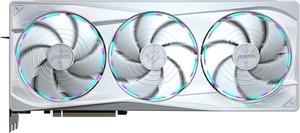
GIGABYTE AORUS GeForce RTX 5090 32GB GDDR7 PCI Express 5.0 ATX Graphics Card GV-N5090AORUSM ICE-32GD
- Model #: GV-N5090AORUSM ICE-32GD
- $5,399.00 –
- More options from $4,929.99 - $5,699.99
- Free Shipping
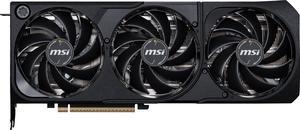
Quick View
MSI SHADOW GeForce RTX 5080 16GB GDDR7 PCI Express 5.0 Graphics Card RTX 5080 16G SHADOW 3X OC
Get CONTROL Resonant with selected purchase, limited offer
- Model #: RTX 5080 16G SHADOW 3X OC
- $1,579.99 –
- More options from $1,579.99 - $3,199.99
- Free Shipping
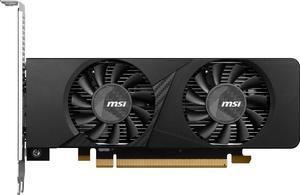
Quick View
MSI LP GeForce RTX 3050 6GB GDDR6 PCI Express 4.0 x8 ATX Graphics Card RTX 3050 LP 6G OC
- Model #: RTX 3050 LP 6G OC
- $299.35
- $219.99 –
- Save: 26%
- More options from $149.31 - $531.80
- $9.99 Shipping
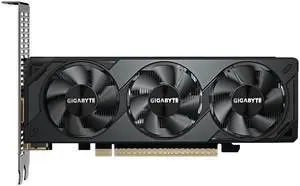
Quick View
GIGABYTE Low Profile GeForce RTX 5050 8GB GDDR6 PCI Express 5.0 x8 Low Profile Graphics Card GV-N5050OC-8GL
- Model #: GV-N5050OC-8GL
- $317.99
- $299.99 –
- Save: 5%
- Free Shipping
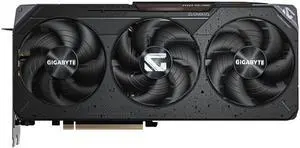
Quick View
GIGABYTE Gaming Radeon RX 9070 XT 16GB GDDR6 PCI Express 5.0 x16 ATX Graphics Card GV-R9070XTGAMING OC-16GD
Get ONIMUSHA with selected purchase, limited offer
- Model #: GV-R9070XTGAMING OC-16GD
- $929.99 –
- More options from $810.00 - $1,599.99
- Free Shipping
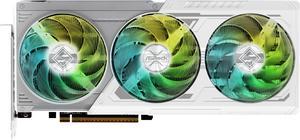
Quick View
ASRock Steel Legend Radeon RX 9070 XT 16GB GDDR6 PCI Express 5.0 x16 ATX Graphics Card RX9070XT SL 16G
Get ONIMUSHA with selected purchase, limited offer
- Model #: RX9070XT SL 16G
- $816.49
- $769.99 –
- Save: 5%
- More options from $769.99 - $1,309.99
- Free Shipping
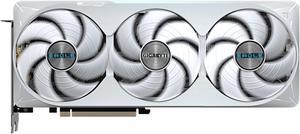
Quick View
GIGABYTE Eagle GeForce RTX 5070 Ti 16GB GDDR7 PCI Express 5.0 ATX Graphics Card GV-N507TEAGLEOC ICE-16GD
Get GIGABYTE 80+ Gold 850W PSU with selected purchse, limited offer
- Model #: GV-N507TEAGLEOC ICE-16GD
- $1,227.19
- $1,189.99 –
- More options from $1,189.99 - $2,199.99
- Free Shipping
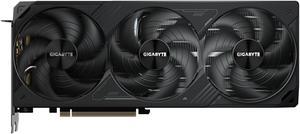
Quick View
GIGABYTE WINDFORCE GeForce RTX 5080 16GB GDDR7 PCI Express 5.0 Graphics Card GV-N5080WF3OC-16GD
Get CONTROL Resonant with selected purchase, limited offer
- Model #: GV-N5080WF3OC-16GD
- $1,599.99 –
- More options from $1,599.99 - $2,899.00
- Free Shipping
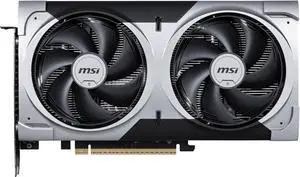
Quick View
MSI Ventus GeForce RTX 5060 Ti 8GB GDDR7 PCI Express 5.0 x 16 (use x8) ATX Graphics Card RTX 5060 Ti 8G VENTUS 2X OC PLUS
- Model #: RTX 5060 Ti 8G VENTUS 2X OC PLUS
- $550.79
- $509.99 –
- Save: 7%
- More options from $509.99 - $1,345.00
- Free Shipping
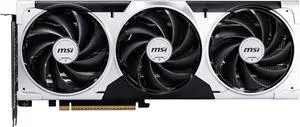
Quick View
MSI Ventus GeForce RTX 5060 Ti 16GB GDDR7 PCI Express 5.0 x 16 (use x8) ATX Graphics Card RTX 5060 Ti 16G VENTUS 3X OC
- Model #: RTX 5060 Ti 16G VENTUS 3X OC
- $799.99 –
- More options from $799.99 - $1,399.99
- Free Shipping
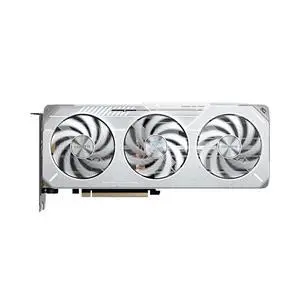
Quick View
GIGABYTE Gaming Radeon RX 9060 XT 16GB GDDR6 PCI Express 5.0 x16 ATX Graphics Card GV-R906XGAMINGOCICE-16GD
- Model #: GV-R906XGAMINGOCICE-16GD
- $637.38 –
- More options from $637.38 - $899.99
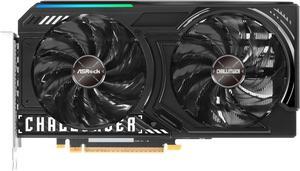
Quick View
ASRock Challenger Arc B570 10GB GDDR6 PCI Express 4.0 x8 ATX Graphics Card B570 CL 10GO
Get Intel Gamer Days Bundle 2026 with selected purchase, limited offer
- Model #: B570 CL 10GO
- $275.99
- $259.99 –
- Save: 5%
- Free Shipping
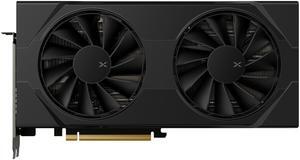
Quick View
XFX Swift AMD Radeon RX 9060 XT OC Gaming Edition with 16GB GDDR6 HDMI 2xDP, AMD RDNA 4
- Model #: RX-96TSW16BQ
- $529.99
- $509.99 –
- More options from $509.99 - $529.99
- Free Shipping
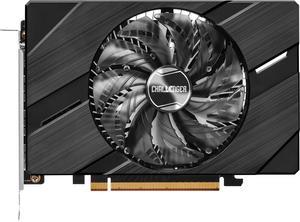
Quick View
ASRock Challenger Arc A380 6GB GDDR6 PCI Express 4.0 ITX Video Card A380 CLI 6G OC
- Model #: A380 CLI 6G OC
- $155.99
- $139.99 –
- Save: 10%
- More options from $139.99 - $170.99
- $6.99 Shipping
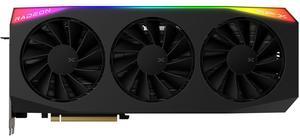
Quick View
XFX Mercury Radeon RX 9070 XT OC 16GB 256-Bit GDDR6 PCI-Express 5.0 RDNA 4 Graphics Card RX-97TRGBBB9
- Model #: RX-97TRGBBB9
- $809.99 –
- More options from $809.99 - $849.99
- Free Shipping
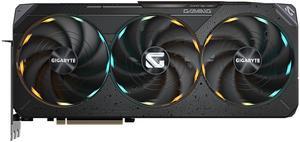
Quick View
GIGABYTE Gaming GeForce RTX 5090 32GB GDDR7 PCI Express 5.0 ATX Graphics Card GV-N5090GAMING OC-32GD
OUT OF STOCK
- Model #: GV-N5090GAMING OC-32GD
- $4,899.99 –
- More options from $4,899.99 - $5,299.99
- Free Shipping
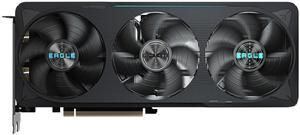
Quick View
GIGABYTE Eagle GeForce RTX 5070 12GB GDDR7 PCI Express 5.0 ATX Graphics Card GV-N5070EAGLE OC-12GD
OUT OF STOCK
- Model #: GV-N5070EAGLE OC-12GD
- $829.99 –
- More options from $829.99 - $1,599.99
- Free Shipping
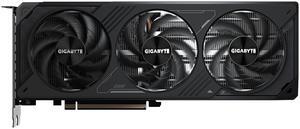
Quick View
GIGABYTE WindForce GeForce RTX 5070 12GB GDDR7 PCI Express 5.0 ATX Graphics Card GV-N5070WF3OC-12GD
OUT OF STOCK
- Model #: GV-N5070WF3OC-12GD
- $819.99 –
- More options from $819.99 - $1,599.99
- Free Shipping
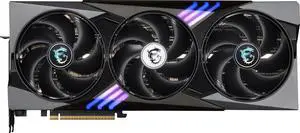
Quick View
MSI Gaming GeForce RTX 5090 32GB GDDR7 PCI Express 5.0 Graphics Card RTX 5090 32G GAMING TRIO OC
OUT OF STOCK
- Model #: RTX 5090 32G GAMING TRIO OC
- $4,899.99 –
- More options from $4,899.99 - $6,999.00
- Free Shipping
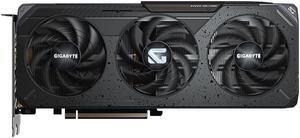
Quick View
GIGABYTE Gaming Radeon RX 9060 XT 16GB GDDR6 PCI Express 5.0 x16 ATX Graphics Card GV-R9060XTGAMING OC-16GD RX 9060XT
OUT OF STOCK
- Model #: GV-R9060XTGAMING OC-16GD
- $649.99 –
- More options from $649.99 - $899.99
- Free Shipping
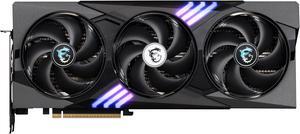
Quick View
MSI Gaming GeForce RTX 5070 Ti 16GB GDDR7 PCI Express 5.0 ATX Graphics Card RTX 5070 Ti 16G GAMING TRIO OC
OUT OF STOCK
- Model #: RTX 5070 TI 16G GAMING TRIO OC
- $1,249.99 –
- More options from $1,249.99 - $2,099.99
- Free Shipping
| Learn About GPU / Graphics Cards | |
|---|---|
Understanding Graphics Cards: Ports, Performance, and VRAMGraphics cards (GPUs) turn CPU data into images on your monitor. Modern GPUs support HDMI 2.1 and DisplayPort 2.1 for higher refresh rates, HDR, and multi-monitor setups. If you want smooth gaming, fast rendering, or AI workloads, focus on three factors: GPU tier, VRAM capacity, and cooling + power requirements. GPU vs Graphics Card: What’s the Difference?A GPU is the processor chip that handles graphics computation. A graphics card includes the GPU, VRAM (memory), cooling system, and display outputs. Major chipmakers like NVIDIA , AMD , and Intel design the GPU silicon, while board partners like ASUS , Gigabyte , and MSI build complete cards with custom cooling, factory overclocks, and improved thermals. Key GPU Families (Gaming + Creator Options)
Ray Tracing & AI Upscaling (DLSS / FSR / XeSS)Modern GPUs use dedicated ray tracing cores to create realistic lighting and reflections. To boost frame rate without losing image quality, AI upscaling technologies like DLSS (NVIDIA), FSR (AMD), and XeSS (Intel) render at a lower resolution and reconstruct a sharper final image. Cooling, Power, and GPU Size: What to Check Before Buying
Always check your PC case clearance and airflow before upgrading. Many high-end GPUs exceed 320mm+ length and require 2.5–3.5 slots. For power, pair performance GPUs with an 850W+ PSU and verify cable compatibility. Use the Power Supply Calculator to estimate wattage.
| Types of Graphics Cards & Best Use CasesChoose the right GPU based on how you use your PC:
Shop High-Performance GPUsExplore Newegg’s selection of GPUs and video cards from entry-level upgrades to flagship RTX and Radeon models. Look for limited-time GPU Deals during seasonal events. Buying Tips (Popular Picks)
Useful Tools and Buying Links
Explore More GPU Guides on Newegg Insider / NewsWant more tips on choosing the right graphics card, understanding VRAM, power requirements, and new GPU features? Browse our latest GPU articles on Newegg Insider: View all GPU Insider posts . You’ll find quick buying guides, performance explainers, and new-release coverage to help you shop with confidence. |
Last Updated: June 2026 | Newegg GPU Buying Guide
GPU / Graphics Card FAQs:
What does a graphics card do in a PC?
A graphics card processes visual workloads for gaming, video output, creative software, and GPU-accelerated tasks. It is one of the most important components for gaming performance and high-resolution display support.
What does VRAM mean on a GPU, and why is it important?
VRAM is the dedicated memory used by a graphics card to store textures, frame data, and other visual assets. Higher VRAM can help at higher resolutions, in newer games, and in workloads that use larger graphics assets.
What is the difference between gaming GPUs, workstation GPUs, and AI accelerator cards?
Gaming GPUs are usually tuned for frame rates and consumer gaming workloads, workstation GPUs focus more on professional applications and stability, while AI accelerator cards are aimed at specialized compute and inference tasks.
What does GPU generation mean when comparing graphics cards?
GPU generation refers to the architecture family or release wave of a graphics card, such as RTX 50 Series or Radeon RX 9000 Series. Newer generations may offer better performance, efficiency, and feature support depending on the model.
What video outputs should I look for on a graphics card?
Common outputs include DisplayPort and HDMI, and the right choice depends on your monitor resolution, refresh rate, and display setup. Before buying, check that the card has the ports and output support your monitor needs.
How do NVIDIA GeForce, AMD Radeon, and Intel Arc graphics cards compare?
All three GPU families can offer strong value depending on your budget, target games, and feature priorities. On Newegg, comparing cards by generation, VRAM, price, and use case is usually more helpful than choosing by brand alone.
What is the difference between an entry-level, mid-range, and high-end graphics card?
Entry-level cards are often aimed at basic gaming or display upgrades, mid-range cards balance price and performance, and high-end GPUs target stronger frame rates, higher resolutions, and more demanding workloads.
How do current GPU generations compare to previous generations?
Newer generations can improve performance, efficiency, and feature support, but the real value depends on the exact model and price. Comparing specific cards side by side is usually better than assuming every newer GPU is the best buy.
What is the difference between gaming video cards and workstation graphics cards?
Gaming cards are usually optimized for consumer gaming performance, while workstation graphics cards focus more on professional software workflows, certified drivers, and specialized business or creator use cases.
How do air-cooled and liquid-cooled graphics cards compare?
Air-cooled cards are more common and easier to install, while liquid-cooled models may target higher-end systems looking for stronger thermal control and different acoustic or case design goals.
How do I choose the right graphics card for gaming?
Start with your target resolution, frame rate expectations, power supply, and budget. On Newegg, filtering by GPU family and comparing cards against your gaming goals is one of the simplest ways to narrow the field.
How much VRAM do I need for modern gaming?
The right VRAM amount depends on resolution, game settings, and how long you want the card to stay relevant. Higher resolutions and newer titles can benefit from more VRAM, but total GPU performance still matters too.
Should I upgrade my GPU or build a whole new PC?
That depends on the age of your current platform and whether the rest of the system can support a newer graphics card. In many cases a GPU upgrade is enough, but older CPUs, power supplies, or cases can limit the value of that upgrade.
How important is power supply compatibility when buying a graphics card?
Power supply compatibility is critical because the GPU must have enough wattage headroom and the right power connectors to run safely. Before ordering, it is important to verify both PSU capacity and connector support.
Should I buy the newest GPU generation or a discounted older card?
A newer generation may offer stronger efficiency and newer features, while an older card can still be a smart value buy at the right price. The best choice depends on your budget, target performance, and how long you plan to keep the card.
What are common issues to watch out for when buying a graphics card?
Common concerns include case fit, power connector needs, cooling clearance, and whether the card is balanced for the rest of your system. Checking the full listing details helps avoid expensive compatibility mistakes.
How important are customer reviews when choosing a GPU?
Customer reviews can reveal useful details about thermals, fan noise, real-world fit, and out-of-box experience. Verified buyer feedback is especially useful when comparing similar cards from different brands.
Are budget graphics cards reliable for long-term use?
Budget GPUs can be reliable when matched with realistic expectations and the right system, but long-term satisfaction often depends more on whether the performance level stays useful for your needs over time.
What compatibility issues should I check before upgrading my graphics card?
Check case length, PSU wattage, GPU power connectors, motherboard slot availability, and monitor output compatibility. These factors are just as important as performance when planning an upgrade.
Do users commonly report overheating or coil whine with graphics cards?
Some users do report thermal concerns or coil whine depending on the exact model, cooling design, system airflow, and load conditions. Recent buyer feedback is often the fastest way to spot whether a pattern exists for a specific card.
How do I install a graphics card in a desktop PC?
Install the card into the correct PCIe slot, secure it to the case, attach the required power connectors, and connect your monitor to the GPU outputs. Take your time and confirm that the card is fully seated before powering on.
Do I need new drivers when installing a new graphics card?
In most cases, yes. Installing the latest graphics driver helps with stability, compatibility, and game performance after a GPU upgrade.
How do I connect my monitor to a new graphics card?
Connect your monitor directly to the graphics card output using the correct cable type, such as DisplayPort or HDMI. This ensures the system is actually using the discrete GPU for display output.
How do I check if my case has enough space for a new GPU?
Compare the card’s listed length and cooling thickness with your case specifications before ordering. Clearance near front fans, radiators, and drive cages can matter just as much as the raw GPU length.
What should I do after installing a new graphics card?
Update drivers, confirm display output, monitor temperatures, and test a few games or workloads to make sure the card is performing as expected. This is also a good time to verify fan behavior and power stability.
Bestselling GPUs / Video Graphics Cards Reviews:
Mohamad J.
8/14/2026 4:20:04 PM
One of my favorite GPUs
“ Honestly, this is one of my favorite GPUs Ive purchased in a while. ”
GIGABYTE AERO GeForce RTX 5070 Ti 16GB GDDR7 PCI Express 5.0 ATX Graphics Card GV-N507TAERO OC-16GDJoshua M.
1/2/2026 10:15:32 PM
ABSOLUTE BEAST. Pushing 300W on War Thunder highest settings
“ Customization is there as always with the AORUS GPUs. ”
GIGABYTE AORUS GeForce RTX 5080 16GB GDDR7 PCI Express 5.0 ATX Graphics Card GV-N5080AORUSM ICE-16GKyle N.
12/8/2025 6:30:20 AM
Oh yeah! Love it!
“ Price: GPUs arent cheap right now and if you want aesthetics, you will have to pay more. ”
GIGABYTE Gaming GeForce RTX 5070 Ti 16GB GDDR7 PCI Express 5.0 ATX Graphics Card GV-N507TGAMING OC-16GDBellenuit
6/30/2025 1:31:43 PM
Great card and sturdy build quality
“ GPUs are just getting pricier and pricier with each gen which is getting crazy. ”
ASUS TUF Gaming GeForce RTX 5070 Ti OC Edition 16GB GDDR7 TUF-RTX5070TI-O16G-GAMING PCI-Express 5.0 DLSS 4.0 Graphics CardRasheeda B.
4/24/2025 6:54:06 AM
Dead silent beast
“ One of my favorite games is Wukong, which is tough on GPUs. ”
GIGABYTE Eagle GeForce RTX 5070 Ti 16GB GDDR7 PCI Express 5.0 ATX Graphics Card GV-N507TEAGLEOC ICE-16GDRay Butler - Houston TX
2/14/2025 12:32:42 PM
AMD 7900XT is the best GPU card dollar per performance!!!!
“ No questions asked I would recommend this GPU all day. ”
SAPPHIRE PULSE Radeon RX 7900 XT 20GB GDDR6 PCI Express 4.0 x16 ATX Graphics Card 11323-02-20G